

Discover integrations with Alumio blogs!


Legacy system integration: six questions to answer first
Software bought around a kept system inherits its limits. For legacy system integration, six answers from your own team come first.

Integration questions your ERP selection criteria are missing
A new ERP has to connect to the webshop, warehouse, and trading partners. Plain vendor questions bring that into your ERP selection criteria.

What ERP replacement does to your EDI integration
Replacing an ERP means remapping every EDI connection. Keep the translation outside the ERP and the partners never have to touch it.

How integrations improve ROI across industries
Custom code caps what an integration returns. On a platform, every connection is reusable and the return grows as you add systems.

Disaster recovery planning when integrations fail
Most disaster recovery plans cover servers and databases. The connections between them fail too, and few plans say what happens then.

Purchase order automation and the delivery date you promised
Drop-ship orders fail between the storefront and the supplier. Purchase order automation turns a customer order into a supplier order automatically.

The ESPR destruction ban and the record it now requires
The destruction ban applied from 19 July 2026. ESPR requires evidence of what happened to every unsold item, and recycling does not count.

The permission problem behind AI agent integration
AI agent integration is straightforward. Deciding what an agent may do, and proving what it did, is the harder half.

The custom integration dependency problem | Caspar Hardholt
The technology was never the hard part. Custom integration leaves a dependency that a central integration platform removes.

Warehouse automation integration starts before the robots
Automated equipment is only as useful as the instructions reaching it. Warehouse automation integration is usually the constraint, not the hardware.

Why 3PL integration decides what you can promise
A 3PL holds the stock and the customer still holds the brand responsible. 3PL integration keeps stock and shipment status visible.

Integration testing when you control one side of the wire
A partner's ERP has no sandbox and will not go down on request. Integration testing works around that with test environments and replay.

How integration monitoring stops customers finding out first
Broken integrations rarely announce themselves. Integration monitoring is what turns a customer complaint into an alert nobody outside sees.

POS integration and the store stock nobody believes
Omnichannel promises rest on store inventory accuracy. POS integration is what makes a store stock figure safe to sell against.

Shop floor data collection and the OEE nobody trusts
Collecting machine data is the easy half. Shop floor data collection pays off once its numbers reconcile against the ERP.

The accounting integration that shortens month-end
Month-end runs long because operational events reach the ledger by hand. Accounting integration turns that translation into a flow.

Connecting vendor managed inventory data across companies
Vendor managed inventory is agreed commercially and then runs on spreadsheets, because sharing stock and usage data continuously is the harder part.

Product data syndication: connect one source to every channel
Catalogs get maintained channel by channel because every marketplace wants different fields. Product data syndication makes that one job, not six.

How QMS integration shortens a containment decision
Quality systems record the problem well and answer the scope question slowly. QMS integration connects the defect to the units it reached.

The CPQ integration that stops quotes being retyped
CPQ speeds up quoting, then hands the result to someone who retypes it into the ERP. CPQ integration removes the handover where accuracy is lost.

Connecting rebate management to a real margin figure
Distributors price deals on gross margin because rebate income lands later. Rebate management integration makes the earned position visible.

How loyalty program integration keeps one balance live
Each channel holding its own balance creates double spends and a liability finance cannot size. Loyalty program integration replaces the copies.

CMMS integration: fit maintenance into the production plan
Maintenance and production schedule the same asset independently, then argue. CMMS integration turns a maintenance window into a planning input.

Collecting digital product passport data from your suppliers
Digital Product Passport readiness is framed as a product data problem. The harder half is getting material and origin data out of the supply base.

The seller metrics your marketplace integration protects
Every marketplace scores sellers on dispatch times and cancellations. Marketplace integration is what keeps those numbers out of penalty range.

Why does payment integration break at reconciliation?
Payment integration effort goes into checkout, but the cost sits in reconciliation. Settlements, fees, and refunds decide when finance can close.
Punchout catalog integration for buyers who never leave their ERP
A supplier that cannot be punched out to never reaches the shortlist. Punchout catalog integration is an ERP problem before it is a protocol problem.
Transportation Management System (TMS) integration with ERP & WMS
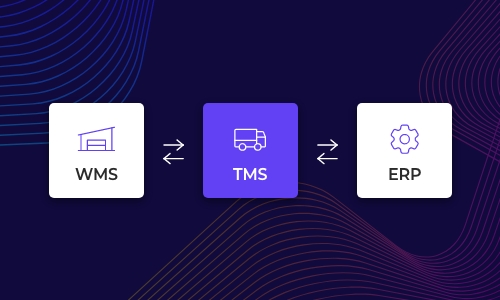
Shipping decisions get made in isolation from order and stock data. TMS integration puts origin, carrier, and service level on current facts.

Why supplier onboarding still takes six weeks
Most supplier onboarding time goes on per-partner mapping and testing rather than the standard itself. Reuse is what makes the next one faster.

What post-merger integration should connect first
Post-merger integration stalls when a group waits for one system. Connecting two landscapes delivers group reporting far sooner than migrating them.

Reverse logistics: where returns lose their margin
Most reverse logistics cost is the delay between an item arriving back and the systems knowing it exists. Connected systems are what remove it.

How to get zero party data to reach essential systems
Zero party data earns its keep once it reaches the email platform, storefront, CDP, and service desk, not just the survey that collected it.
How WMS ERP integration prevents conflicting stock figures
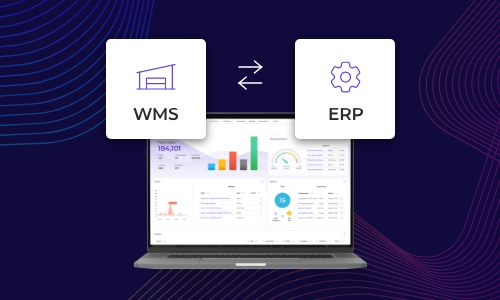
Most sync failures are ownership disputes, not technical faults. WMS ERP integration starts by deciding whether the ERP or the warehouse owns each record.

The B2B e-commerce features that depend on integration
Buyers judge a B2B webshop on whether prices and stock are right. Most B2B e-commerce features are ERP data flows, not storefront configuration.
How to roadmap digital transformation in manufacturing
Failed digital transformation rarely comes from bad technology choices. It comes from the order in which those technologies are adopted.

Unified commerce and the back-office systems behind it
A consistent storefront does not make commerce unified. Retailers need one shared record of stock, orders, and customers behind every channel.

Engineering change management: why approved changes stall
In manufacturing, an approved design change stalls when PLM, ERP, and MES each hold their own revision. Engineering change management keeps them aligned.

How to prepare your SAP ECC landscape for 2027
For businesses that cannot migrate SAP ECC by 2027, decoupling it with an integration layer keeps operations running on their own timeline.

Engineering change orders: where production lead time goes
Most production lead time is waiting, not working. Engineering change orders that move automatically from PLM to ERP and MES cut days from the cycle.

Cloud ERP vs on-premise: what manufacturers should keep local
Manufacturers often need both cloud and on-premise ERP. Learn which workloads should stay local and how hybrid integration keeps systems connected.

How omnichannel fulfillment decides where an order ships from
Syncing stock across channels does not decide where an order ships from. Omnichannel fulfillment depends on allocation rules, not just visibility.

Order orchestration: why connected systems lose orders
Most e-commerce complexity comes from processes, not systems. Order orchestration governs the steps between them so orders complete reliably.

How manufacturers enforce data validation and governance
Trusted manufacturing data starts with control over how it moves. Data validation and governance keep records accurate across every connected system.

How to scale internationally without rebuilding your e-commerce stack
International e-commerce expansion usually forces a rebuild for each market. A composable stack makes it an extension of the systems you already run.

How to build supply chain resilience with composable integration
Supply chains break when sourcing shifts faster than integrations adapt. Composable integration builds supply chain resilience to re-source fast.

Securing e-commerce integrations with Monitoring and Logging
When e-commerce integrations fail quietly, orders and stock go wrong. Monitoring and logging surface the failure early, before customers feel it.

E-commerce innovation without replatforming
Why replatforming is rarely the path to new e-commerce capabilities, and how an integration platform adds channels and features on the existing stack.

Digital Product Passport: the data integration roadmap
A readiness roadmap for Digital Product Passport requirements: the timeline through 2027, the DPP data model, and the systems to connect first.

Integrating your master data management software
Master data management keeps products, customers, and assets consistent across systems: what it covers, MDM vs PIM, and where integration fits in.

Manufacturing data security best practices for connected plants
Connected factories multiply data pathways and exposure. Five manufacturing data security practices that keep integrated systems governed and safe.

Why custom integrations put manufacturing traceability at risk
Traceability systems get audited; the custom integrations feeding them do not. Manufacturing traceability breaks in the unlogged gaps between systems.
Maintaining data consistency across ERP, MES, and WMS
Three systems, three versions of the same fact: why manufacturing data drifts out of sync and how an integration layer maintains data consistency.

The business case for decoupling systems with an integration platform
Every ERP swap, channel launch, and upgrade is priced by how tightly systems are coupled. Why decoupling systems is a finance decision, not an IT one.
How e-commerce integration security protects business data
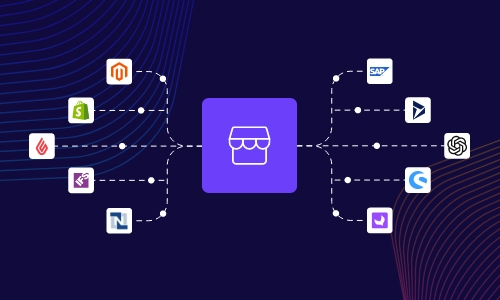
More connected systems means more APIs and more data in transit to protect. E-commerce integration security keeps those connections governed and safe.

Why integration security is now a board-level concern
Every new system connection widens the attack surface. Integration security is now a board-level risk to govern, not an IT detail to delegate.

Why choose an iPaaS over point-to-point connectors
Discover the benefits and differences of an iPaaS (integration Platform as a Service) solution vs point-to-point connectors.

Real-time manufacturing order management across systems
Order data splinters across ERP, MES, and WMS, so no one can say where an order really is. Manufacturing order management in real time fixes that.

API security best practices for e-commerce data flows
Composable e-commerce means more APIs to defend. These API security best practices centralize authentication, encryption, and monitoring in one layer.
Building end-to-end supply chain visibility across multiple tiers
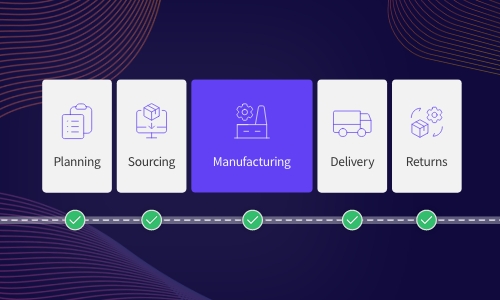
Manufacturers lose sight of risk beyond their direct suppliers. Connected, multi-tier data is what turns blind spots into real supply chain visibility.

How e-commerce integration security protects business data
More connected systems means more APIs and more data in transit to protect. E-commerce integration security keeps those connections governed and safe.

Enabling fast EUDR compliance: TradeAware x Alumio
ERP systems hold most of the data EUDR needs, in the wrong shape. The Alumio connector feeds it into TradeAware, making EUDR compliance an automated flow.

How event-driven flows power manufacturing automation integration
A factory runs on dozens of systems that talk on a schedule. Manufacturing automation integration built event-driven lets them respond in real time.

Building one data model with multi-plant ERP integration
Multiple plants on separate ERPs produce data that never reconciles. ERP data integration into one shared model gives a single source of truth.

GDPR data transfer: where your e-commerce data really lives
Most e-commerce teams cannot say where their customer data physically sits. GDPR data transfer rules turn that blind spot into a real legal risk.

How to tell AI features from AI-ready infrastructure
AI features and AI-ready infrastructure both need a data foundation to act on. See how to tell them apart, and what makes either work.

Preventing data siloes and shadow IT with an integration platform
Data silos and shadow IT are two symptoms of one failure. See how an integration platform prevents both by making the sanctioned path the fast one.

How to build AI-ready e-commerce architecture
Adopting AI tools is not the same as being AI-ready. See what an AI-ready e-commerce architecture needs, and why the integration layer decides it.

Dynamics 365 F&O connector: integrating 30 ERP endpoints
A partner-built Dynamics 365 F&O connector with close to 30 endpoints, and why that breadth, not just order sync, is what makes ERP integration hold up.

AI in e-commerce runs on data quality, not model choice
Recommendation engines, forecasts, and shopping assistants inherit their data's quality. Why AI in e-commerce depends on clean product and inventory data.

How IIoT retrofitting gets old machines talking to new systems
Legacy machines run fine but share no data. IIoT retrofitting adds sensors and edge gateways so their data reaches ERP, MES, and analytics systems.

Digital twin data modeling across PLM, ERP, and IoT
A digital twin is only as reliable as the PLM, ERP, and IoT data feeding it. Digital twin data modeling on a standard like AAS is what holds it together.

Governing AI decision-making with the iPaaS
Most AI decisions leave no trail. AI decision governance depends on the data layer that records and validates every input behind a call.

Why smart factories fail: the missing integration layer
Manufacturers run eight pilots on average and scale fewer than a third. Smart factory scalability comes down to the integration layer beneath them.

How AI automation differs across order, inventory, and pricing
Treating AI as one automation switch backfires. AI workflow automation across order, inventory, and pricing each needs a different data foundation.

Connecting Pay.nl to your Dutch commerce stack
Dutch payments aren't Stripe-and-forget. Pay.nl integration through an iPaaS handles iDEAL, Wero, refunds, and reconciliation across your stack.

How to make production monitoring real-time
Real-time production monitoring fails when the data layer underneath is built for batch reporting. Event-driven flows and integrated OEE change that.

How to integrate LLMs into your tech stack with an iPaaS
Connecting LLMs to your tech stack needs more than an API key. An iPaaS adds the production layer LLM integration actually depends on.

Why your AI ROI calculation is missing the integration variable
AI ROI gets calculated wrong when integration is treated as a hidden cost. Integration depth is the variable that determines actual returns.

From first integration to scalable integration backbone
Most teams build their first integration before thinking of architecture. Scalable integration architecture services turn early wins into governance.

How data integration enables predictive maintenance
Predictive maintenance models work when the data does. Data integration for predictive maintenance feeds sensors, ERP context, and history reliably.

How AI changes product data management across e-commerce systems
Generative AI reshapes SKU work in seconds, but AI product data management only pays off when the integration layer connects every system.

How professional services firms prepare clients for AI-ready data
Most client AI projects fail at the data layer. A structured AI readiness assessment, supported by an integration platform, is how agencies fix that.

Connecting legacy ERP with cloud apps with hybrid integration
Legacy ERPs run too much of the business to replace quickly. A hybrid integration platform connects them to cloud apps without forcing a migration.

Personalization to prediction: Role of AI in e-commerce
Most e-commerce AI stops at personalization. Predictive AI needs integrated cross-system data, which is what an integration platform delivers.

How an iPaaS helps professional service firms reduce delivery risk
Integration projects often slip on scope or post-launch stability. Discover how a centralized iPaaS makes professional services delivery more predictable.

Connecting machine data to enterprise systems: a modern IT/OT integration layer
Connecting machine data to enterprise systems is an architectural problem. Learn how MQTT, Unified Namespace, and an iPaaS bridge OT and IT in manufacturing.

How AI-driven integrations unlock smarter e-commerce operations
AI is evolving e-commerce operations. Discover how AI-driven integrations turn pricing, content, and customer experience into faster, smarter workflows.

The real cost of integration debt for fast-growing companies
Scaleups hit an integration wall when growth outpaces their systems. Learn how an iPaaS cuts costs and puts operational control back in-house.

Enabling integration governance for professional services
Governance is what makes integration delivery trustworthy at scale. Discover how agencies and SIs can add audit trails, access controls, and client separation.

The hidden costs of legacy e-commerce integrations
Custom e-commerce integrations look cheap until they aren't. Learn how legacy connectors accumulate hidden costs across maintenance and lost revenue.

Connecting the digital thread for manufacturers: PLM to ERP to MES
Disconnected PLM, ERP, and MES systems break the digital thread in manufacturing. Learn how integration keeps product data accurate from design to production.

Managing multiple clients, systems, and data models from one platform
Managing integrations across multiple clients creates unsustainable technical debt. Learn how a centralized multi client integration platform helps agencies, consultants, and SIs scale their operations efficiently.
Enabling real-time inventory sync: ERP, WMS, and production
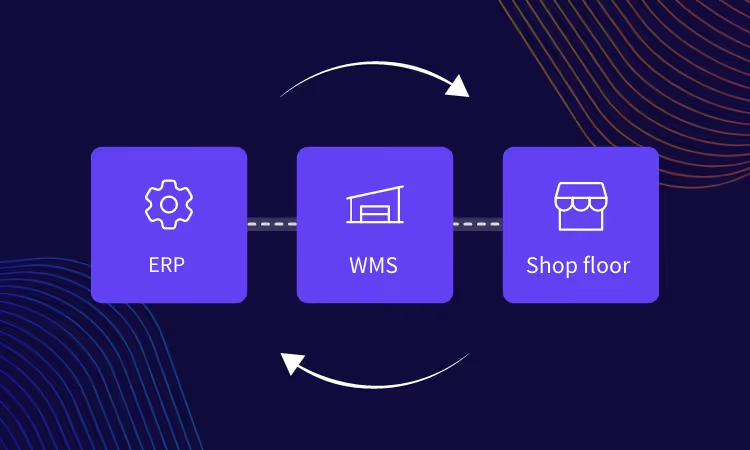
Batch-based inventory updates create costly blind spots in production. Event-driven ERP and WMS sync gives real-time stock visibility.

Turning e-commerce replatforming failures into success
E-commerce replatforming often fails due to misalignment, data complexity, and risky launches. Learn how to execute a safer, phased transition.

Integrating Microsoft Dynamics 365 F&O for manufacturers
Learn how the iPaaS helps manufacturers apply the right Dynamics 365 F&O integration method for each data flow, from real-time OData to batch DMF and Dual-write sync.

Standardizing integrations across multiple clients with scalability
Discover the architectural approach that allows professional services firms to deploy standard integration templates without sacrificing custom client requirements.

How MACH architecture redefines brand scalability
Fast-growing brands need architecture that scales with them. Learn how MACH helps eliminate technical debt, accelerate deployment, and support continuous growth.


.avif)


.avif)


.avif)


Here's three others to help you on your integration journey!
Get a free assessment of your integration needs


.svg)
.svg)
.svg)
.svg)
.svg)
.svg)
