




.svg)



Predictive AI in e-commerce is a data problem, not a model problem
Most discussion around AI in e-commerce focuses on models, prompts, and tooling, but the infrastructure that determines whether those models do anything useful sits one layer down. Predictive AI in e-commerce fails when the data feeding it is partial, late, or inconsistent across systems, not when the algorithms are weak. Personalization could work on a thin slice of behavioral data, whereas prediction needs the whole operational picture kept current across systems.
Personalization-era AI has reached its ceiling
Product recommendations, on-site search refinement, and behavioral targeting are mature capabilities now, shipped or integrated by every credible e-commerce platform. They run on shallow data such as clicks, views, cart events, and purchase history within a single store, which is enough to optimize what is already happening on-site.
What these tools do not do is anticipate. They react to demand after it shows up, personalize within an existing session, and optimize the conversion of traffic already in motion. None of that forecasts which SKUs will stock out next month, which customer segments are about to disengage, or where pricing should move when a competitor changes theirs.
The ceiling is structural. AI that only sees behavioral data inside the storefront can refine the customer journey, but it cannot drive the decisions sitting upstream of it.
What does predictive AI in e-commerce actually require?
Predictive AI in e-commerce requires structured data from across the operational stack, kept in sync close to real time. Each predictive use case pulls from different systems, but the pattern is consistently one of breadth and freshness.
A few typical examples:
- Demand forecasting: ERP stock, WMS capacity, historical orders, supplier lead times
- Inventory-aware campaigns: live availability, margin data, marketing platform feeds
- Churn prediction: CRM lifecycle, service interactions, behavioral signals
- Pricing optimization: competitor data, stock levels, margin, demand patterns
- Returns prediction: product attributes, fulfillment data, customer history
None of these models work on a single system's data, and all of them break when the data they receive lags 24 hours. The phrase “AI-ready data” is really shorthand for data integrated across systems, normalized, and available with low enough latency that predictions reflect current reality.
Selfmade, a Dutch multi-brand retailer running SAP, inRiver, and Shopware across e-commerce and retail channels, rebuilt its integration layer to cut data lag from roughly 24 hours to hourly synchronization. Any predictive model running on that data would have been making decisions about a version of the business that no longer existed. After moving to hourly synchronization across systems, the data layer caught up to operational reality, which is the precondition for any predictive layer sitting on top of it.
The integration layer behind every working predictive AI use case
An integration platform-as-a-service (iPaaS) is the category that handles the connectivity, transformation, and real-time data flow predictive AI depends on. Rather than building one-off connections between each system, an iPaaS centralizes integration logic, normalizes data formats, and orchestrates event-driven flows across the stack.
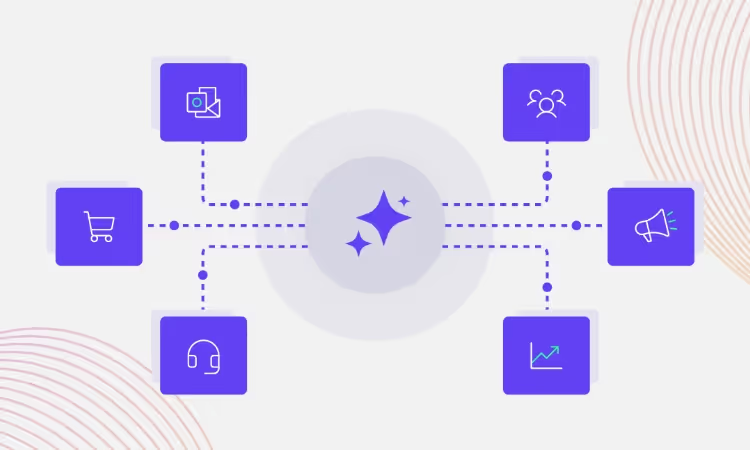
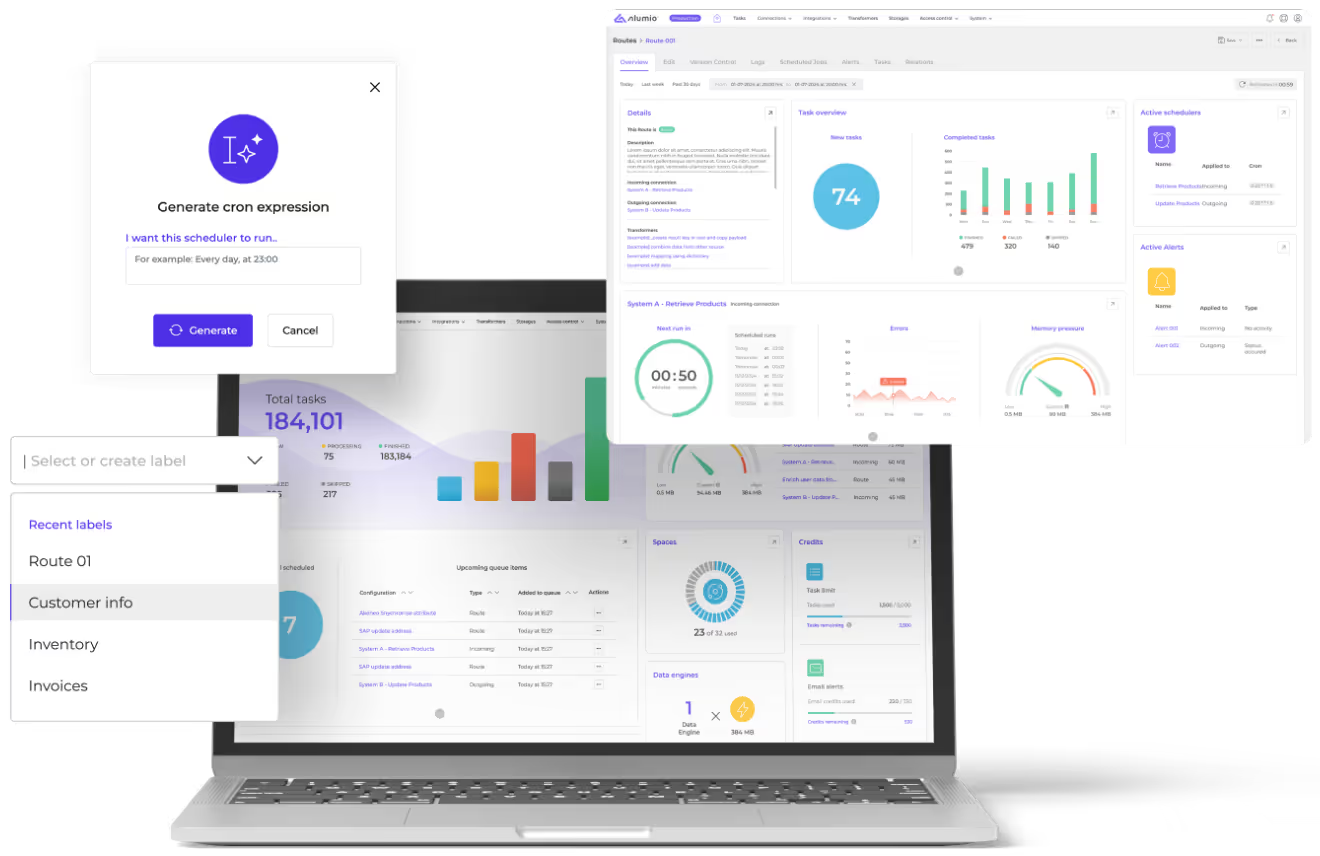
The Alumio iPaaS provides that foundation for e-commerce businesses building toward predictive AI. In this use case, it does three things at once. It moves data between ERP, PIM, OMS, CRM, and commerce systems in real time or near real time, replacing nightly batches with event-driven flows. It transforms and normalizes that data into structures predictive models can consume. And it maintains observability and audit trails across the flows, which matters because a prediction is only trustworthy when the data feeding it is verifiable.
Most Alumio deployments happen through certified system integrators and digital agencies. That partner-led model is particularly relevant for predictive AI, where use cases typically arrive as part of a wider data or AI engagement rather than as standalone integration projects.





.svg)
.svg)
.svg)
.svg)
.svg)
.svg)
