What end-to-end supply chain visibility actually requires
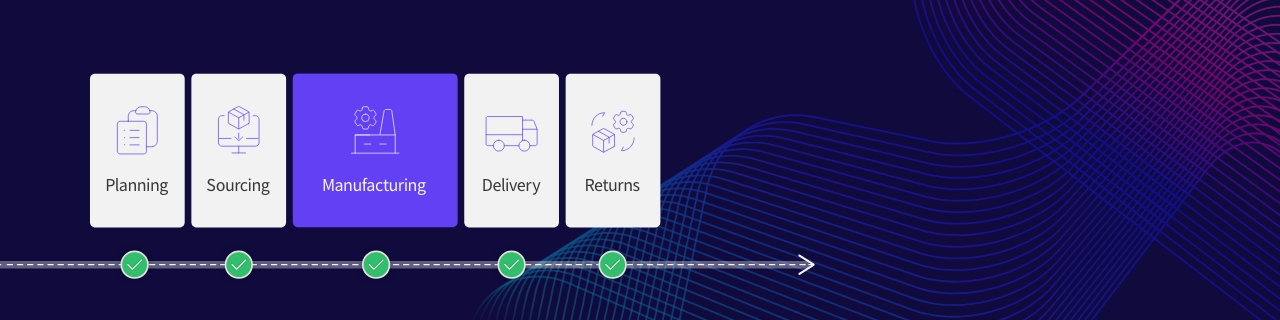
End-to-end supply chain visibility means tracking the flow of goods, orders, and risk from raw material to finished product, across every partner involved. For a manufacturer, that includes the tier 1 suppliers it deals with directly, the tier 2 and tier 3 suppliers behind them, the logistics providers moving material, and the customers receiving the output. Each holds a piece of the picture. None holds all of it.
The hard part is not displaying that data. It is collecting it in a consistent form from partners who never coordinated their systems. One supplier sends a daily spreadsheet. Another exposes an API. A logistics provider posts updates to a portal someone has to check by hand. Visibility depends on pulling these feeds into one place and making them speak the same language, which is a data integration problem before it is a dashboard problem.
Why does visibility break down beyond tier 1?
Because a business only has a direct relationship, and a direct data connection, with its tier 1 suppliers. Everything beyond that arrives secondhand, if it arrives at all. A tier 1 supplier may know its own suppliers are slipping, but that signal rarely reaches the manufacturer until it shows up as a late shipment.
Multi-tier supplier integration is the work of extending data connections past that first ring, so a business can see status and risk at suppliers it does not contract with directly. It is hard because each tier adds more partners on more systems, and few of them have any incentive to standardize. The result is familiar. Visibility is sharp at tier 1, blurry at tier 2, and close to zero past that, which is exactly where the surprises live.
The data problem behind a supply chain control tower
A supply chain control tower is a single, real-time view of the whole chain, the thing most visibility projects are ultimately trying to build. The dashboard is the easy part. The hard part is feeding it accurate, current data from every tier without a person stitching it together by hand.
That feed is a continuous integration problem. Demand signals, inventory levels, shipment status, and supplier updates all change constantly. So does the production data flowing up from the plant floor, which depends on solid IT/OT integration to reach enterprise systems at all. These feeds arrive in different formats from different systems. Pulling them together once by hand produces a snapshot that is stale within hours. To stay live, the connections have to be automated and governed in one place. This is the role of an integration platform-as-a-service (iPaaS), software that connects a business's own systems and its partners' systems through a single managed layer rather than dozens of separate links.
How does an integration layer connect multi-tier supplier data?
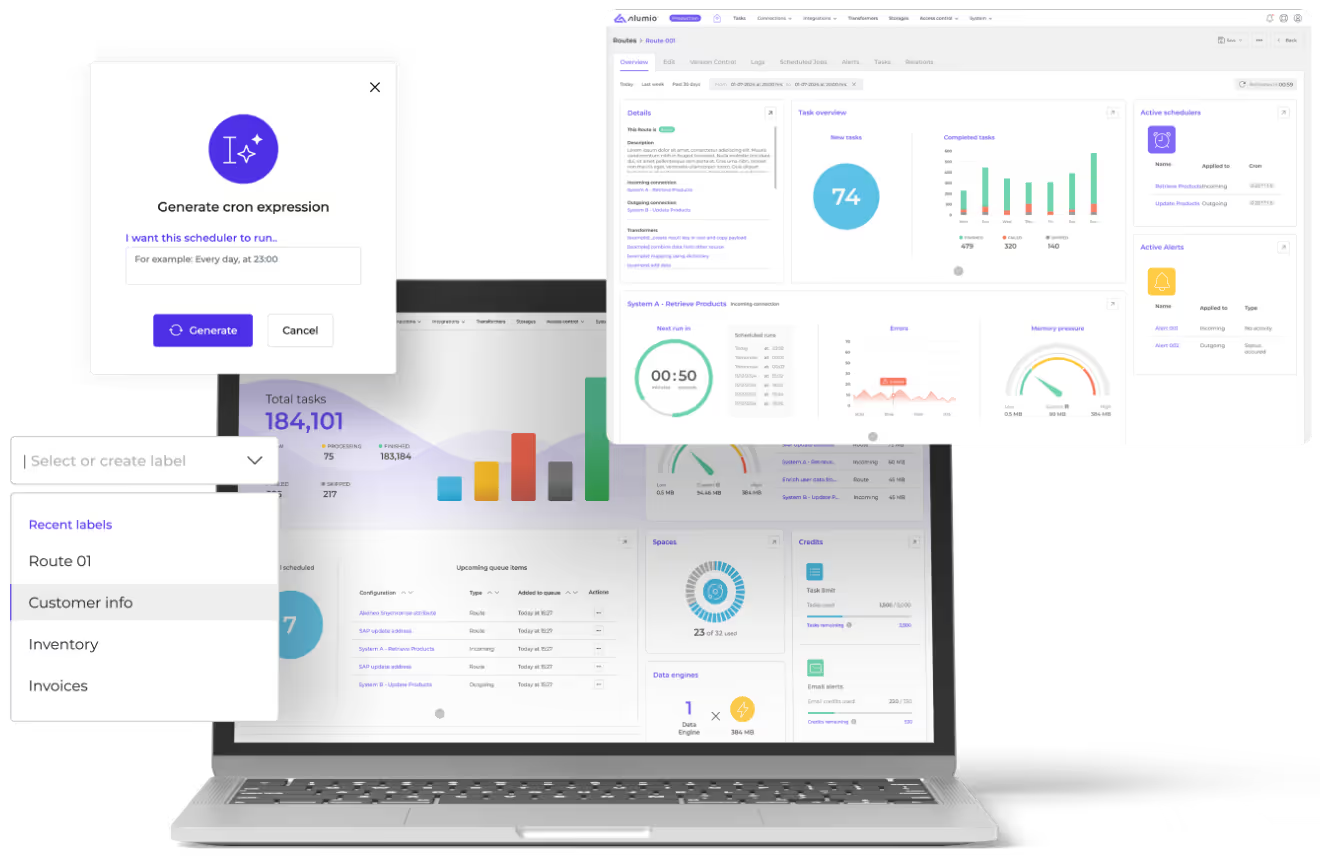
An integration platform sits between a manufacturer's core systems and the external partners feeding the chain. The Alumio integration platform connects to each source, a tier 1 supplier's API, a tier 2 portal, a logistics provider's EDI feed, and maps every format into one consistent structure. From there, the same data can flow into an ERP, a planning tool, or a control tower dashboard, in the shape each one needs. The same approach that handles ERP integration in manufacturing inside the four walls extends outward to the partners across the chain.
Two things make this work at scale. First, the platform transforms and validates data in transit, so a delivery date from a supplier spreadsheet and one from an EDI message arrive in the same format and units. Second, every flow is monitored and logged, so a feed that stops or starts sending bad data is caught early rather than discovered when a line stops. Logistics data synchronization, keeping shipment and inventory status aligned across carriers and warehouses, runs the same way. Most manufacturers set this up with a certified integration partner, who maps the supplier connections and the data model once, then reuses them as new partners join.
Turning visibility into supplier risk management
Visibility is only useful if it changes a decision. Once the integration platform feeds multi-tier data into one place, patterns become visible early enough to act on. A supplier whose lead times are creeping up, a region with repeated delays, or a single tier 2 source that three of your tier 1 suppliers all depend on: these are the early signals of risk. The same monitoring that flags a broken feed surfaces these patterns too, because the platform is already watching every flow as it runs.
This is where supply chain visibility becomes supplier risk management. With the data connected and governed in one integration platform, a business can flag a concentration risk before it becomes a shortage, or reroute to a second source while there is still time. Without that integration layer, the same problem surfaces as a missed delivery, when the options have narrowed to bad and worse. The data was always there, spread across partners. The integration platform is what makes it usable.
Supply chain visibility as an operating advantage
The number of partners behind a manufactured product keeps growing, and so does the distance between a disruption and the business it hits. Supply chain visibility is what closes that distance. It will not remove risk from the chain, but it turns risk into something a business can see coming and plan around, rather than absorb after the fact.
The manufacturers pulling ahead treat visibility as a data problem to solve once, not a report to reassemble each week. When the connections between tiers are automated and governed, the control tower stops being a project and becomes the normal way the business runs. That is the real shift: from chasing information across partners to acting on it while it still matters.




.svg)






.svg)
.svg)
.svg)
.svg)
.svg)
.svg)
