Which digital product passport attributes come from outside
A Digital Product Passport (DPP) blends data a business already owns with data it has to request, and the split is uneven.
- Held internally: product identifiers, dimensions, model numbers, and most commercial attributes already carried in the PIM or the ERP.
- Held by direct suppliers: material composition, substance declarations, recycled content, and manufacturing location for each component.
- Held further upstream: origin of raw materials, which a tier-one supplier may itself have to request from tier two.
- Generated by third parties: certifications, test reports, and carbon footprint calculations produced by labs or assessors.
- Created at the end: repair instructions, disassembly guidance, and end-of-life handling, which often exist as documents rather than data.
Only the first category responds to internal effort. Mapping the DPP data model across the ERP, PLM, and PIM is work a business can schedule. The rest arrive at whatever quality and frequency the supply base can manage, which for most businesses means email attachments and spreadsheets.
Why does digital product passport data stall with suppliers?
Suppliers have no obligation to your format. The Ecodesign for Sustainable Products Regulation (ESPR) binds the business placing a product on the market, not the component supplier three steps back. ESPR compliance, therefore, reaches the supplier as a commercial ask rather than a legal one.
Capability varies more than willingness. A large supplier may have the data and hold it in a system that cannot export what you asked for. A small one may know the answer and have no way to send it except by writing an email. Both are cooperating, and neither produces structured data.
Then there is drift. A material specification collected once is accurate until the supplier changes a source, which happens without notification because the change did not affect the part number. The DPP then carries a claim the product no longer supports, which is worse than a gap.
What does a manual collection process cost?
Businesses usually start with a spreadsheet template emailed to the supply base. The costs follow in a predictable order:
- Chasing that never ends: a compliance or procurement person spends their week following up non-responses, and the follow-up list resets every product change.
- Data that arrives unusable: free-text fields, inconsistent units, and material names that do not match any standard vocabulary.
- Claims nobody can evidence: a recycled content figure sits in the DPP with no record of who supplied it or when, which fails at audit.
- Launches held up: a product cannot be placed on the market without a complete DPP, so one missing supplier attribute blocks a range.
- Silent expiry: data collected eighteen months ago is presented as current because nothing tracks when it was last confirmed.
None of these is a technology failure. Each follows from collecting regulated data through a channel built for correspondence, which is why digital product passport programs stall at the collection stage rather than the modeling one.
Treating suppliers as a data channel, not a mailing list
The businesses that get this working stop treating supplier data as a collection exercise. They treat it as an ongoing exchange, which is the same problem as onboarding a trading partner for orders.
That has a practical consequence. A supplier already sending order confirmations and dispatch advices electronically is a supplier who can send material declarations the same way, through a channel that already exists. A supplier who cannot needs a simpler route, typically a form or a structured spreadsheet that gets validated on arrival rather than after someone reads it.
The distinction that matters is not supplier size. It is whether the data arrives in a form the receiving system can check. An attribute nobody validated will fail at audit rather than at intake.
How an integration platform handles digital product passport data
There are three routes and each carries a limit. A dedicated DPP or compliance platform models the requirement well and still has to be fed from your systems and your suppliers. A PIM holds the attributes properly once they arrive and offers little help getting them there. Collecting by email and consolidating manually is what most businesses do now, and it caps how many suppliers and products the program can cover.
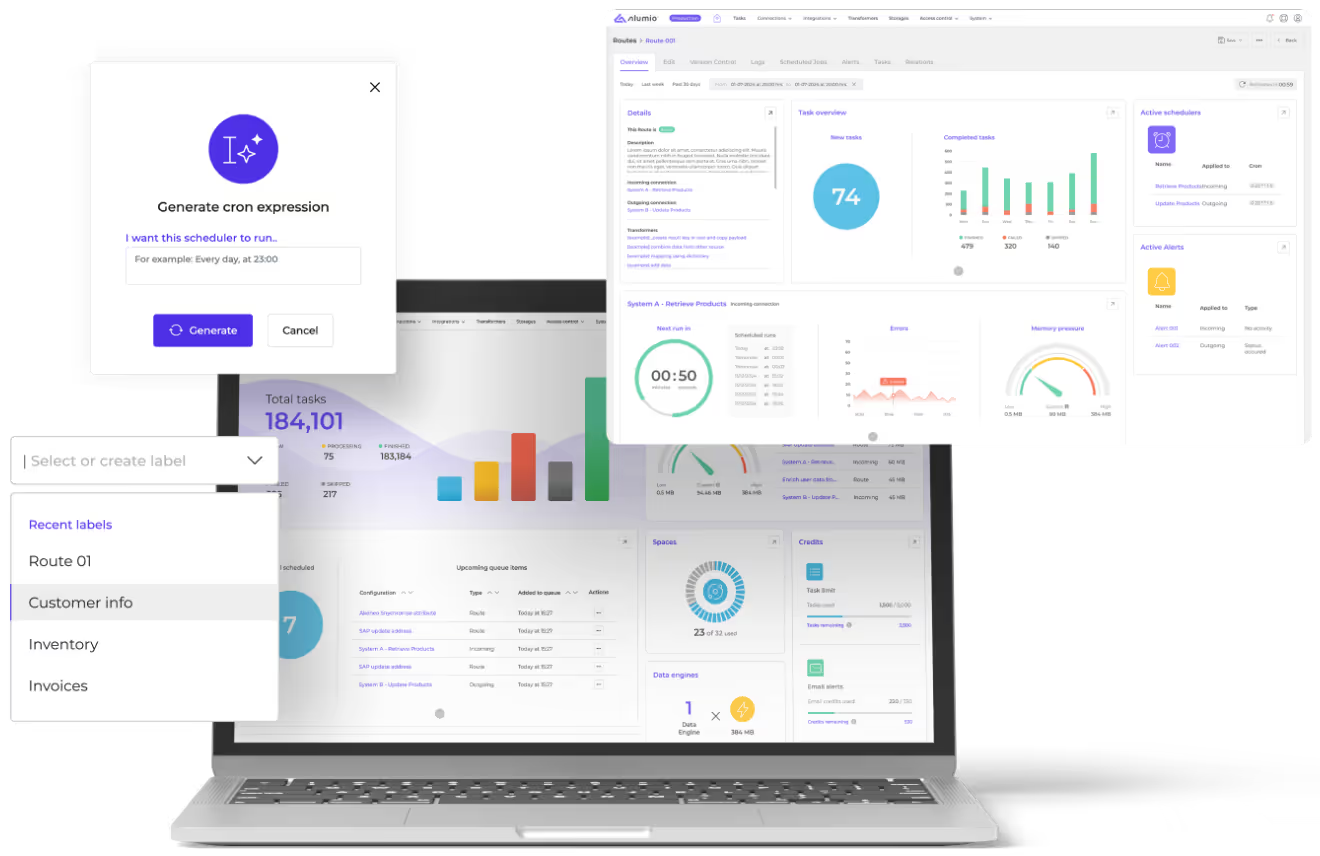
An integration platform-as-a-service (iPaaS) sits between the supply base, the internal systems, and whatever registry the DPP is published to. On the Alumio iPaaS that work takes four forms:
- Any supplier format accepted: a data Transformer converts structured messages, spreadsheets, and file drops into one internal attribute model, so supplier capability decides the intake route rather than whether they can participate.
- Checked before it lands: validation rules reject missing units, unrecognized material terms, or out-of-range values at the boundary, with a reason the supplier can act on.
- Provenance recorded per attribute: detailed Logs capture which supplier supplied which value and when, which is what turns a DPP claim into evidence.
- Published where it is required: an event-driven data Route carries the completed record to the PIM, the storefront, and the registry, so one attribute update reaches every destination.
Those flows are configured rather than hand-built per supplier, with the Code Transformer available where configuration cannot express a rule, and writing code is preferred. The hundredth supplier connects to a pattern rather than a project.
What digital product passport readiness actually delivers
Compliance programs get funded on the deadline and judged on whether the product could ship. That framing understates what the work produces, because the same data supports claims the marketing team has wanted for years and could never substantiate.
A business that can evidence material composition and origin per product can make sustainability claims that survive scrutiny. It can sell into retailers who now demand that data contractually. It can answer a customer question about repairability without opening a research project.
The deadline then stops being the point. A manufacturer who can say what a product contains, where it came from, and who confirmed it has built something the compliance date was only the first use for.





.svg)








.svg)
.svg)
.svg)
.svg)
.svg)
.svg)
