

A Alumio vivid purple arrow pointing to the right, a visual representation of how to access more page material when clicking on it.
Go back

Overcoming common cloud migration challenges

By
Carla Hetherington
Published on
April 23, 2023
Updated on
June 24, 2026
IN CONVERSATION WITH
Email icon
Email icon

As the digital landscape continues to evolve at a rapid pace, businesses are becoming more reliant on cloud computing to handle their data and applications. Cloud migration involves transferring not just individual applications but entire data centers from on-premises infrastructure to the cloud. Having a clear understanding of the significance of cloud migration and its importance for businesses can help you make informed decisions and ensure a seamless transition to the cloud. However, it is vital to consider the challenges businesses face in regard to cloud migration and how to overcome them. Keep on reading to find out more!

What are the common cloud migration challenges?

While cloud migration has many benefits, it can also be complex and risky. These are some of the major challenges facing many organizations as they transition resources to the cloud:

  • Poor budget management: The first and most obvious challenge business face when adopting cloud migration involves poor budget management and planning. This translates to the absence of well-defined KPIs that would help them assess their expected costs and savings after the migration. Additionally, cloud setups are characterized by constant changes and potential unexpected costs related to data transfer, network connectivity, and ongoing cloud usage.
  • Lack of a strategic approach: Having a well-defined plan of action is vital to ensure the success of cloud migration. This involves extensive planning and brainstorming across teams and departments according to business priorities and objectives to ensure all stakeholders are on board.
  • Lack of expertise: Cloud migration requires a certain level of expertise in cloud technologies, and many businesses may lack the necessary skills and experience to manage the process effectively.
  • Compatibility issues: It is important to select the right cloud services that your workload will tap into since systems designed for on-premises infrastructure may not be compatible with the cloud environment, leading to performance issues and downtime, which disrupt productivity, revenue, and customer satisfaction.
  • Data Security and Compliance: Moving sensitive data to the cloud can evoke security concerns for businesses, in particular for those adhering to strict compliance regulations.

How can businesses overcome these challenges?

In order to ensure a succesful cloud migration, businesses, regardless of their priorities and approaches to fulfilling said priorities, need to have a reliable platform that can guide them through the migration process. The Alumio iPaaS (integration Platform as a Service) can ensure seamless connectivity, empower growth, and foster profitability.

Alumio helps businesses rapidly migrate and unify all their systems, applications, and data in one secure cloud environment. It enables businesses to seamlessly develop, govern, and orchestrate system integrations with multiple cloud apps and SaaS solutions via one user-friendly interface, prioritizing data security and compliance above all.

Explore Alumio’s approach to data security and compliance →

Conclusion

In short, while cloud migration has many benefits, it also comes with its challenges. For this reason, Alumio guides businesses throughout the entire migration to ensure a smooth and cost-effective transition. From identifiying the specific applications or workload that requires relocation to the cloud, determinining the volume of data that requires migration, to testing systems and conducting security checks to erradicate vulnerabilities, Alumio is with you every step of the way.

If you are interested in migrating your business to the cloud but are afraid this transition may be too sudden, expensive, or complex, get in touch with us and we will put your mind at ease! Cloud migration is simple with Alumio.


Turn AI ambition into action

Portrait of Leonie Becher Merli, Business Development Manager at Alumio

Get a free assessment of your integration needs and next steps

Portrait of Leonie Becher Merli, Business Development Manager at Alumio

No items found.
Topics in this blog:
No items found.

FAQ

Integration Platform-ipaas-slider-right
What are the main challenges of cloud migration for businesses?

The main cloud migration challenges are: data migration complexity (moving data from on-premise systems to cloud without loss, corruption, or extended downtime), integration reconfiguration (existing integrations built for on-premise systems often do not work directly with cloud equivalents), security and compliance changes (cloud environments have different security postures and compliance requirements than on-premise), cost management surprises (cloud costs can exceed projections when consumption patterns are poorly understood initially), and organizational change management (teams accustomed to on-premise infrastructure management must adapt to cloud operations models).

Integration Platform-ipaas-slider-right
How does an iPaaS help businesses overcome cloud migration integration challenges?

An iPaaS helps overcome cloud migration integration challenges by providing connectors for both on-premise (SAP ECC, legacy databases, on-premise ERP) and cloud (Shopify, NetSuite, Salesforce, AWS services) systems on the same platform. During migration, Alumio can run integrations to both old and new systems in parallel, routing data to whichever is live at each stage of the cutover. After migration, the same platform manages the fully cloud-native integration landscape without requiring a platform change, and the config-first approach means integration logic migrates with the systems rather than requiring custom rebuilds.

Integration Platform-ipaas-slider-right
What integration-specific risks should businesses plan for during cloud migration?

Integration-specific cloud migration risks include: breaking changes when the cloud version of an ERP (SAP S/4HANA Cloud versus ECC) has a different API model requiring integration connector updates, performance differences when integrations that ran against local databases now route through cloud APIs with different latency profiles, authentication changes when cloud systems use OAuth 2.0 rather than the basic auth mechanisms of legacy on-premise APIs, and data format differences when cloud versions of systems use different schemas than their on-premise predecessors. Each risk requires identifying affected integrations before migration and testing in staging environments before production cutover.

Integration Platform-ipaas-slider-right
How should businesses sequence integration migration during a cloud transition?

Integration migration should be sequenced to minimize operational risk: non-critical integrations (analytics feeds, marketing data syncs) migrate first, building confidence in the cloud platform. Business-critical flows (order processing, inventory sync, ERP financial posting) migrate last, with extended parallel-run periods where both old and new integrations process the same data and results are compared. Each stage should have defined rollback criteria (conditions under which the team returns to the legacy integration rather than proceeding) so the decision to continue or roll back is predetermined rather than made under pressure during an incident.

Integration Platform-ipaas-slider-right
How does Alumio's cloud-native architecture benefit businesses completing a cloud migration?

Alumio's cloud-native architecture benefits cloud migrations because the platform itself does not require migration: it already runs in the cloud, scales automatically with workload, and connects to both on-premise and cloud systems from the same platform. As businesses migrate individual systems from on-premise to cloud, their Alumio Routes update to use the cloud-version connector rather than the on-premise one: a configuration change rather than a new integration build. This platform continuity through migration is one of the concrete advantages of an iPaaS over on-premise middleware for organizations undergoing cloud transformation.

Integration Platform-ipaas-slider-right
What best practices reduce cloud migration risk for integration-heavy organizations?

Best practices for integration-heavy cloud migrations are: audit all existing integrations before migration begins (documenting what connects to what and identifying which integrations will be affected by each system migration), test cloud-version connectors in staging environments before production migration, run parallel integrations during the cutover period rather than hard-switching, define clear rollback criteria for each migration phase, and prioritize migrating the integration platform itself to cloud (if it is currently on-premise) before migrating the systems it connects, ensuring the governance infrastructure is cloud-native before the systems it governs make the transition.

Get a free assessment of your integration needs

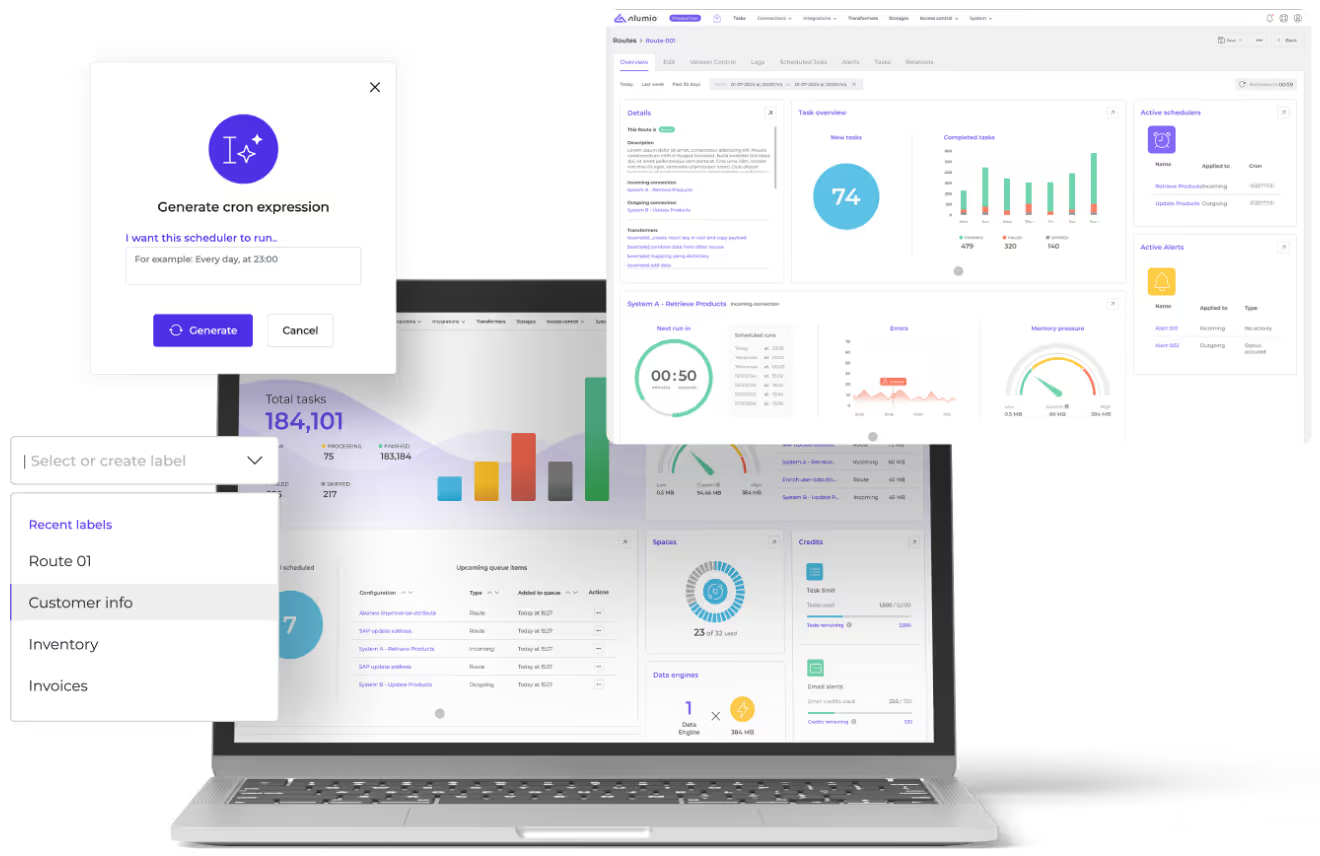
Laptop screen displaying the Alumio iPaaS dashboard, alongside pop-up windows for generating cron expressions, selecting labels and route overview.