Why integration testing decides what breaks after go-live
An integration is a connection that carries records between two systems that were never designed to talk to each other. An order placed on an Adobe Commerce storefront has to arrive in SAP as something finance can invoice. A stock figure in SAP has to reach the storefront before a customer buys something that is no longer there.
Integration testing checks that this exchange holds up before it starts carrying real orders. It looks like ordinary software testing with more moving parts, but most of those parts belong to somebody else.
When a team skips it, the IT department is not the first to notice. The warehouse notices, the service desk notices, and finance notices at month end:
- An order the flow has never seen: a credit note or a partial delivery reaches SAP in a shape the mapping does not expect. The flow stops, and that customer goes uninvoiced until someone spots it
- A stock feed that fails quietly: the storefront shows yesterday's availability for twenty minutes, and pickers go looking for items that already sold
- A marketplace that changed a field: Amazon starts requiring an attribute the product data never sent, rejects the listings, and the products drop off the channel
- A peak nobody sized for: a flow tested at ten orders an hour meets four thousand on the first big sales day and times out, with the orders queued where nobody is watching
None of these are exotic. Every one of them could have been tried in advance. Most teams do not try them, because half the systems involved are not theirs to experiment with.
Why integrations cannot be tested like ordinary software
The supplier's sandbox may not exist. If it does, it may hold data three years old that looks nothing like what is running now. Sandbox testing against an environment that differs from the live one proves less than it appears to.
Integrations also change things when they run. The first test creates the order, uses a number in a sequence, or moves the stock, so the same test cannot simply be run again. Repeating it means resetting the systems, which is usually impossible, or generating fresh data every time. The conditions most worth testing are also the ones nobody will grant. A supplier will not take their system offline so the team can try its error handling. A carrier will not throttle an API on request. Those paths get simulated, or they get skipped.
One condition can never be tested at all. A supplier can change a field without telling anyone, and that change has not happened yet when the test plan is written. To catch it, the team needs monitoring and logging. Testing proves a flow before go-live. Monitoring tells the team what live traffic is doing to it afterwards. Everything in between depends on one thing: whether the test environment was close enough to production to be worth trusting.
Why the test environment is where integration testing stalls
Most of the effort in system integration testing goes into the environment, not the tests. Where each connection is custom code, a test environment means running a second copy of that code, pointed at whatever supplier sandboxes exist, and kept in step with production while both sides change.
That upkeep is why test environments drift. The version being tested stops matching the version running, and the tests stop proving anything.
Configuring the flows on one shared integration layer removes that problem. The same flow definition runs in both environments. It points at test endpoints in one and live endpoints in the other, and only the configuration differs. The supplier sandboxes are no better for it, but the team stops deploying something other than what it tested.
Teams handle this three ways today. They build a full parallel environment, which is thorough and expensive to keep current. They test in production against records they have chosen carefully, which works until the chosen record turns out to matter. Or they mock every external system, which is quick but only tests what the team assumes the supplier will send. An integration platform-as-a-service (iPaaS) is the fourth option, and the only one that removes the environment problem instead of working around it.
How an integration platform supports integration testing
An iPaaS is a single platform that every system connects to once, instead of connecting directly to each other. It holds the flows that move and reshape data between them. Because each flow sits in one place, a team can point it at test endpoints or at live endpoints without rebuilding anything.
That makes four things possible on the Alumio integration platform:
- One flow, two environments: the same configured flow runs against test endpoints in a test environment and against live ones in production, so the team deploys exactly what it checked
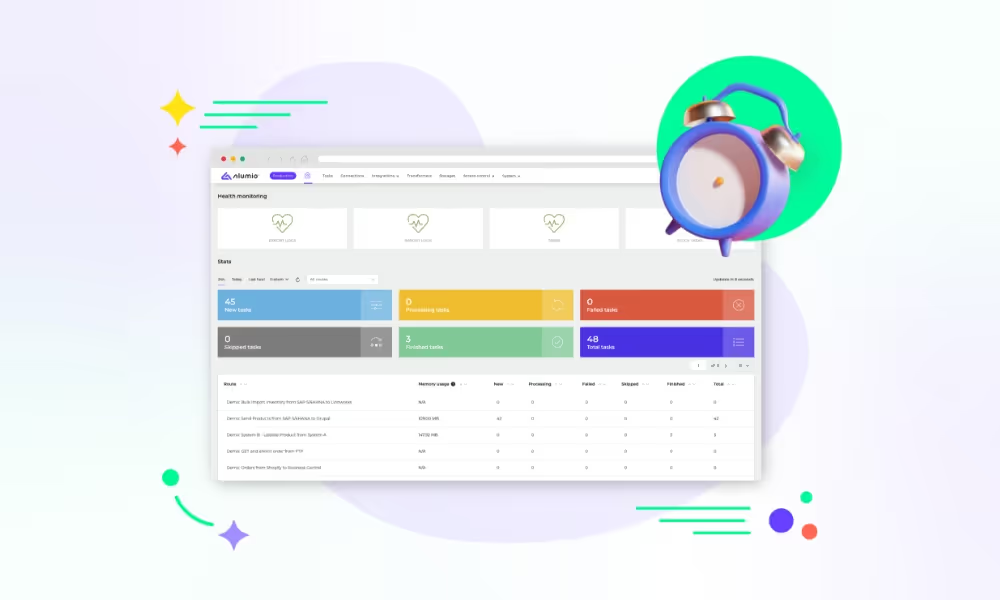
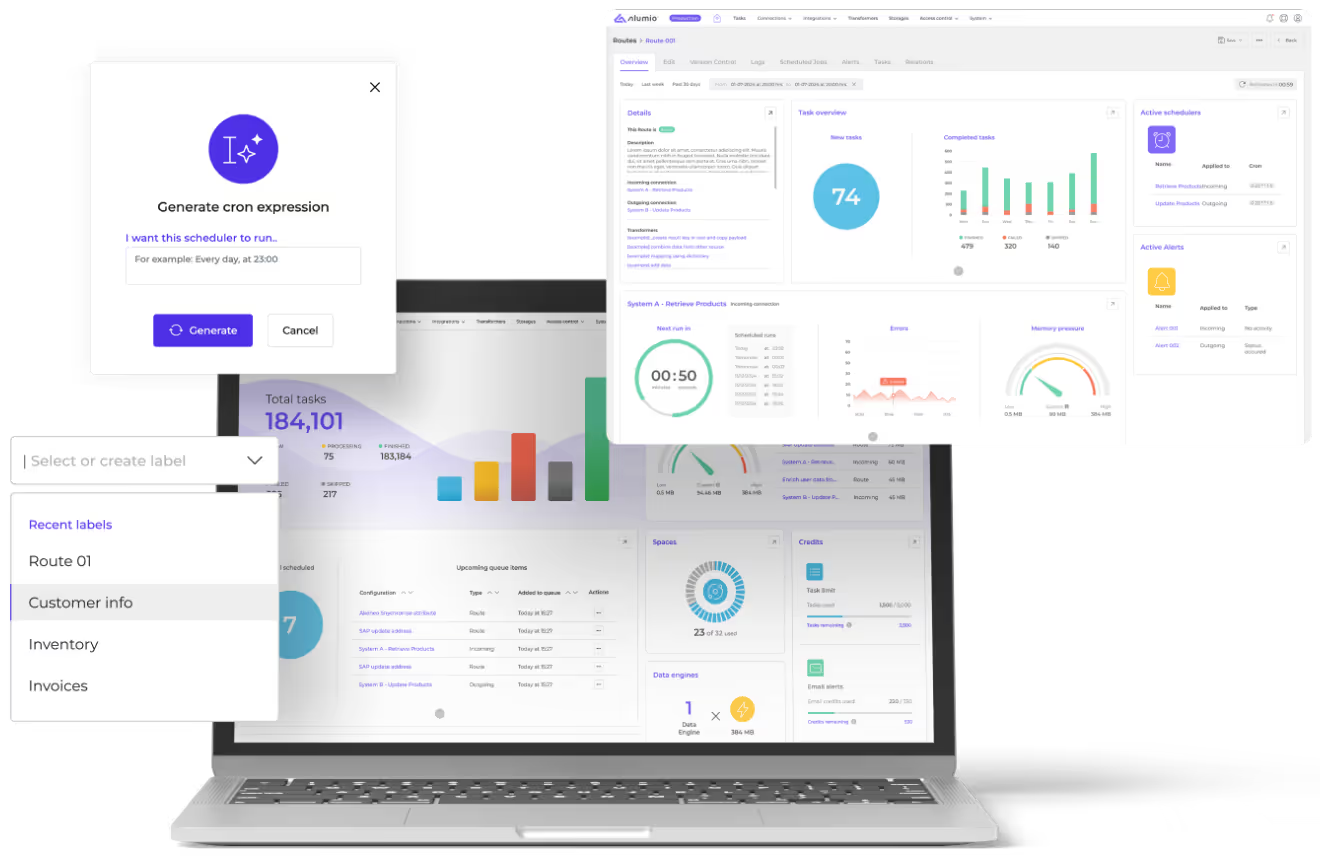
- Message-level detail: the Alumio iPaaS records what each message contained and where it stopped, so the team fixes the actual fault instead of guessing at it
- Replay: Storage within the Alumio iPaaS keeps those messages, so a corrected flow can be re-run against the order that broke it
- Controlled promotion: version control and staged deployment move a change into production deliberately, not by editing what is already running
The Alumio iPaaS also provides an Inspection Tool. It shows the input and output of each transformation step side by side, so a team can test one part of a flow without running the whole integration. These capabilities work the same way for every flow, so the second integration reuses the test approach of the first.
What honest integration testing gives a business
Full coverage is not achievable, and a test plan written as though it were is either dishonest or never finished. The useful goal is a clear list: which paths the team covered properly, which it only simulated, and which it could not reach at all. A team that knows its untested paths can watch them specifically and act fast, which beats believing everything was tested.
An integration platform makes that list possible to keep. It puts the flow being tested and the flow being deployed in the same place, keeps a record of what every message did, and lets a fix be checked against the order that actually broke.
The business gets go-lives with fewer surprises, failures explained from a record rather than reconstructed afterwards, and the confidence to change a connected system without treating it as a project risk.





.svg)








.svg)
.svg)
.svg)
.svg)
.svg)
.svg)
