


Now visually orchestrate integrations with Alumio's route builder

See it in action
A Alumio vivid purple arrow pointing to the right, a visual representation of how to access more page material when clicking on it.
Go back

Scheduling data integration smartly with the iPaaS

By
Saad Merchant
Published on
November 20, 2024
Updated on
June 24, 2026
IN CONVERSATION WITH
Email icon
Email icon

As businesses embrace digital interconnectedness and adopt multiple SaaS solutions along with complex back-end systems, integrating data across all these touchpoints has become increasingly complex. Data integration isn’t just about simple point-to-point connections between apps, rather it requires a combination of scheduled data exchange and real-time synchronization. As such, modern enterprises are turning to solutions like the Alumio iPaaS (integration Platform as a Service). This next-gen, API-driven integration solution doesn’t just simplify data integration between multiple endpoints. Rather, it helps businesses and system integrators schedule and orchestrate data exchange across the digital ecosystem in a scalable way.

Scheduling data integration intelligently with the Alumio iPaaS

Modern enterprises need to build dynamic data integration workflows to achieve a wide variety of outcomes. For instance, an e-commerce business may need to constantly sync all its webshop orders and inventory with its ERP system in real-time to process orders instantly. Other use cases may require a more scheduled form of data exchange, such as the nightly consolidation of sales figures into an accounting system for accurate financial reporting. Attempting to orchestrate these various data integration workflows manually or with custom-code can be a nightmare. That’s where the Alumio iPaaS comes in!

How to schedule smart data integration with the iPaaS

What is the Alumio iPaaS?

The Alumio iPaaS (integration Platform as a Service) is a cloud-native, low-code middleware solution that helps connect two or multiple systems, cloud apps, and data sources. As an API-driven solution, it allows you to create, monitor, and modify data exchange between integrated endpoints via one user-friendly, web interface. It helps build workflows to schedule and automate data exchange between apps, and provides advanced data Transformers that can be used to specifically customize how you import and export data.

Most importantly, it enables real-time data synchronization between integrated systems (also known as synchronous integration), and it also helps process larger data volumes in scheduled batches (also known as asynchronous integration). But why exactly do modern enterprises stand to greatly benefit from having the flexibility to enable data exchange in real-time or in scheduled batches? Let’s explore further!

How does synchronous integration vs. asynchronous integration work?

While synchronous integration means processing data exchange in real-time, ensuring immediate updates between apps, asynchronous integrations enable data integration in scheduled or delayed intervals. Both methods serve distinct purposes, and the Alumio iPaaS helps strategically combine both methods to optimize your workflows.

Synchronous integration: is ideal for real-time data exchanges where immediate feedback is required. For example, when a payment is processed through an e-commerce platform like Shopify, the transaction details can be instantly synced with an ERP system like SAP to update financial records in real time. This approach ensures that critical transactions happen without delay.

Asynchronous integration: is suited for processes that don’t require instant updates. Data is queued and integrated at scheduled intervals, which is better for handling larger volumes of data. For instance, an end-of-day batch transfer of sales data from your POS system to your accounting software enables efficient data integration without overloading systems during busy hours.

In practice, most businesses need a mix of both methods, wherein synchronous integrations handle time-sensitive operations, while asynchronous workflows manage less critical or high-volume tasks.


Turn AI ambition into action

Portrait of Leonie Becher Merli, Business Development Manager at Alumio

Get a free assessment of your integration needs and next steps

Portrait of Leonie Becher Merli, Business Development Manager at Alumio

Want to combine real-time sync with smart scheduling with your integrations?

Want to combine real-time sync with smart scheduling with your integrations?

Flexibly scheduling data integration with the Alumio iPaaS

Using the Alumio iPaaS to integrate data between applications typically involves a two-step process: first, the data is collected from one application, and then it is sent via Alumio to another system. However, what if the system you’re pulling data from and the one you’re sending the data to don’t have the same data processing capabilities? This leads to bottlenecks. Here’s how the Alumio iPaaS helps solve the problem:

  • Queuing data integration seamlessly
    Alumio uses a queuing mechanism to temporarily hold the incoming data, allowing the transfer to occur at a pace the target system can handle. For example, if System A can pull 1,000 records per minute, but System B can only process 100 records per minute, the Alumio queue prevents overloading System B by controlling how much data is sent to it at one time. Alumio provides a Scheduler in its Route-builder that enables you to customize this flow, allowing data to be sent in manageable batches at the right intervals.

  • Filtering and caching data integration intelligently
    Alumio also offers flexibility for testing and filtering data. When building integrations in Alumio, you can create exceptions to skip certain types of data. For example, if a dataset includes multiple payment methods and one option, for example “Cash,” doesn’t need to be processed, you can configure Alumio to filter this out automatically during data integration.

    The Alumio iPaaS can also function as a caching system, ensuring that only new or updated data is sent between integrated endpoints. For example, rather than resending all 1,000 product records from one application to another every minute, Alumio can identify and send only the records with updated details— such as changes in price, stock, or inventory levels. This approach enables efficient data integration, minimizes redundant data transfers, conserves resources, and ensures faster, more efficient processing.

Smarter scheduling enables future-proof data integration

Efficient data integration is no longer just about connecting systems — it’s about orchestrating data flows in a way that aligns with your specific business needs and system capabilities. With the Alumio iPaaS, modern businesses can achieve seamless data integration tailored to their operational needs.

Whether managing real-time updates or batching large data volumes, Alumio ensures optimal performance while preventing system overloads. With added features like caching and filtering, you can further streamline processes by focusing on what truly matters: delivering accurate, timely data across your systems. Smarter scheduling leads to seamless integration, helping your business maintain great digital synergy as it grows.

No items found.
Topics in this blog:

FAQ

Integration Platform-ipaas-slider-right
What is smart data integration scheduling and why does it matter?

Smart data integration scheduling means configuring the trigger mechanism (event-driven versus scheduled, frequency, timing) for each integration flow based on its specific business requirements rather than applying one-size-fits-all scheduling to all flows. It matters because different data flows have fundamentally different timeliness requirements: order processing needs near-real-time event-driven integration, monthly financial reporting can use scheduled batch, and product catalog updates may suit a daily synchronization window. Applying real-time triggers to flows that do not need them wastes processing capacity; applying batch scheduling to flows that need real-time delays causes operational problems.

Integration Platform-ipaas-slider-right
How does Alumio support both scheduled and real-time data integration from the same platform?

Alumio supports both patterns through its Route trigger architecture: event-driven Routes fire immediately when a webhook from a connected system is received (an order placed, a product updated, a stock level changed), while scheduled Routes run at configured intervals (every 15 minutes, hourly, nightly). Both patterns use the same connector, Transformer, and monitoring infrastructure: the only difference is the trigger mechanism. This means the integration team can configure the optimal trigger for each flow without switching platforms or tools, and both real-time and batch flows are monitored centrally with consistent alerting and audit logging.

Integration Platform-ipaas-slider-right
What criteria should determine whether a data flow uses real-time or scheduled integration?

The determining criteria are: how quickly does a delay in this data flow cause operational harm or degraded customer experience (immediate harm argues for real-time, delayed harm accepts scheduled), what is the source system's ability to emit events in real time (not all systems support webhooks reliably), what is the destination system's ability to receive high-frequency updates (some systems perform better with batched updates than individual events), and what is the processing overhead of event-driven versus batch (high-volume sources may be more efficiently processed in batches during off-peak periods). Most integration landscapes benefit from a mixed approach where critical operational flows are real-time and analytical/reporting flows are scheduled.

Integration Platform-ipaas-slider-right
How does scheduling integration flows during off-peak hours benefit system performance?

Scheduling resource-intensive batch flows during off-peak hours prevents processing load from affecting user-facing system performance during peak trading periods. A full product catalog synchronization from PIM to e-commerce that processes thousands of product records should run at 3am rather than during the trading day when product page performance matters to customers. An end-of-day financial reconciliation batch benefits from running after trading closes when ERP transaction volume is low. Alumio's scheduling features allow these timing optimizations to be configured per Route, ensuring that integration processing load complements rather than competes with business operations.

Integration Platform-ipaas-slider-right
How does intelligent scheduling reduce integration errors in practice?

Intelligent scheduling reduces errors by aligning integration timing with system availability and operational states: scheduling imports to an ERP after its nightly batch processing completes (rather than during it, when transaction locks cause failures), scheduling API-intensive data flows within the source system's rate limit windows (preventing the rate limit errors that cause retry cascades), and using maintenance window scheduling to pause Routes during known system downtime (preventing the error floods that occur when Alumio tries to send data to an unavailable system). Each of these timing decisions prevents a category of predictable errors that scheduling-unaware integrations encounter regularly.

Integration Platform-ipaas-slider-right
What best practices should integration teams follow when configuring data flow schedules?

Best practices for scheduling data flows are: default to event-driven for any flow where a delay causes measurable operational harm, use the connected systems' maintenance window schedules to configure Route pauses (preventing false alerts during planned downtime), test scheduled batch flows under expected production data volumes before go-live (batch flows that take two minutes on test data may take two hours on full production catalogs), monitor batch flow completion times over time (gradual increases indicate growing data volumes requiring schedule or infrastructure adjustment), and review all scheduled flows quarterly to ensure the frequency still matches business requirements as both systems and data volumes evolve.

Get a free assessment of your integration needs

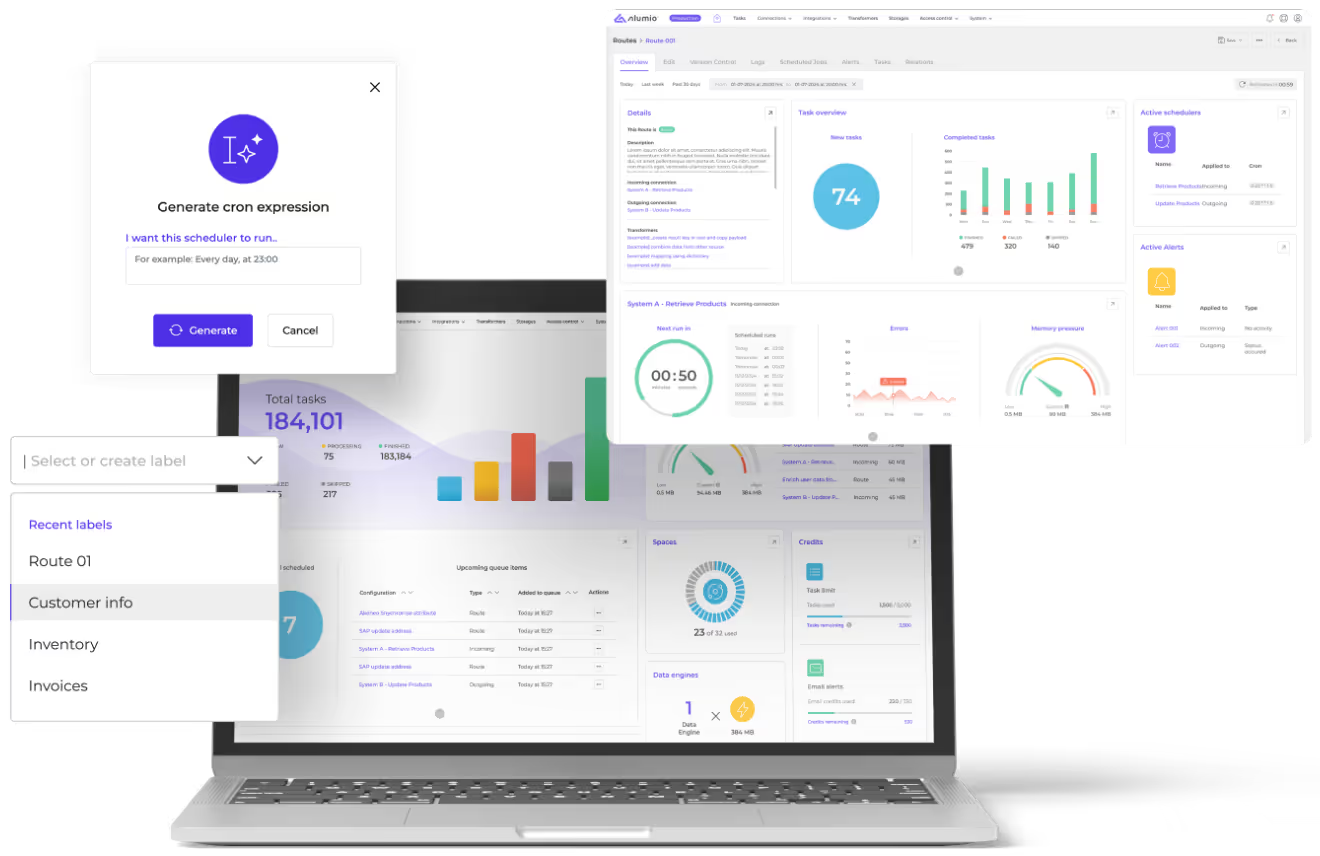
Laptop screen displaying the Alumio iPaaS dashboard, alongside pop-up windows for generating cron expressions, selecting labels and route overview.