Discover how and why we're exploring sustainability at Alumio
Sustainability is the future and it is imperative for all kinds of modern businesses to take steps to inculcate eco-friendly practices and mindsets within the company culture.
Apart from reducing the environmental impact of products/services and aligning with the increasing demand of consumers and investors for eco-friendly brands, being sustainable prepares organizations for future regulatory changes. For instance, the EU is expected to soon pass legislation that will require businesses to provide the environmental impact details on every product via Digital Product Passports.
However, before we delve into how we’re exploring a more sustainable future at Alumio, let’s first understand sustainability and the global shift towards it.
What is sustainability?
Sustainability is about minimizing human impact on the planet by reducing waste, conserving resources, and mitigating pollution. This involves adopting eco-friendly technologies, minimizing daily waste, and promoting ethical business practices.
It encompasses three main pillars: environmental protection, economic growth, and social equity. By adopting sustainable practices, individuals and organizations can help protect ecosystems, combat climate change, and ensure a healthier future for generations to come.
Why is sustainability relevant in modern workplaces?
The motivations behind sustainability and its implementation are subjective, but for most people, it all boils down to the type of future we are leaving for the generations to come. Taking care of our planet is a generational responsibility that is only increasing in importance and one that is pertinent in the workplace.
Sustainability now holds an important place in corporate agendas: according to a recent IBV consumer research, 53% of surveyed organizations view environmental sustainability as one of their top priorities. According to a McKinsey study, financially successful companies that incorporated environmental, social, and corporate governance (ESG) priorities into their growth strategies were twice as likely as their peers to generate a 10% increase in revenue. Whereas, as per to another key statistic, around 57% of businesses have initiated using energy-efficient or climate-friendly machinery, technology, and equipment. Additionally, a Nielsen study shows that 66% of consumers would spend more for a product if it came from a sustainable brand.
Most importantly, incorporating sustainable practices into daily operations and product development enhances brand reputation and mitigates risks associated with climate change. In order to develop a sustainable mindset within the work culture, businesses can start with small and simple steps to demonstrate a commitment to environmental responsibility.
What are sustainable workplace practices like?
At Alumio, we are intrinsically motivated to be sustainable, and follow a simple set of practices that are easy and practical to adopt, in order to reduce carbon footprints:
- The hybrid workplace model that we implement offers flexibility and autonomy to our employees increasing their well-being and productivity, while reducing commuting emissions and decreased energy consumption in heating, cooling, and lighting.
- Working from a shared office space ensures that we share resources with our neighboring company, leading to reduced consumption and wastage of office supplies, equipment, and energy consumption.
- We encourage green commuting to work and our headquarters is in the Netherlands, which is the country that cycles the most in the world. Personal vehicles are one of the world's biggest sources of greenhouse gases and leading contributors to air pollution, with emissions rising every year. Walking and cycling to work are great for both environmental and personal health.
- Minimizing use of paper in our day-to-day operations, we use digital apps for our transactions, from e-signature software to cloud storage services and digital pay stubs. This is an alternative that also increases security by keeping everything in one place and stored securely online.
- Reducing plastic use and disposable products is something that we encourage by providing employees with alternatives like reusable water bottles, cups, and cutlery. According to Plastic Oceans, humans produce over 380 million tons of plastic every year, of which 50% is for single-use purposes and 10 million tons of which are dumped into our oceans.
- We provide vegan and vegetarian meal options for our employees. What we eat has a huge environmental impact. Scientists estimate that meat accounts for nearly 60% of all greenhouse gases from food production. The production of meat has a detrimental impact on our planet and demands copious amounts of natural resources, like fresh water and land, while generating massive amounts of waste and pollution. Plant-based options encourages employees to reduce meat consumption.
- Energy-efficient practices. Using energy-efficient alternatives is a great way to promote sustainability in the workplace. We implement such practices at the office through the use of LED lamps since they are a far more cost-efficient ecologically conscious option that can last up to 25 times longer, using a small fraction of the energy that traditional incandescent light bulbs do. We also implement dishwashers within our shared working space, which according to a study by scientists at the University of Bonn in Germany uses only half the energy, one-sixth of the water, and less soap than hand-washing an identical set of dirty dishes.
How our integration platform enables sustainability
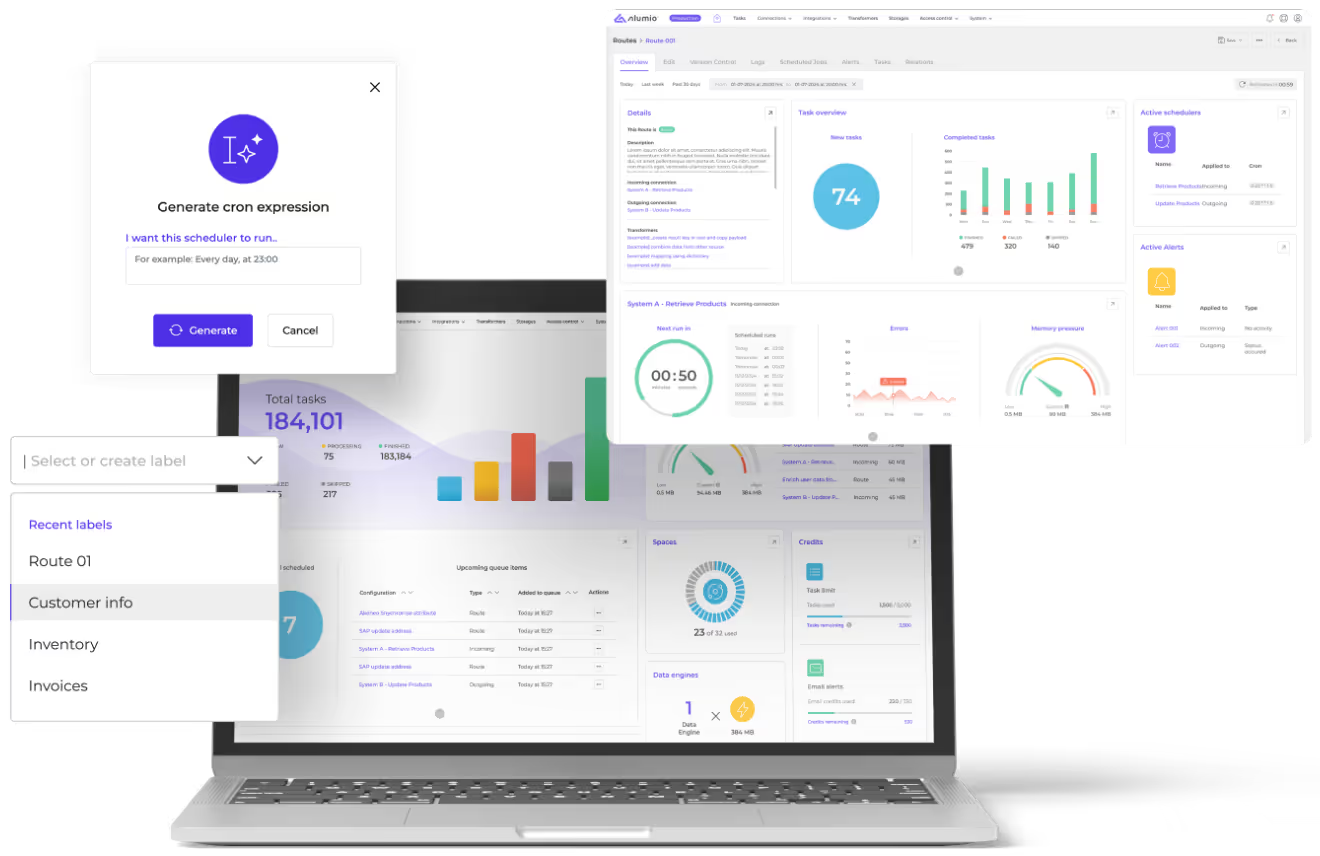
Alumio provides a cloud-native, low-code integration platform (iPaaS) that enables businesses to integrate multiple systems, applications, and data sources. Apart from providing a user-friendly interface that can be used to create, monitor, and manage integrations and data flows, it also provides workflow automation and data transformation features that significantly eliminates manual work, improves data efficiency, and reduces development and troubleshooting time.
Businesses can empower their sustainability strategies with the Alumio integration platform through the following platform benefits:
- Real-time data insights: the Alumio integration platform enables real-time data aggregation from various sources, providing actionable insights to optimize resource consumption. By identifying inefficiencies and bottlenecks, organizations can reduce waste and energy consumption.
- Supply chain optimization: Manufacturers can use the iPaaS to streamline supply chain operations through integrations, minimizing transportation emissions and reducing material waste through improved demand forecasting and inventory management.
- Inventory management: Improved data integration leads to better inventory management enabling optimal inventory levels, avoiding overstocking and understocking, and reducing overall waste.
- Cloud migration: By streamlining the integration of legacy systems with cloud-based applications, the Alumio integration platform helps businesses reduce their operational footprint of businesses. By empowering seamless cloud migration, it allows businesses to transition from energy-intensive, on-premise data centers to more efficient, scalable cloud environments. This migration reduces physical infrastructure needs, cutting down on energy consumption and carbon emissions.
As mentioned earlier, the Alumio integration platform is also helping businesses and partners get the first mover advantage on complying with Digital Product Passports through integrations →
Why sustainability is a future-proof solution
Encouraging sustainability in the workplace requires the engagement of all employees; it is a team effort and not an individual battle. For this reason, at Alumio, we encourage conversations around the topic of sustainability that can lead to implementing newer and better strategies. A company cannot become sustainable overnight, but we must do our bit to contribute. While we look to find newer ways to lower our global footprint as a workforce, we look forward to deliver our integration platform’s advantages to more sustainability-driven customers and to be a integral enabler of their eco-conscious goals.




.svg)






.svg)
.svg)
.svg)
.svg)
.svg)
.svg)
