




.svg)



The crucial role of the supply chain in e-commerce
Before we dive into the advantages of cross-channel consistency, let's start with the basics. The supply chain is the intricate network of processes that ensure the efficient production, transportation, and delivery of products to customers.
In the context of e-commerce, it encompasses everything from sourcing raw materials to the final delivery of the product at the customer's doorstep. The complexity of modern supply chains demands careful management and coordination to keep everything running smoothly.
In order to have a well-functioning supply chain, businesses must encourage collaboration across the different touchpoints of the journey, aim for increased productivity and speed, have analytic tools that measure the success rate of each step in the supply chain, and adopt new technologies to improve their processes wherever necessary.
How does the supply chain relate to omnichannel success?
The supply chain is the backbone of any e-commerce business, and plays a pivotal role in ensuring that products are available and ready to be shipped across all sales channels.
When customers engage with a brand through multiple touchpoints such as physical stores, online marketplaces, social media platforms, or mobile apps, they expect consistency and a seamless shopping experience, otherwise known as an omnichannel experience.
A robust supply chain allows businesses to meet this expectation by maintaining sufficient stock levels and efficiently managing inventory. This ensures that customers can access the products they desire irrespective of the channel they choose.
How can you ensure cross-channel supply chain?
To achieve a cross-channel supply chain, coordination and integration are paramount, as well as some essential strategies, such as:
Centralized inventory management: Adopt a centralized inventory management system that synchronizes stock levels across all sales channels. This real-time visibility ensures better inventory control, reduces the risk of overselling or stockouts, and enhances order accuracy.
Order routing and fulfillment: Implement intelligent order routing algorithms that direct orders to the nearest fulfillment center or store with available inventory. This approach reduces shipping times and costs, enhancing the customer experience.
Data analytics and forecasting: Leverage data analytics to forecast demand accurately. By analyzing historical sales data and customer behavior, businesses can anticipate demand spikes, plan inventory levels accordingly, and minimize excess inventory.
Collaboration with suppliers and partners: Establish strong relationships with suppliers and logistics partners. Timely communication and collaboration are essential for maintaining a responsive and agile supply chain.
What are the business benefits of an optimized supply chain?
An optimized supply chain offers numerous advantages that directly impact the bottom line of an e-commerce business:
Increased efficiency and cost savings: A streamlined supply chain reduces operational inefficiencies and minimizes costs associated with inventory management, warehousing, and transportation.
Enhanced customer satisfaction: With products consistently available across channels, customers experience a seamless shopping journey, leading to improved satisfaction, brand loyalty, and positive word-of-mouth.
Faster order fulfillment: An optimized supply chain ensures that orders are processed and shipped quickly, meeting customer expectations for speedy delivery.
Flexibility and adaptability: Businesses with optimized supply chains can respond swiftly to market changes, introducing new products or adapting to trends promptly.
What are the Customer Experience (CX) benefits of an optimised supply chain?
A well-functioning supply chain significantly impacts customer experience, offering the following improvements:
Consistency and reliability: Customers receive the same level of service and product availability, regardless of the sales channel they choose. This consistency builds trust and reliability.
Faster delivery times: Efficient supply chains enable faster order processing and shipping, reducing delivery times and meeting customers' desire for immediate gratification.
Reduced errors and returns: With centralized inventory and streamlined order processing, the likelihood of errors in order fulfillment diminishes, leading to fewer returns and exchanges.
Personalization possibilities: When supply chain data is integrated with customer data, businesses can offer personalized recommendations and promotions, enhancing the overall shopping experience.
Introducing Alumio: The key to cross-channel consistency
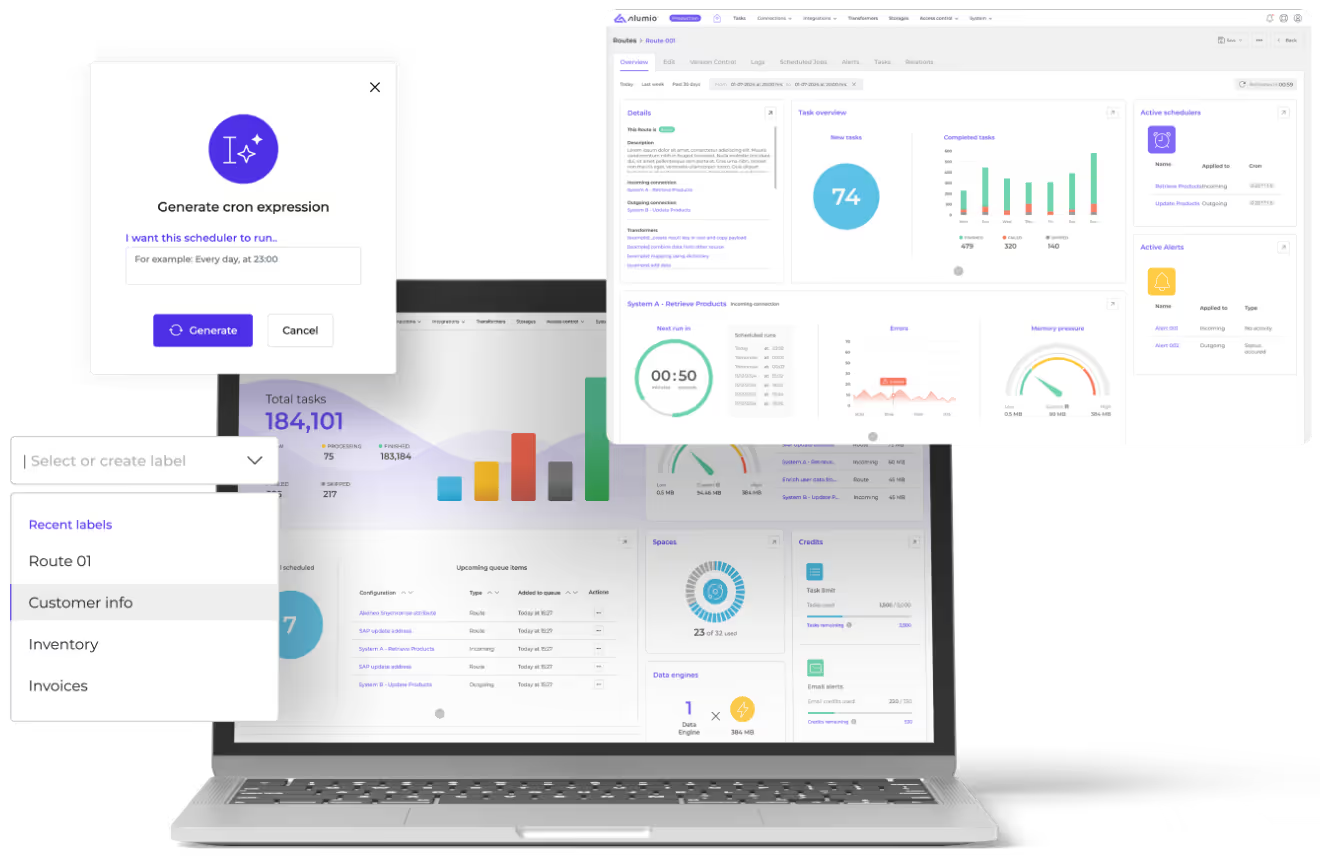
Now that we've seen the immense benefits of cross-channel consistency in the supply chain, let's talk about how Alumio fits perfectly into this equation. Alumio is a leading Integration Platform as a Service (iPaaS) that specializes in connecting disparate systems, applications, and data sources, creating a unified and harmonious ecosystem.
Alumio empowers businesses to integrate their various systems and data sources seamlessly. By integrating your ERP, e-commerce platform, inventory management system, and more, Alumio enables real-time data synchronization and automates critical processes, creating an entire robust and interconnected IT ecosystem. With Alumio, you can bid farewell to manual data entry errors and delays, and embrace a reliable and agile supply chain.
1. Effortless integration: Alumio offers pre-built connectors and APIs that accelerate the integration journey. Say goodbye to complex coding and lengthy development cycles and build an entire commerce ecosystem in no time.
2. Real-time data flow: With Alumio, data flows in real-time across your entire network, ensuring everyone is updated with the latest information, from inventory levels to order status. For example, by enabling data to flow in real-time, you can rest assured that the information gathered from your ERP system will be consistent with that found in your WMS, avoiding issues such as incorrect availability or inconsistent inventory levels.
3. Flexibility and scalability: Whether you're a small e-commerce startup or a global enterprise, Alumio grows with your business and accommodates your evolving needs, promoting scalability through fast and flexible integrations.
4. Data security: Alumio prioritizes data security and compliance, protecting your sensitive information from breaches and unauthorized access.
Conclusion
In conclusion, a seamless supply chain is the backbone of a successful e-commerce business, and the key to providing an omnichannel experience for your customers. Cross-channel consistency brings together stakeholders, elevates customer satisfaction, and addresses logistic and supply chain challenges. Businesses powered by Alumio can unlock the full potential of their supply chain, delivering what customers want and reaping the benefits of operational efficiency and rapid growth. Embrace cross-channel consistency and watch your e-commerce business thrive in today's competitive landscape through future-proof integrations!




.svg)
.svg)
.svg)
.svg)
.svg)
.svg)
