


Go back
8 Reasons for c-level to have an iPaaS in their IT ecosystem




IN CONVERSATION WITH

.svg)








C-level executives should care about iPaaS because it directly affects the speed and cost at which their organizations can adopt new technology, respond to market changes, and scale operations. Without a governed integration layer, every new system or channel requires custom development work that slows digital initiatives and creates hidden technical debt. An iPaaS turns integration from a bottleneck into a competitive asset: businesses that can connect new tools and automate data flows faster can execute strategy faster.
Without a governed integration strategy, organizations accumulate fragile point-to-point connections that each require specialist knowledge to maintain. When a system updates, multiple integrations can break simultaneously. When a key developer leaves, the logic of existing integrations is undocumented and hard to transfer. These risks translate into operational outages, data quality failures, and IT teams spending the majority of their time maintaining legacy connections rather than enabling new business capabilities.
An iPaaS reduces TCO by replacing multiple custom-coded integrations with governed, reusable Routes built on shared connector templates. Maintenance costs drop because configuration changes replace development cycles. Monitoring is centralized, so fewer resources are needed to track the health of integrations across the landscape. For organizations managing more than a handful of system connections, the accumulated savings in developer time, incident response, and system downtime typically justify the platform investment within the first year.
AI and business intelligence tools produce reliable outputs only when they receive clean, current, and complete data from the systems they draw on. An iPaaS ensures that data flows between ERP, CRM, e-commerce, and other systems are synchronized, governed, and traceable before they reach analytics or AI layers. Organizations that invest in integration infrastructure first find that AI and BI tools deliver measurably better results because the data feeding them is accurate and consistent.
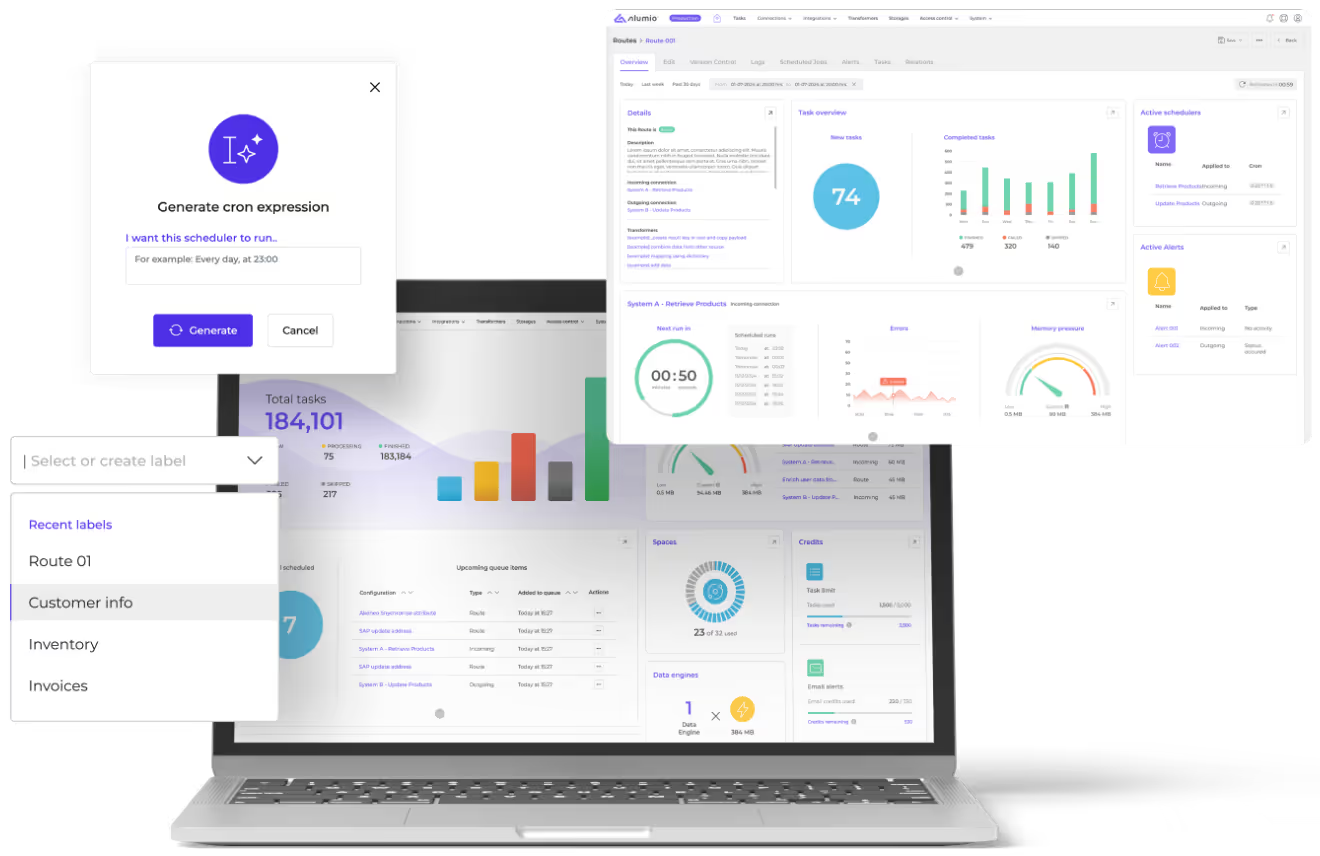
Alumio provides a centralized monitoring dashboard showing the status of every integration Route across the connected system landscape. Failed data flows are surfaced in real time with full audit logs showing what data moved, when, and in what state. This gives IT leadership and operations managers the visibility to detect and resolve integration failures before they become customer-facing problems, and gives C-level executives confidence that the integration backbone is reliable and governed.
The most important evaluation criteria are: connector depth for the specific systems the organization runs, security and compliance certifications (ISO 27001 is a baseline for enterprise use), the degree to which the platform reduces developer dependency for routine integration changes, pricing transparency at scale (especially if data volumes are expected to grow significantly), and the vendor's track record with organizations of similar size and complexity. References from comparable integration landscapes are more reliable than feature lists alone.




.svg)
.svg)
.svg)
.svg)
.svg)
.svg)