




.svg)



AI product data management is moving faster than the systems around it
Most discussion around AI in product data focuses on the tools themselves: which model writes the best descriptions, which vision system tags attributes most accurately, which translation engine handles localization. That conversation matters, but it misses where the value of AI product data management actually gets decided. The integration layer underneath these tools decides whether their output reaches the systems that need it, in the format those systems expect, with the consistency the business depends on.
When the integration layer is wrong, faster AI produces faster inconsistency across channels. When it is right, AI extends across the whole product data ecosystem rather than staying trapped inside one corner of it. The businesses pulling ahead in product data work this year are the ones treating the integration layer as the architecture that AI runs on, not as the plumbing AI runs around.
Where is AI changing product data work?
AI is changing product data work across four main workstreams: content generation, image-based attribute tagging, classification, and translation. Each replaces a slow, manual process that used to gate how fast new products and product updates reached customers.
Product data work used to be a discipline of patient, repetitive enrichment. Copywriters drafted descriptions, merchandisers mapped categories, translators localized content, and operations teams ran channel-specific exports. Most of that work now has an AI counterpart that runs in a fraction of the time.
Generative AI handles description writing, alternate copy variants, and SEO-optimized headlines at scale. Computer vision models classify attributes from product images, identifying color, material, fit, and category without manual tagging. Classification models map products to category trees and taxonomies, accelerating the work of fitting new SKUs into existing structures. Translation models handle localization across markets, producing channel-ready copy in the languages and tones each market expects.
What unites these capabilities is speed. Work that used to take weeks per product line now takes hours. Work that used to take hours per SKU now takes minutes.
Why faster AI product data doesn't automatically mean better product data
Speed creates a different problem. Product data lives across multiple systems, and AI tools usually operate inside one of them. A generative model inside the PIM creates a description that the commerce platform never sees in time. A vision model on the marketplace side tags an attribute that the ERP does not recognize. A translation engine produces localized copy that the channel-specific export job runs before the new translation is finalized.
The result is a familiar pattern in e-commerce operations: more content, more variants, more localized copy, and more inconsistency between channels. AI produces output faster than the surrounding integration layer can distribute it.
This is not an AI problem. It is an integration problem that AI has exposed by removing the previous bottleneck. When humans were the rate-limiting step, the integration layer could afford to be slow. With AI generating content at machine speed, the integration layer becomes the new bottleneck.
What does AI product data management need from the integration layer?
AI product data management needs three things from the integration layer underneath it: speed, structure, and trust.
Speed means moving AI-generated content from the system that created it to the systems that consume it without batched delays. A description generated in the PIM at 9 AM should be live on the commerce platform and the marketplace by 9:05, not after the nightly sync. Structure means that AI output has to fit the schema each downstream system expects, with the attribute mappings, format conversions, and channel-specific transformations handled in the integration layer rather than rebuilt by hand for each new AI workflow. Trust means that AI output has to be validated before it goes live, with checks for tone, compliance, completeness, and consistency across channels.
The integration layer is also where AI output becomes observable. Without observability, an AI workflow that starts producing low-quality descriptions runs silently for weeks before someone notices in a marketplace listing. With proper observability across the integration flows, the same drift gets flagged inside hours.
How an integration platform supports AI product data workflows
An integration platform-as-a-service (iPaaS) handles the connectivity and orchestration AI product data workflows depend on. Rather than building one-off integrations between each AI tool and each downstream system, an iPaaS centralizes the integration logic, manages the data transformations, and orchestrates the flows across the stack.
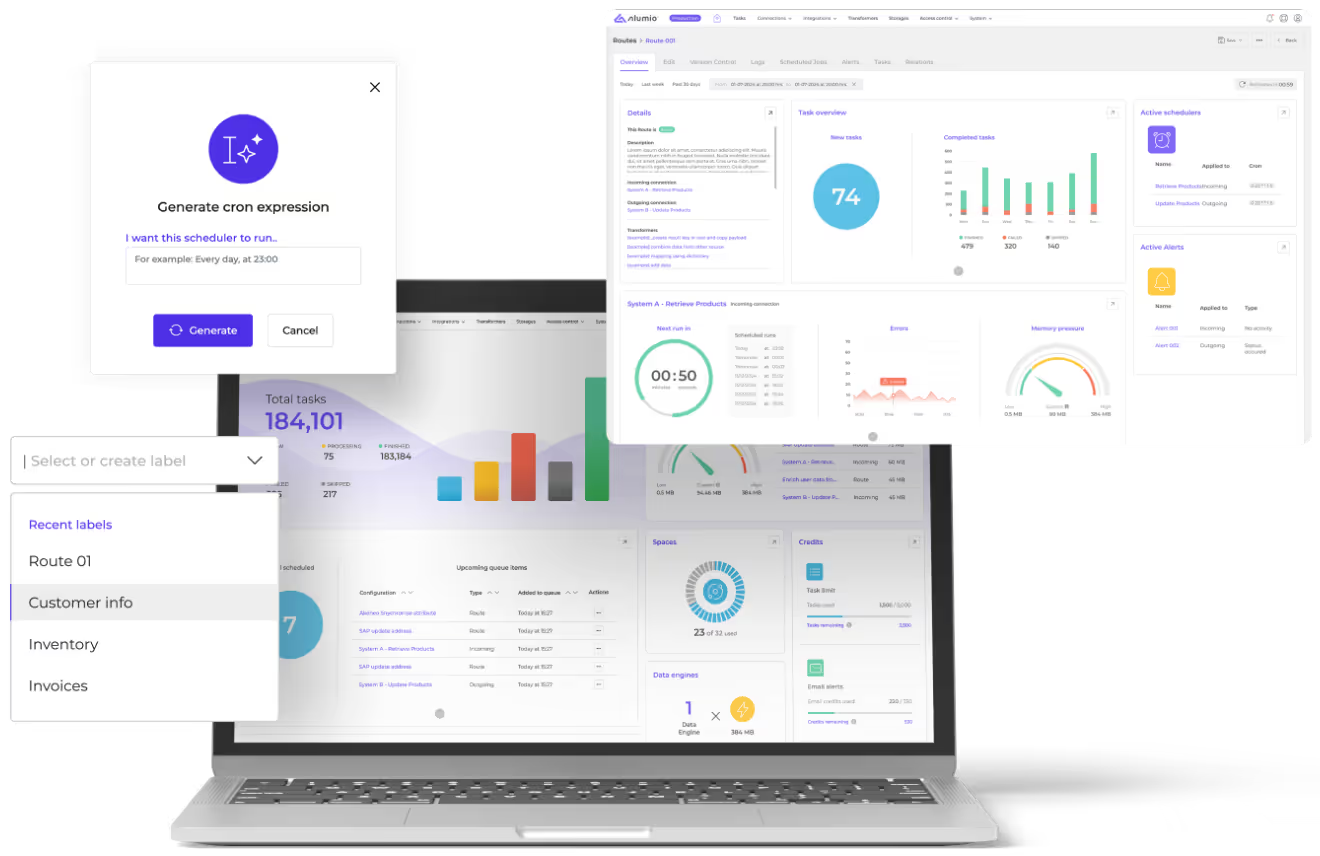
The Alumio iPaaS provides this foundation for e-commerce businesses running AI across their product data work. In this use case, it does three things at once. It connects AI tools, PIM systems, ERP, commerce platforms, marketplaces, and translation services through a single integration layer rather than as point-to-point connections. It transforms AI output into the schema each downstream system expects, including the attribute mappings, format conversions, and channel-specific variants. It runs validation, monitoring, and audit trails across the flows, so AI output that fails downstream checks gets flagged before it reaches customers.
Most Alumio deployments happen through certified system integrators and digital agencies. That partner-led model is particularly relevant for AI product data work, where the integration design has to reflect the specific AI tools, PIM choice, and channel mix the business runs.







.svg)
.svg)
.svg)
.svg)
.svg)
.svg)
