




.svg)



Build faster integrations with Alumio iPaaS connectors
The rapidly evolving world of digital commerce spurs enterprises to upscale their digital transformation efforts. And one of the fastest ways to accelerate digital transformation across the Value Chain is by implementing effective system integrations. However, soon to be long gone are the days when businesses needed to build traditional point-to-point integrations between two or three systems, such as connecting an ERP system with an e-commerce platform.
Why do businesses need integration solutions and connectors?
To keep up with new industry trends, technologies, and market solutions, future-driven enterprises are now implementing application integrations to digitalize and automate business processes. This involves integrating a plethora of applications apart from e-commerce and EPR systems, such as PIM, CRM, WMS, POS, OMS, Channel Marketplace software, Business Intelligence, and many more apps.
To connect all these software solutions and streamline the exchange of data and services, businesses have been implementing different types of middleware solutions over the years. However, the advent of a next-gent middleware, such as the iPaaS (integration Platform as a Service), has significantly evolved how businesses integrate software solutions. Advanced iPaaS solutions, such as Alumio, provide specialized connectors (pre-configured integrations) to integrate popular B2B and B2C enterprise systems, cloud apps, and SaaS solutions in a faster and future-proof way.
According to a survey by Forrester, businesses using iPaaS reported a 40% reduction in the time required to integrate systems and applications.
Read more about the cost benefits of building integrations with iPaaS vs. point-to-point integrations.
How the Alumio iPaaS provides connectors to build faster integrations
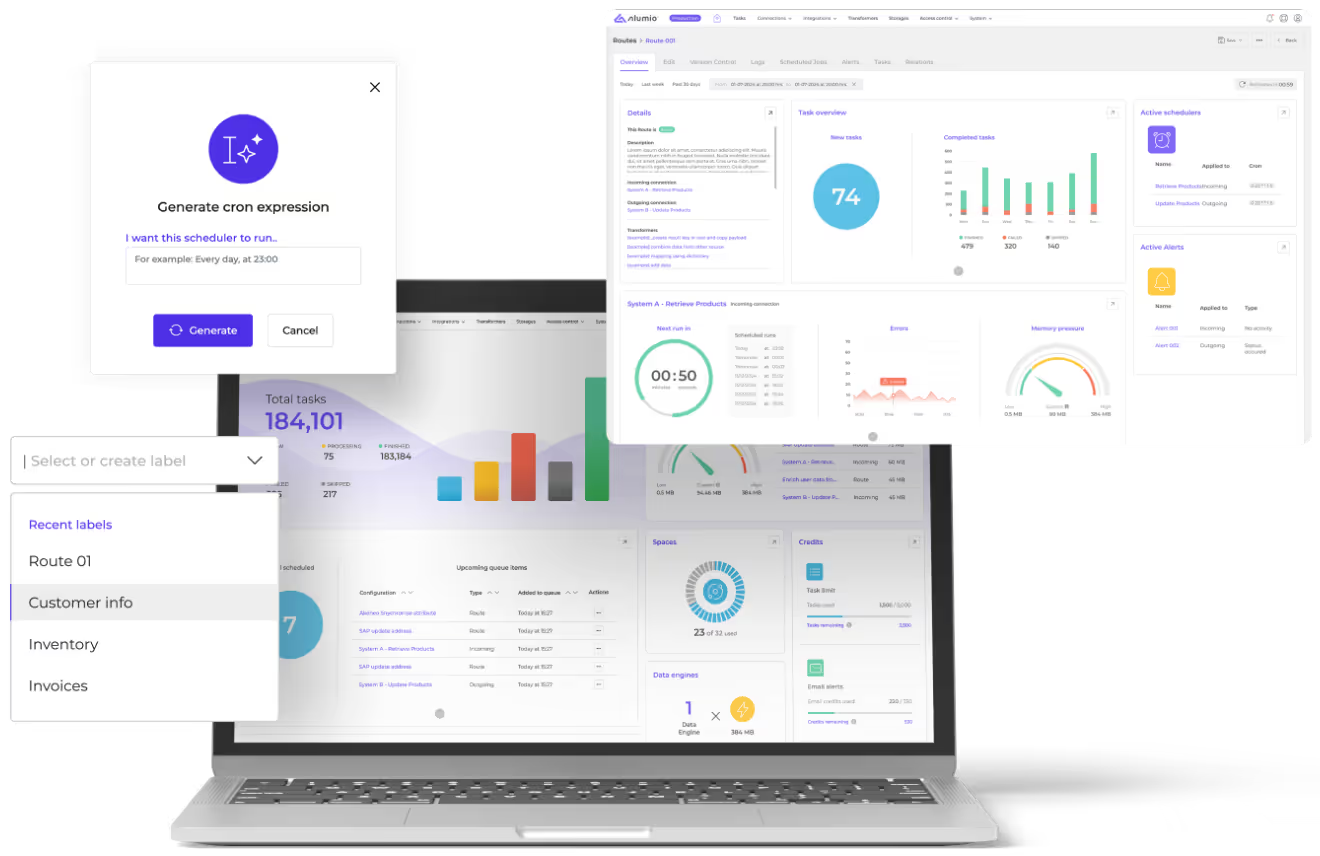
The Alumio iPaaS is a cloud-based, low-code integration platform that helps deploy multiple integrations with enterprise systems, SaaS solutions, cloud apps, and data sources across on-premises and cloud environments. As an API-driven solution, the platform helps developers and business users collaborate in creating, managing, and monitoring integrations on one user-friendly web interface, without the need to custom code. However, to help create even faster and more flexible integrations, Alumio offers a rich library of connectors that are tried and tested configurations to connect popular software.
Centralizing all integrations on one dedicated cloud space, the Alumio iPaaS helps businesses streamline data exchange and eliminate data silos. It can synchronize data in real-time, ensuring that changes made in one system are immediately reflected in another system. As a low-code solution, Alumio also provides developer-friendly features such as advanced mappers and transformers to flexibly transform data, workflow automation, and the ability to modify, reuse, and build connectors.
What connectors does the Alumio iPaaS provide?
Whether it's manufacturers looking to build B2B or D2C digital commerce experiences, or retailers looking to grow their e-commerce exponentially, they need a quick and cost-effective integration solution. The Alumio iPaaS provides connectors to help rapidly integrate relevant systems, SaaS solutions, or cloud apps.
The Alumio iPaaS provides connectors for many popular systems that both retailers and manufacturers seek to integrate, some of which are:
- ERP (Enterprise Resource Planning) systems like SAP, Microsoft Dynamics 365, Sage, or NetSuite that help track and manage inbound and outbound logistics, as well as human resource management.
- E-commerce platforms like Adobe Commerce (formerly Magento), WooCommerce, and Shopware that enable businesses to swiftly build web shops to sell and market their products digitally.
- PIM (Product Information Management) systems like Akeneo, Pimcore, and inriver that help centralize, store, enrich, and update product information.
- CRM (Customer Relationship Management) systems like Salesforce, Hubspot, and Zendesk that help track customer data, improve customer support, and automate marketing initiatives at every business touch-point.
- EDI (Electronic Data Interchange) helps with the paperless exchange of B2B information for procurement or sales in a standard electronic format, ensuring data accuracy and faster transactions.
- Channel Marketing Software like ChannelEngine and Channable help simplify creating, managing, and optimizing e-commerce product listings across multiple channels like Amazon, Alibaba, and Bol.
The Alumio iPaaS also integrates WMS (Warehouse Management System) and provides a specialized connector to leverage OpenAI for e-commerce, BI (Business Intelligence), and many more systems businesses can integrate to improve each area of their Value Chain.
Read an actual case study about how Heusinkveld, developers of cutting-edge sim racing products, used the Alumio iPaaS and its connectors to rapidly integrate WooCommerce with the Odoo ERP.
How the Alumio iPaaS speeds up integrations with ERPs and on-premises systems
Popular ERP systems like SAP, Microsoft Dynamics 365, and Exact Globe lack essential B2C and B2B API points (web services) that are required to integrate them with e-commerce, PIM, CRM, and other applications. Custom building these API points is time-consuming, expensive, and prone to errors.
Productizing decades of experience in integrating ERP systems, Alumio has developed unique API Plugins that help install these lacking B2B and B2C API points in the ERP. Installing these makes it easier to integrate the respective ERP systems with any software for digital commerce.
Alumio provides API plugins to enhance integrations with the following systems:
Read the case study about how our integration partner Corra, used the Alumio API Plugin to integrate Pelican Product's ERP (SAP ECC) and e-commerce (Adobe Commerce) visa the Alumio iPaaS ->
Building new connectors with our integration partners
Alumio also provides enterprises access to a global network of integration partners, consisting of agencies, system integrators, and e-commerce experts, who specialize in building and managing integrations via the Alumio iPaaS. It is these integration partners that work with advanced Alumio features in order to build new and unique connectors to speed up integrations with new systems. These connectors can be reused to build integrations for multiple customers and to facilitate integrations between one system with many others.
Both Alumio customers and integration partners can also communicate and collaborate on the Alumio Forum, where integration challenges and new solutions can be collaboratively discovered. To find our entire library of connectors visit: The Alumio iPaaS Connector packages
Why use Alumio connectors to build faster integrations?
According to a study by Harvard Business Review, data quality issues cost businesses an average of $15 million per year. iPaaS connectors also help mitigate these costs by building seamless integrations and ensuring data integrity, reducing errors, and improving data quality overall.
Alumio connectors provide numerous benefits to businesses seeking efficient and reliable application integration. From simplified integration processes to real-time data synchronization, enhanced visibility, and increased productivity, Alumio connectors streamline data integration efforts. Thus, by providing a vast library of connectors and its scalable integration platform, Alumio empowers businesses to optimize all their operations by seamlessly integrating all their systems. By leveraging Alumio connectors, businesses can stay agile, make data-driven decisions, and unlock the full potential of their integrated systems.





.svg)
.svg)
.svg)
.svg)
.svg)
.svg)
