

See how Alumio connects manufacturing data

Learn more
A Alumio vivid purple arrow pointing to the right, a visual representation of how to access more page material when clicking on it.
Go back

Digital twin data modeling across PLM, ERP, and IoT

By
Saad Merchant
Published on
June 12, 2026
Updated on
June 12, 2026
IN CONVERSATION WITH
Email icon
Email icon

A digital twin is a working digital copy of a physical machine, line, or product. It runs on real data from the asset, so it behaves like the real thing. Businesses use one to test a change or catch a problem before it reaches the floor. But a twin is only as accurate as the data going into it. That data comes from several systems: design data from PLM, order and cost data from ERP, and live sensor readings from the machines. This is where digital twin data modeling comes in, which is how that data is structured and kept current. When those systems are not connected, or the data arrives late, the copy slowly stops matching the real asset. Its predictions then describe a factory that no longer exists. Agreeing on one shared way to describe an asset, such as the Asset Administration Shell (AAS), lets data from very different systems line up in one place the twin can read. Keeping that data flowing and current is an integration job, which is where an integration platform-as-a-service (iPaaS) comes in. Get digital twin data modeling and the data flow right, and the twin becomes something a business can trust enough to act on.

Why digital twin data modeling decides whether a twin works

Most of the attention on digital twins goes to the model itself: the 3D view, the analytics, the dashboard. That is rarely where they go wrong. A twin built on good simulation software still gives the wrong answers when the data feeding it is incomplete or out of date.

A twin pulls from three kinds of system at once. It takes design data, like the parts and the bill of materials, from PLM. It takes order, cost, and stock data from ERP. And it takes live readings, like temperature or vibration, from the sensors on the machines. Each of those systems was built for its own job, with its own data formats and its own update speed.

Pulling all of that into one accurate, current picture is the hard part, and it is a data problem before it is a simulation problem. How the twin's data is structured, where it comes from, and how fresh it stays are what decide whether the model matches reality or slowly drifts away from it. That starts with a distinction people often blur.

What is the difference between a digital twin and a digital thread?

The digital thread is the connected record of a product's data across its whole life, and the digital twin is the live model that sits on top of that record and uses it to simulate and predict. The two typically get mixed up, but they do different jobs, and the difference matters here.

One feeds the other. A twin without a solid thread is a model running on guesswork because it has no reliable history or current state to work from. So for most manufacturers, the first job is connecting PLM, ERP, and MES into that thread, and the twin is what turns the connected data into something useful. Treating the twin as a screen to bolt on at the end, rather than something that depends on well-organized data, is how costly twin projects end up modeling the wrong thing.

What does it actually mean to model a digital twin's data?

It means agreeing on one structure that every source system feeds into, so the twin reads a single, consistent description of an asset instead of a dozen that do not match. The format question comes before the simulation question.

This is where the Asset Administration Shell, or AAS, has become the common reference. AAS is an agreed, standard way to describe an industrial asset as a digital twin. It is maintained by the Industrial Digital Twin Association and published as an international standard, so it is not tied to one vendor. An asset is described through submodels, where each submodel covers one part of the picture: its nameplate, its documents, its sensor history, or its bill of materials.

Building a twin on a standard like AAS gives all that data one place to land. A design file from PLM, a work order from ERP, and a sensor reading can each map to a defined submodel with an agreed meaning, instead of being wired together by hand for every new machine. That is what lets a twin grow past a single trial, because the hundredth asset is described the same way as the first. AAS is still maturing, and not every asset needs a full, live twin, so the sensible first step is to model the few submodels that carry real decisions.

Keeping the data current is what keeps a twin accurate

A shared data model gives the twin its structure. Keeping that model current is what stops it drifting. A twin is useful because it shows the asset as it is right now, not as it was at last night's data export. The moment its data falls behind the real line, every prediction it makes is based on a version of the factory that has already changed.

This is the quiet failure behind a lot of twin projects. A twin fed by scheduled overnight exports looks convincing in a demo and gets less reliable in daily use, because the gap between the model and the machine grows by the hour. Event-driven updates close that gap, so a change on the floor reaches the twin within seconds or minutes rather than the next day. Real-time simulation data is also what makes related uses like predictive maintenance work, since a model predicting a part failure is only as good as how fresh the sensor data behind it is.


Turn AI ambition into action

Portrait of Leonie Becher Merli, Business Development Manager at Alumio

Get a free assessment of your integration needs and next steps

Portrait of Leonie Becher Merli, Business Development Manager at Alumio

Want your digital twin running on current, trustworthy data from every system?

Want your digital twin running on current, trustworthy data from every system?

Connecting PLM, ERP, and IoT data to build digital twins

Pulling those three sources together is the job of an integration layer that sits between the source systems and the twin. It maps each system into the twin's data model and keeps it fed as changes happen.

An integration platform-as-a-service is built for exactly this. The Alumio iPaaS connects PLM, ERP, and sensor data to the structure the twin reads. It translates each system's format into the submodels the twin expects, and checks each record on the way through, so bad data never reaches the model.

In practice, a manufacturer might bring design and bill-of-materials data from a PLM like Siemens Teamcenter, order and cost data from SAP, and live machine data arriving over MQTT into one managed flow. The Alumio iPaaS sets up that mapping and checking through configuration rather than custom code, then sends each update to the twin as it happens, so the model stays current. It also keeps a log of every exchange, which gives the twin a clear record of what changed and when. Most of these projects run with a certified Alumio partner or system integrator, who reuses the data models from earlier builds on each new one.

Digital twin data modeling is the real foundation, not the simulation

The manufacturers getting real value from digital twins are not the ones with the fanciest simulation software. They are the ones whose twins run on well-organized data that stays current, so the model can be trusted to guide a real decision. Digital twin data modeling, built on a standard like AAS and fed continuously from the systems that hold the data, is what separates a twin that grows from a demo that stalls.

That foundation is as much an integration question as an engineering one. A platform like the Alumio iPaaS keeps the twin's data fed with checked, current information as more assets come online, which is what lets a twin move from one trial line to the whole plant.

As standards like AAS settle in and more of the factory can be read as data, the edge will go to manufacturers who treated the twin's data model as a first decision, not a finishing touch. The twin was never really about the simulation. It was about trusting the data underneath it enough to act.

No items found.

FAQ

Integration Platform-ipaas-slider-right
What is digital twin data modeling?

Digital twin data modeling is how you set up the data behind a digital twin: what the twin holds, where each piece of data comes from, and how it stays current. The goal is one clear, shared structure the twin can read, instead of a patchwork of formats pulled from different systems. Good data modeling is what lets a twin stay accurate as it grows.

Integration Platform-ipaas-slider-right
What is the Asset Administration Shell (AAS)?

The Asset Administration Shell, or AAS, is a standard way to describe an industrial asset as a digital twin. It is maintained by the Industrial Digital Twin Association and published as an international standard, so it does not belong to any one vendor. AAS breaks an asset into submodels, where each one covers a single part of the picture, such as its nameplate, its documents, or its sensor data.

Integration Platform-ipaas-slider-right
How does a digital twin get data from PLM, ERP, and IoT systems?

It draws design data from PLM, order and cost data from ERP, and live readings from sensors, usually through an integration layer that connects all three. That layer maps each system's format into the twin's data model and passes updates along as they happen. Without it, every connection is built by hand and breaks whenever a system changes.

Integration Platform-ipaas-slider-right
How do you keep a digital twin's data current?

You feed it through event-driven updates instead of scheduled overnight exports, so a change on the floor reaches the twin within seconds or minutes. The smaller the gap between the real asset and the twin, the more you can trust its predictions. Current, real-time data is what keeps the twin matching the real asset instead of drifting from it.

Integration Platform-ipaas-slider-right
Is a digital twin the same as a digital thread?

No. The digital thread is the connected record of a product's data across its whole life, from design through production and service. The digital twin is the live model that sits on top of that record and uses it to simulate and predict. The thread supplies the data and the twin puts it to work, so a twin without a solid thread has nothing reliable to work from.

Integration Platform-ipaas-slider-right
Do manufacturers need AAS to build a digital twin?

No. A twin can be built without it, but a standard like AAS makes the data far easier to organize and reuse across many assets. Without a shared structure, each new twin tends to be modeled from scratch, which slows everything down. Because AAS is still maturing, many manufacturers start with the submodels that carry their most important decisions.

Get a free assessment of your integration needs

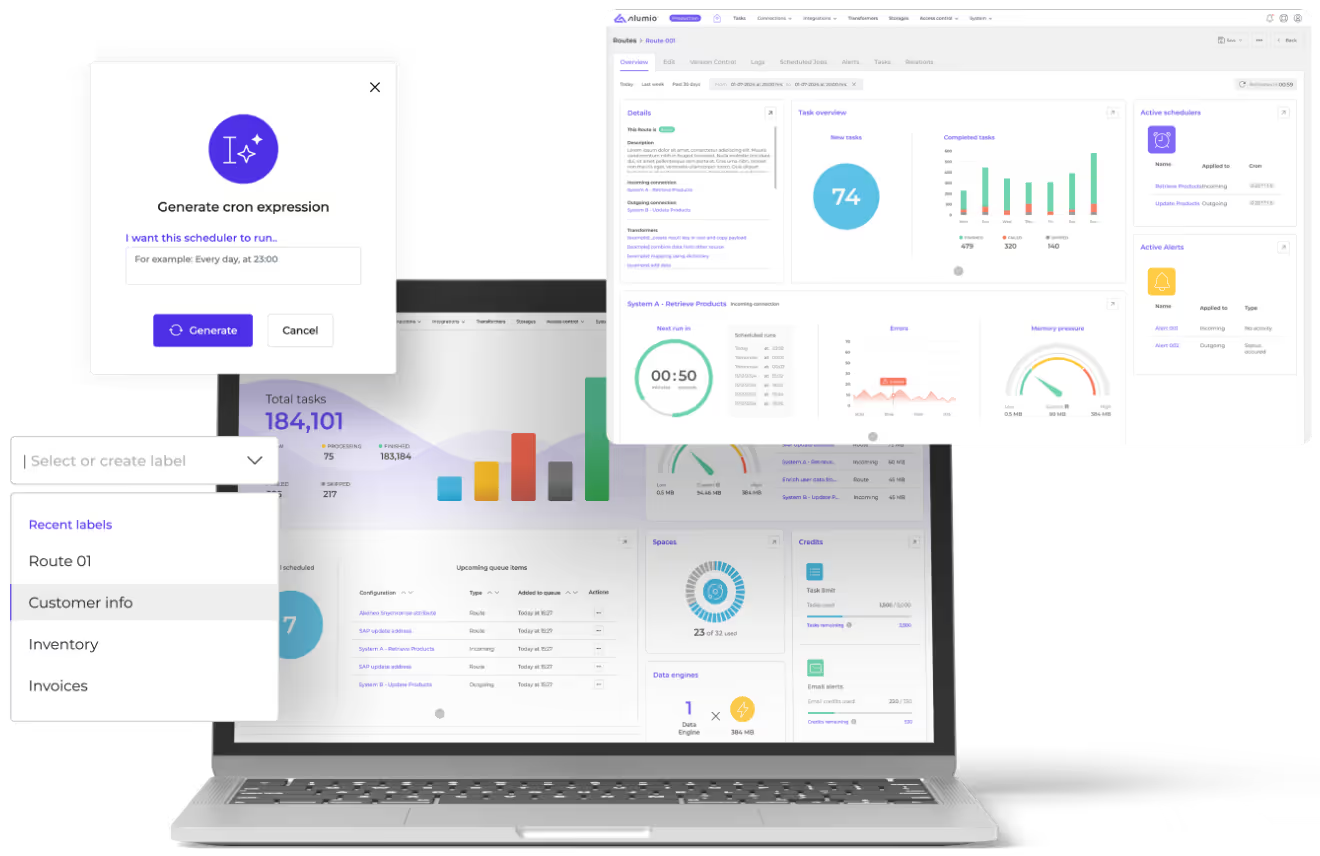
Laptop screen displaying the Alumio iPaaS dashboard, alongside pop-up windows for generating cron expressions, selecting labels and route overview.