

A Alumio vivid purple arrow pointing to the right, a visual representation of how to access more page material when clicking on it.
Go back

Preventing data siloes and shadow IT with an integration platform

By
Saad Merchant
Published on
June 19, 2026
Updated on
June 19, 2026
IN CONVERSATION WITH
Email icon
Email icon

Most businesses treat data silos and shadow IT as two separate problems. One belongs to the data team, the other to security. But they grow from the same root: when the official way to connect a system or get data is too slow, people route around it. A team buys its own SaaS tool because the integration backlog is six months deep. That tool becomes both a new silo and an unsanctioned app no one approved. Data silos are isolated stores of data that other systems cannot reach, and shadow IT is technology adopted without IT's knowledge or approval. Chasing each one separately treats the symptom and leaves the cause running. The structural fix is to make the sanctioned path the fast path, so connecting a system through approved channels is easier than working around them. That is what an integration platform does, and why preventing data silos increasingly starts there.

Why data silos and shadow IT are the same problem

Data silos and shadow IT look like different failures owned by different teams. Look at how each one forms and the line between them blurs.

A data silo appears when a system holds information that the rest of the business cannot reach. A marketing team's analytics tool, a warehouse's inventory system, a regional office's spreadsheet. Shadow IT appears when someone adopts a tool without going through IT. A sales team signs up for its own pipeline software, a department expenses an AI writing tool, an analyst builds a workflow in an app no one vetted.

The reason both happen is usually the same. The approved path was too slow or too rigid, so people built their own. Every shadow IT tool becomes a silo the moment it holds data nothing else can read. According to data integration and data hub experts, Factor Blue, data silos form when teams adopt specialized systems with no unified strategy for how data should flow. Shadow IT is simply that pattern happening faster, one unsanctioned signup at a time.

What data silos and shadow IT actually cost a business

The cost of data silos rarely lands on the team that created them, which is part of why it goes unaddressed for so long. It surfaces in three places.

  • Decisions made on partial data: when customer information lives in three tools that do not talk, no one sees the full picture, and the forecast is built on a fraction of the truth.
  • Security and compliance exposure: shadow IT means data sitting in tools the security team cannot see, audit, or protect. Under GDPR, personal data in an unsanctioned app is still the business's legal responsibility, even when IT does not know the app exists.
  • Duplicated spend and effort: three teams license three overlapping tools, and two analysts rebuild the same report because neither could reach the other's data.

None of this shows up as a line item called “data silo,” so the waste compounds quietly while the official numbers look fine. That invisibility is exactly what lets it grow.

Why the usual fixes fail to prevent data silos

The instinct is to police the problem. Ban unapproved tools, lock down spending, send a memo about data governance. This treats the symptom and ignores the cause, and it tends to make things worse.

When the official path stays slow, restriction pushes the workarounds further underground. People still need to do their jobs, so they find quieter ways to route around IT, and the shadow estate grows less visible rather than smaller. A cleanup project has the same flaw. A business can spend a quarter consolidating silos, but if connecting a new system still takes months, fresh silos form before the project even ships.

This is the difference between elimination and prevention. Eliminating existing silos is cleanup work that pays off once. Preventing new ones means changing the condition that creates them: the gap between how fast the business wants to move and how fast the sanctioned path allows. Close that gap and the incentive to build silos disappears. Leave it open and no amount of policing holds.


Turn AI ambition into action

Portrait of Leonie Becher Merli, Business Development Manager at Alumio

Get a free assessment of your integration needs and next steps

Portrait of Leonie Becher Merli, Business Development Manager at Alumio

Wondering how much of your data is already trapped in tools IT cannot see?

Wondering how much of your data is already trapped in tools IT cannot see?

How an integration platform prevents data silos at the source

An integration platform is software that connects a company's systems through one central hub, so data flows between them through a managed layer instead of one-off custom connections. Its role here is direct: it removes the reason silos and shadow IT form by making the approved path the fast one.

When connecting a new system is a configuration task that takes days instead of a custom development project that takes months, teams have no reason to go around IT. The integration platform becomes the easy path and the sanctioned path at once. New tools connect through it, their data flows to the systems that need it, and the tool stops being a silo the moment it joins the managed layer.

It also turns shadow IT from an invisible risk into a visible decision. Because every connection runs through one platform, IT can see what is connected, what data moves where, and who is using what. A team that wants a new tool can have it, connected properly, with its data flowing to the business and its activity logged for audit. The Alumio integration platform handles this through configurable connections, monitoring, and audit trails, so adopting a new system becomes a governed step rather than a quiet workaround. This is the same shift covered in enabling integration governance: control comes from making the right path the easy one, not from blocking the wrong ones.

Most of these deployments run through a certified integration partner, who sets up the connections and governance model so the internal team inherits a managed landscape rather than building one from scratch.

Building a landscape where silos cannot form

Preventing data silos is not a one-time cleanup. It is a structural choice about how the business connects things from now on. The businesses that stay clear of silos are not the ones that police hardest. They are the ones where connecting through approved channels is genuinely the easiest option available.

That changes what IT governance means. Instead of a gatekeeper that slows teams down and breeds workarounds, IT becomes the provider of a fast, sanctioned path that teams actually want to use. Shadow IT loses its reason to exist when the official route is quicker than the unofficial one. Data silos lose their reason to form when every new system connects to the rest by default.

The goal is not a locked-down business. It is one where moving fast and staying connected are the same action, so the company can adopt new tools without fragmenting the data that holds it together.

No items found.

FAQ

Integration Platform-ipaas-slider-right
What is the difference between a data silo and shadow IT?

A data silo is information trapped in a system that the rest of the business cannot access. Shadow IT is technology adopted without the IT department's knowledge or approval. They are closely linked: a shadow IT tool usually becomes a data silo, because it holds data that no approved system can reach. Both tend to form for the same reason, which is that the official way to get a tool or connect data was too slow.

Integration Platform-ipaas-slider-right
What causes data silos to form?

Data silos form when teams adopt systems that are not connected to the rest of the business, usually because there is no unified strategy for how data should flow. This happens when departments work independently, when companies grow quickly or go through mergers, and when the approved path to connect a system is slow enough that people build their own instead. The common thread is a gap between how fast teams need to move and how fast the sanctioned route allows.

Integration Platform-ipaas-slider-right
How does an integration platform reduce shadow IT?

An integration platform reduces shadow IT by making the approved path the fast one. When a team can get a new tool connected in days through a managed layer, there is little reason to set one up in secret. Because every connection runs through one platform, IT can also see what is connected and what data moves where, so a new tool becomes a visible, governed decision instead of a hidden risk.

Integration Platform-ipaas-slider-right
Can you prevent data silos without blocking new tools?

Yes, and blocking tools usually backfires. The aim is not to stop teams adopting new systems but to make sure each new system connects to the rest of the business by default. An integration platform lets a team add the tool it needs while its data flows to the systems that depend on it. The tool gets adopted, and it never becomes a silo, because it joined the connected layer from the start.

Integration Platform-ipaas-slider-right
Are data silos a security risk?

Yes. A data silo is a blind spot, and shadow IT means data sitting in tools the security team cannot see or protect. Under regulations like GDPR, a business is legally responsible for personal data even when it lives in an app IT never approved. Bringing those tools into a managed integration layer makes the data visible, auditable, and far easier to govern.

Integration Platform-ipaas-slider-right
Is it better to eliminate existing data silos or prevent new ones?

Both matter, but prevention is what lasts. Eliminating existing silos is cleanup work that pays off once, and new silos will form again if the underlying cause is left in place. Preventing them means closing the gap that creates them, so connecting through approved channels is faster than working around them. Most businesses do both at once: consolidate what exists while putting an integration platform in place so the problem stops recurring.

Get a free assessment of your integration needs

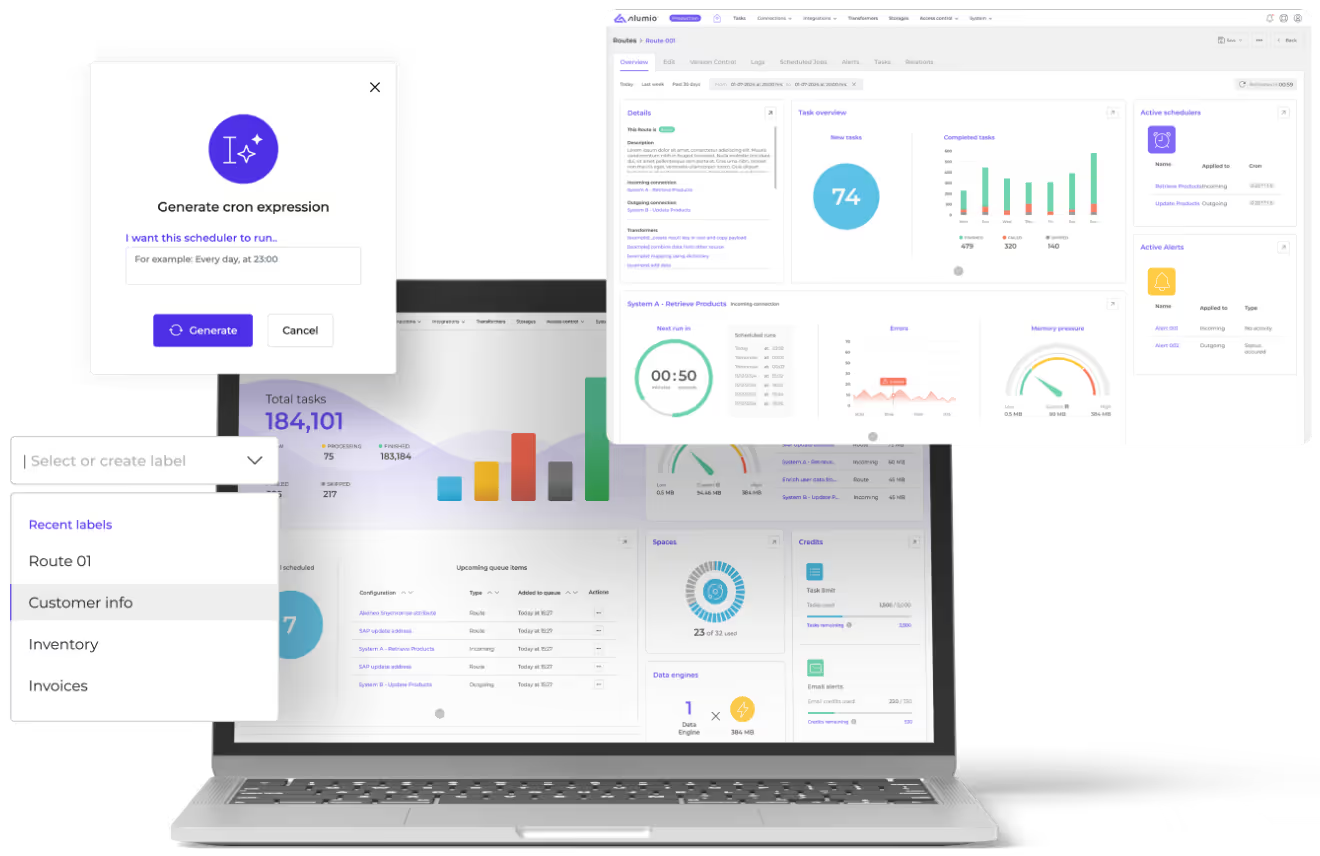
Laptop screen displaying the Alumio iPaaS dashboard, alongside pop-up windows for generating cron expressions, selecting labels and route overview.