What AI agent integration has to control
An AI agent connected to business systems is an actor, not a feature. It reads records, decides what to do next, and where it has been given the ability, writes back. A conventional integration does what it was configured to do. An agent decides.
Controlling an actor means settling in advance what it may reach and what it may change. Those are the same decisions a business makes about an employee or a service account. The difference is speed, because an assumption left implicit gets tested hundreds of times before anyone reviews it.
Five things have to be explicit:
- Scope of access: which systems and which records, since an agent answering service questions has no reason to read supplier pricing
- Permitted actions: the difference between reading an order, changing it, and cancelling it, each of which is a separate decision
- Thresholds and escalation: the value or risk level above which a person confirms, rather than a blanket allow or deny
- Identity and attribution: which agent, acting for which user or process, so an action has an owner
- A complete record: what was read, what was changed, and on what basis, in a form that answers an auditor or a customer complaint
None of these are new requirements. They are the controls that already apply to integrations and interfaces, applied to an actor that generates its own next step. They matter more now because an agent that acts is a different problem from an agent that reads.
Why is an acting agent different from a reading one?
A reading agent that gets something wrong gives a bad answer, and someone corrects it. An acting agent that gets something wrong issues a refund that was not owed, adjusts a stock figure that was already right, or cancels an order the customer still wants. Undoing any of those is a second operation with its own consequences.
The second difference is harder to see. A normal integration does the same thing every time it runs, so a test tells you what it will do in production. An agent picks its own route to the goal, and the same request can produce a different sequence of steps each time. Testing it proves less. The only reliable control is limiting what it is able to do at all.
Speed is the third difference. An agent gets through in minutes what a person would spend days on. When the logic is right, that is the whole point. When it is wrong, four hundred records are already affected before anyone looks.
AI governance covers what a model reads and how it reaches a conclusion, which is a data problem. Governing what an agent writes into the ERP is an access problem, and the two need different controls.
What ungoverned AI agent access costs
Most of these are old integration problems arriving faster. The difference is that an agent reaches them without anyone having decided it should:
- Credentials get shared too widely: the agent ends up with a service account that can read and write across the whole ERP, because scoping it to four operations would have taken a week
- Actions cannot be attributed: the order was cancelled by “integration_user” at 02:14, and nobody can say which agent did it, what prompt triggered it, or who asked
- Errors compound before anyone looks: the agent applies the same wrong rule to six hundred orders overnight, and the pattern surfaces in the morning queue
- Regulated data ends up somewhere unassessed: customer records reach a model or a third-party service nobody reviewed for personal data
- The action cannot be reversed: there is no record of what the values were before the agent changed them, so putting it back is guesswork
The last one turns an incident into a write-off. All five are versions of a requirement businesses have carried for years without enforcing it strictly.
Why AI agent integration makes an old requirement urgent
Businesses have been connecting systems to each other for years without defining precisely what each connection is allowed to do. A nightly job pulls orders from the webshop into the ERP using a database account that can also write to the ledger. A price feed from the PIM has permission to update every field on a product, when it only ever touches three. Nobody minds, because those integrations do the same thing every night.
An agent breaks that arrangement. It decides its own next step, so trusting what it will choose to do is not a control. The permission scoping that was good practice for the nightly job becomes a precondition for the agent.
So the question when connecting an agent is not what it can reach. It is what it can be stopped from doing, and whether anyone could reconstruct its actions a month later. Businesses that already handle data security across their AI integrations have most of the groundwork done.
Most teams start by connecting the agent straight to each system's API. That is the fastest route, and it puts the credentials and the rules about what the agent may do inside the agent itself. Some use an agent platform instead, which handles the connections but keeps those rules in a separate place from everything else the business runs. Others build a piece of middleware for each agent, which works and has to be built again for the next one.
All three share a problem. The business already has a place where its systems connect to each other, and where rules about what may pass between them are enforced. Putting the agent's controls anywhere else means maintaining two sets of rules about the same systems.
How an integration platform governs AI agent integration
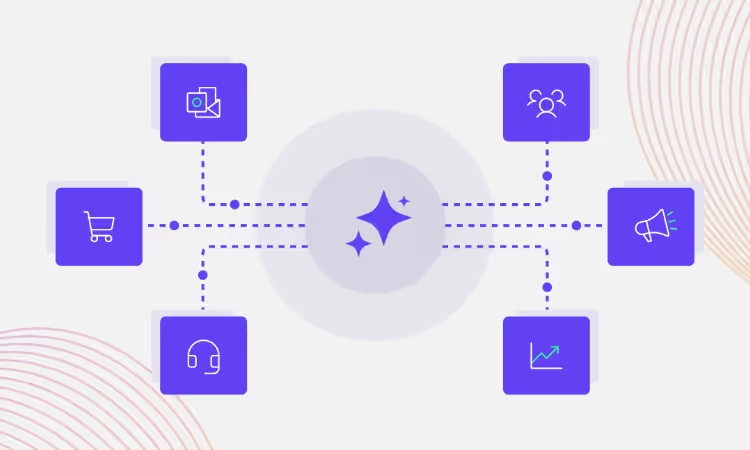
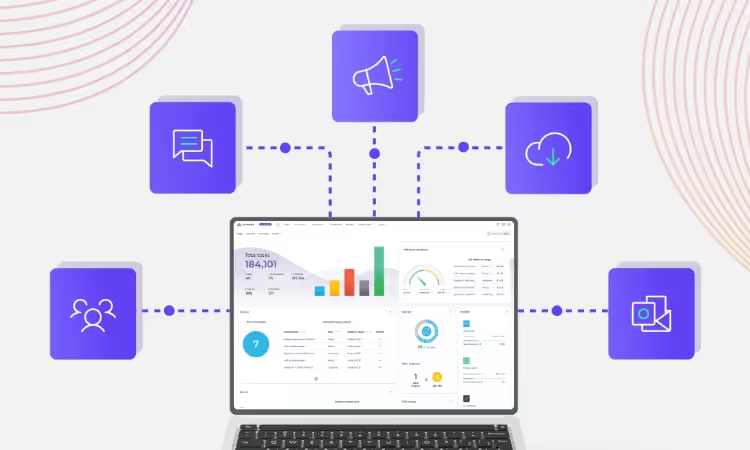
An integration platform-as-a-service (iPaaS) is one place where every system connects once instead of connecting directly to each other, and it moves and reshapes the data between them. Businesses already use it for exactly this kind of work: pulling webshop orders into the ERP overnight, pushing product data from the PIM to the storefront, and sending stock figures back the other way. Configuration handles each of those, with the Code Transformer there for developers who would rather solve an edge case in code. Someone has already defined what it may read, what it may write, and what gets recorded when it runs.
An agent connects the same way. It does not receive credentials to the ERP. It receives access to the specific operations someone configured for it, and those operations carry the rules and the logging every other integration on the platform already carries.
That puts the following governance controls within reach without building anything new. The Alumio integration platform can be configured to:
- Scope access per connection: role-based system access control and per-environment isolation mean an agent reaches the specific data and operations it was granted, rather than holding system credentials
- Express actions as governed flows: an agent triggers a Route within Alumio that performs a defined operation, so the range of possible actions is bounded by configuration rather than by the agent's judgment
- Validate before anything is written: a Transformer applies the same rules any other integration would, so an out-of-range value is rejected regardless of what requested it
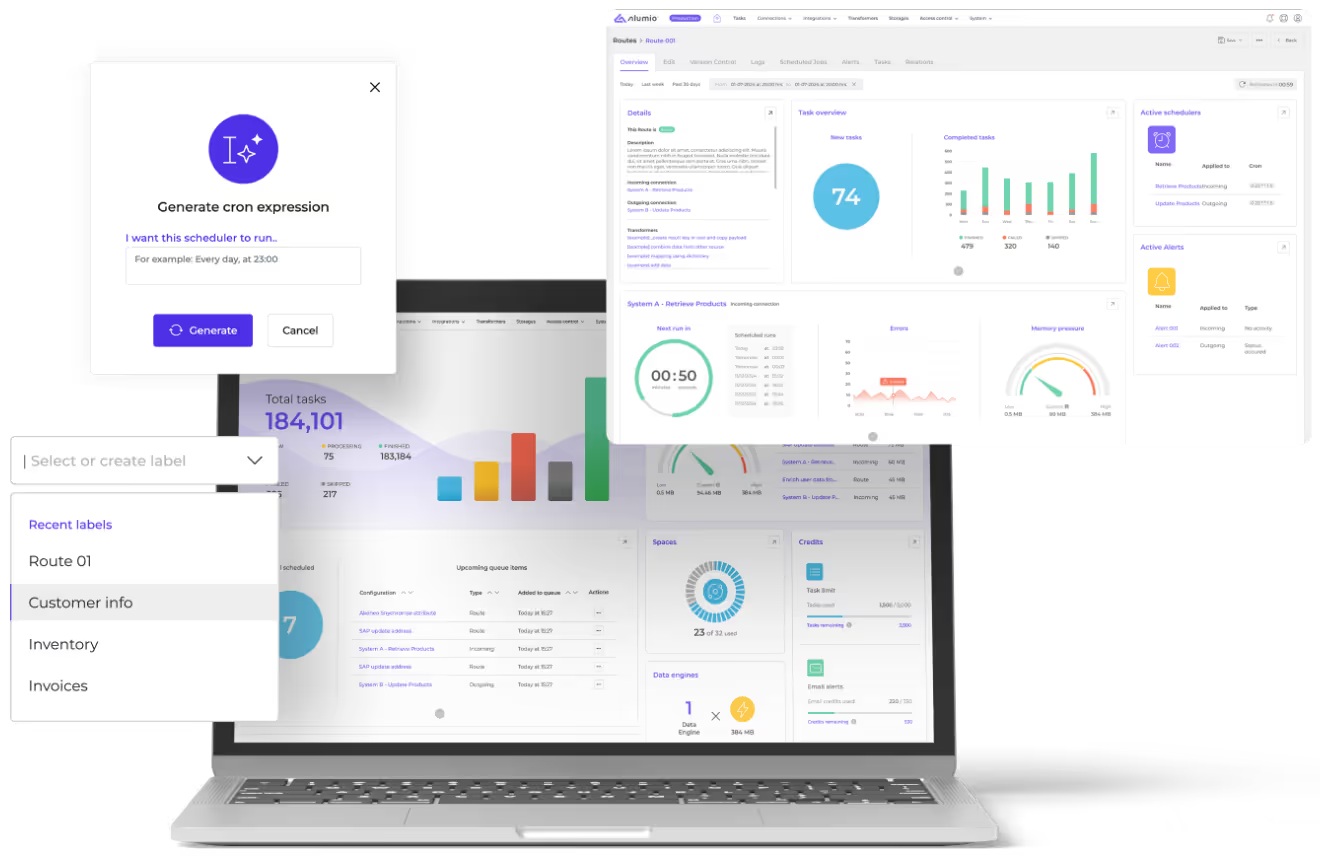
- Record every action: the Alumio iPaaS logs what was requested, what was executed, and what the receiving system returned, which is what makes AI agent governance auditable rather than assumed
Because that governance already covers the systems the agent touches, adding an agent does not mean building a parallel control model. The next agent connects to what the first one established.
What governed AI agent integration makes possible
Most businesses are stuck at the same point. IT will not connect an agent to the ERP without knowing what it could do on a bad day. The operations team gets little value from an agent that can only read. So the agent drafts emails and summarizes tickets, and the processes where it would actually save money stay manual.
The way out is not deciding whether agents can be trusted. It is deciding which actions are safe to delegate under which conditions, which has specific answers that differ by process. Reading and drafting are low risk almost anywhere. Committing a payment is not. Most of the useful cases sit in between, where the agent prepares the work and a person approves it.
An integration platform makes that split enforceable rather than a policy nobody can check. It bounds what the agent is able to do, validates what it produces, and records what it did.
The business can then say yes to more of it. Agents move into order handling, returns, and supplier communication, instead of staying on summaries and drafts.




.svg)








.svg)
.svg)
.svg)
.svg)
.svg)
.svg)
