





.svg)



The architectural tension every service provider faces
Every time a delivery team builds custom point-to-point integrations for a new client, the firm takes on technical debt. Custom scripts are fragile, they depend on specific API versions, and they typically require the original developer for ongoing maintenance. When a vendor updates their API, those bespoke connections break. Senior engineers get pulled off billable work to fix them.
At the same time, clients engage system integrators precisely because their requirements are complex. A standard connector that does not accommodate custom data fields, unique routing rules, or specific business logic fails to deliver the value the client is paying for.
The challenge is finding a structural approach that handles both. A baseline framework that covers the heavy lifting of authentication, data transport, and error handling, combined with an isolated layer where client-specific logic can be configured safely without touching the core.
What a reusable integration framework looks like
A reusable integration framework is a pre-configured template that already contains the standard API connections, error-handling protocols, and core data mapping for common software pairings. Rather than starting from an empty codebase for each new client, the delivery team begins from a proven foundation.
The foundational template handles the repeatable, structural elements of the integration. The remaining project time is spent mapping the client's custom fields and configuring their specific routing logic within a dedicated transformation layer. The two layers are kept structurally separate, which is what makes the framework reusable in the first place. If client-specific logic is applied directly to the core template, it stops being a reusable asset.
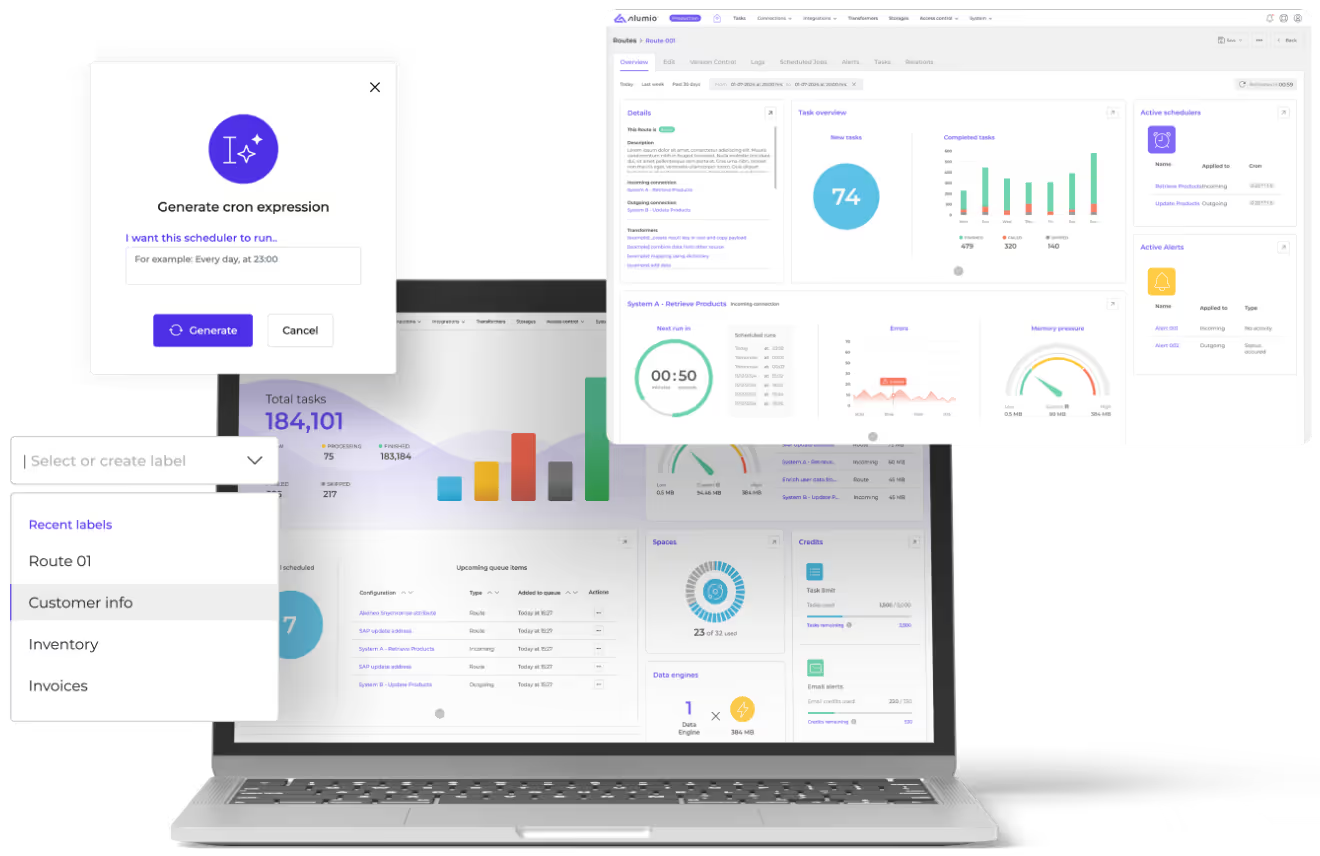
Modern integration platforms like Alumio support this architecture natively. The core connection layer handles extraction and transport. The transformation layer, where data is mapped, filtered, enriched, or reformatted, is where client-specific logic lives. Updates to the baseline do not overwrite client configurations. Client customizations do not compromise the integrity of the template for other deployments.
The workflows worth building reusable templates for
The starting point for any standardization effort is identifying the workflows that appear repeatedly across the client portfolio. These are the strongest candidates for master templates.
Lead to project automation
When a client closes a deal in their CRM, that data needs to flow into a project management system. A standard template handles new account creation, contact synchronization, and project workspace provisioning. Client-specific logic, such as custom naming conventions or automatic task assignments, is configured in the transformation layer without touching the core flow.
Quote to cash synchronization
Financial data flows between quoting tools and ERP systems in almost every B2B client environment. A reusable template standardizes the connection and guarantees accurate transfer of line items and financial records. Client-specific tax rules, currency conversions, or approval routing are applied in the isolated logic layer.
Ticket to resolution workflows
Support integrations typically connect a helpdesk platform to an internal engineering ticketing system. The foundational template manages bidirectional status syncing and basic comment transfer. Escalation rules based on a client's specific SLAs are handled separately in the transformation layer.
These three workflows alone cover a significant share of integration work across most professional services client portfolios. Building reliable templates for them reduces project discovery and execution time meaningfully on every subsequent engagement.





.svg)
.svg)
.svg)
.svg)
.svg)
.svg)
