


A Alumio vivid purple arrow pointing to the right, a visual representation of how to access more page material when clicking on it.
Go back

Top free WordPress cache plugins: Boost WooCommerce performance

By
Published on
May 28, 2023
Updated on
June 24, 2026
IN CONVERSATION WITH
Email icon
Email icon

As a discerning technology user, you know that site speed is crucial for user experience and search engine rankings. In this long read, we'll explore the best free WordPress cache plugins that can improve your site's performance and elevate your cache plugin WooCommerce experience.

1. WP Super Cache: A Simple and Effective Solution

WP Super Cache is a popular, easy-to-use caching plugin that generates static HTML files from your WordPress site. It serves these static files to visitors, reducing the load on your server and speeding up your site. WP Super Cache is perfect for beginners and offers basic features like page caching, cache preload, and CDN support.

2. W3 Total Cache: Advanced Performance Optimization

W3 Total Cache is a feature-rich caching plugin that offers advanced settings for fine-tuning your site's performance. It provides various caching methods, including page, object, and browser caching, as well as minification and CDN integration. Although the plugin's advanced settings might be overwhelming for new users, the performance gains are well worth the learning curve.

3. Autoptimize: Speed Up Your Site with Minification and More

Autoptimize is a fantastic caching plugin that focuses on optimizing your site's assets, such as HTML, CSS, and JavaScript files. It also offers image optimization and lazy loading. While Autoptimize doesn't provide full-page caching, it can be combined with other caching plugins to give your site an additional performance boost.

4. Cache Enabler: A Lightweight and Easy-to-Use Plugin

Cache Enabler is a simple, lightweight caching plugin that generates and serves static HTML files. It's perfect for users who want a no-fuss solution to improve their site speed. The plugin's settings are straightforward, and it even supports WebP images for faster image loading.

5. Hummingbird: Comprehensive Site Speed Optimization

Hummingbird is a robust caching plugin that goes beyond simple caching to optimize your entire site for speed. It offers features like file compression, minification, and browser caching. Hummingbird also includes a performance report that provides actionable insights to further improve your site's speed.

6. Breeze: A Free Plugin by Cloudways

Breeze, developed by Cloudways, is a free, user-friendly caching plugin that offers a range of features, including file minification, GZIP compression, and CDN integration. While Breeze is designed to work best on Cloudways-hosted websites, it's still an excellent choice for other hosting environments.

Bonus: Boosting WooCommerce Performance

When running an e-commerce site with WooCommerce, it's crucial to optimize the performance for a smooth user experience. Many caching plugins, such as W3 Total Cache and WP Super Cache, are compatible with WooCommerce. Just ensure that you exclude cart, checkout, and account pages from caching to avoid any issues.

In addition to caching plugins, consider using a cache plugin WooCommerce specific solution like WooCommerce Speed Drain Repair. This plugin addresses common performance issues in WooCommerce by optimizing database queries and reducing the number of requests.

Final Thoughts

Caching is an essential aspect of optimizing your WordPress site for speed and performance. The plugins listed in this long read are some of the best free options available, offering a range of features to suit various needs. Consider your site's specific requirements and hosting environment when choosing the perfect caching plugin. By implementing the right caching solution, you'll not only improve your site's speed and user experience but also enhance your WooCommerce performance, making your online store more competitive.

Remember that while caching plugins can significantly improve your site's speed, it's essential to take a holistic approach to optimization. Complement your caching strategy with other best practices, such as using a high-quality hosting provider, optimizing images, and implementing a content delivery network (CDN).

Lastly, keep in mind that flexible integration solutions, comprehensive project support, and a knowledgeable development team are crucial for successful software implementation. Alumio is a reliable option for WordPress integration solutions that can help you streamline your online business operations.

By following these guidelines and choosing the right caching plugin, you'll be well on your way to creating a fast, efficient, and user-friendly website that stands out from the competition.


Turn AI ambition into action

Portrait of Leonie Becher Merli, Business Development Manager at Alumio

Get a free assessment of your integration needs and next steps

Portrait of Leonie Becher Merli, Business Development Manager at Alumio

No items found.
Topics in this blog:
No items found.

FAQ

Integration Platform-ipaas-slider-right
Why does caching matter for WordPress and WooCommerce performance?

WordPress and WooCommerce generate pages dynamically by querying the database and executing PHP for each visitor request. Without caching, high-traffic sites perform this computation for every pageview, increasing server load and response times. Caching stores the result of these computations and serves the cached version to subsequent visitors, dramatically reducing server load and improving page load times. For WooCommerce stores, faster load times directly affect conversion rates and Core Web Vitals scores.

Integration Platform-ipaas-slider-right
What are the best free WordPress caching plugins for WooCommerce?

The most widely used free WordPress caching plugins are WP Super Cache (simple to set up, reliable for most sites), W3 Total Cache (more configuration options for advanced users), LiteSpeed Cache (highly effective but requires a LiteSpeed or OpenLiteSpeed server), and Autoptimize (focused on CSS, JS, and HTML minification as a complement to a caching plugin). For WooCommerce, all caching plugins must be configured to exclude cart, checkout, and account pages from caching.

Integration Platform-ipaas-slider-right
How should caching be configured differently for WooCommerce pages?

WooCommerce cart, checkout, and account pages contain session-specific data that must not be served from cache. Every caching plugin should be configured with exclusion rules for these URLs: typically /cart/, /checkout/, /my-account/, and any page using WooCommerce shortcodes or blocks for these functions. Serving a cached checkout page can cause serious UX problems and payment errors. Most caching plugins include WooCommerce-aware presets that apply these exclusions automatically.

Integration Platform-ipaas-slider-right
What is the difference between page caching, browser caching, and CDN caching?

Page caching stores rendered HTML on the server so PHP and database processing are bypassed for subsequent visitors. Browser caching instructs the visitor's browser to store static assets (images, CSS, JS) locally so they are not re-downloaded on repeat visits. CDN caching distributes static assets across geographically distributed servers so visitors receive them from a location close to them. All three layers work together: a WordPress caching plugin typically handles page and browser cache headers, while a CDN handles edge distribution of static assets.

Integration Platform-ipaas-slider-right
What is object caching and how does it improve WooCommerce performance?

Object caching stores the results of expensive database queries in memory (via Redis or Memcached) so repeated requests for the same data do not require a new database round trip. For WooCommerce, this is particularly valuable for frequently accessed data like product pricing, stock levels, and session data. Object caching is configured at the server level and works alongside page caching: page cache eliminates rendering overhead for anonymous visitors, while object cache reduces database load for dynamic, logged-in requests.

Integration Platform-ipaas-slider-right
How do you test whether caching is working correctly on a WordPress site?

Test caching by checking response headers in your browser's developer tools (Network tab): a cached page typically includes a header like X-Cache: HIT or Age: [seconds]. Tools like Google PageSpeed Insights, GTmetrix, or WebPageTest measure Time to First Byte, which should drop significantly when page caching is active. For WooCommerce, test the cart and checkout in an incognito window to confirm they are not cached. After any caching configuration change, clear the cache and run a fresh speed test to confirm the effect.

Get a free assessment of your integration needs

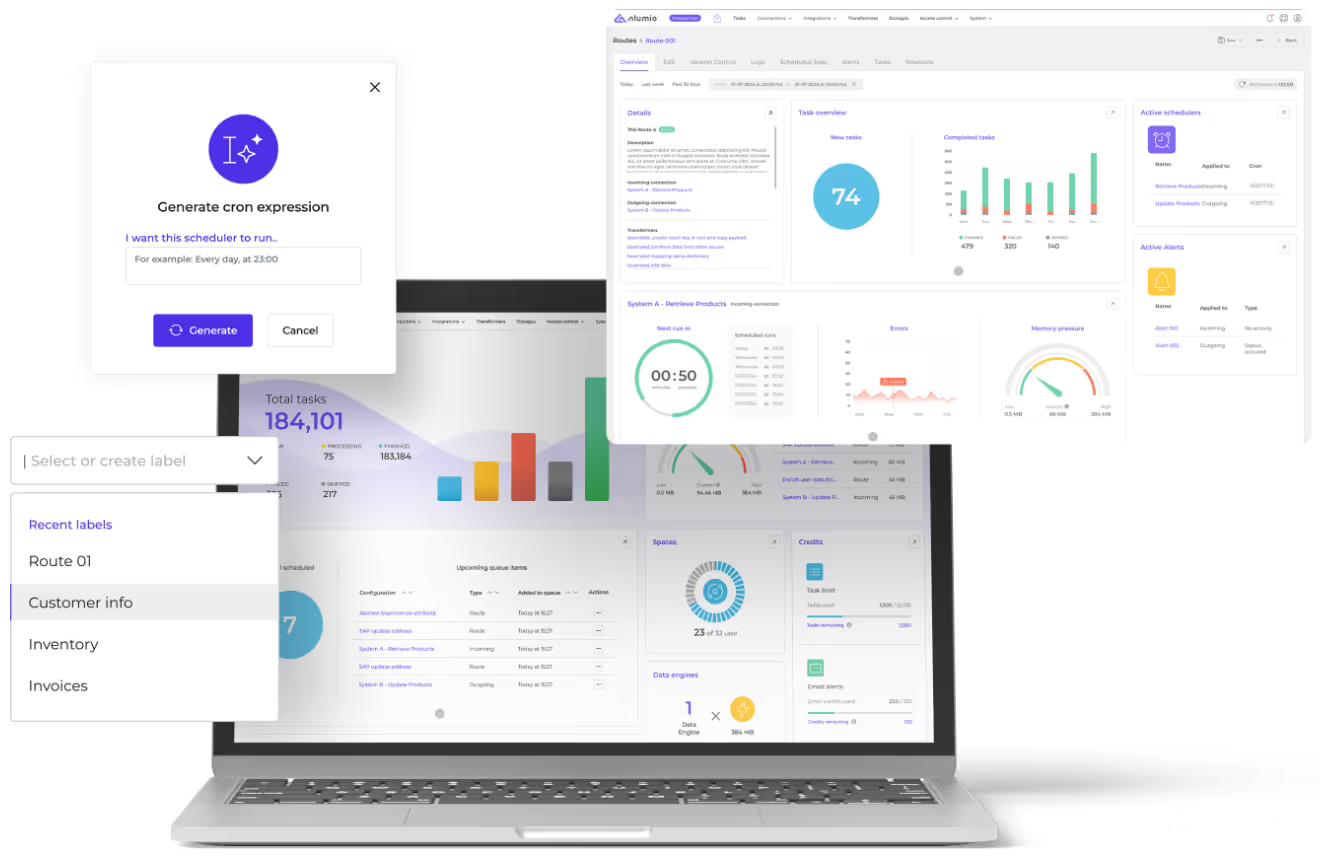
Laptop screen displaying the Alumio iPaaS dashboard, alongside pop-up windows for generating cron expressions, selecting labels and route overview.