Why manufacturing data quality depends on more than clean records
Manufacturing runs on data moving between systems that were never designed to agree. The ERP holds financial and order data. The MES runs the shop floor. The warehouse management system tracks inventory. A product lifecycle or quality system owns specifications and compliance records. Each speaks its own dialect of part numbers, units, and status codes.
When data moves between them, small mismatches are normal. A weight is in kilograms on one side and pounds on the other. A supplier code exists in the ERP but not the MES. A status field is blank because an optional step was skipped. On their own, each looks minor. Across thousands of transactions a day, they become scrap, delays, and reports nobody trusts.
Fixing data quality at the source is worth doing. But no source system stays clean forever. Data also degrades as it crosses formats and systems. The reliable place to enforce quality is where the data actually moves, in the layer between the systems. That is the job of data validation and governance.
What do data validation and governance actually mean?
They are two halves of the same goal, applied at different moments. Validation is the check. As a record moves between systems, a validation step confirms it meets the rules: required fields are present, values fall in allowed ranges, units and formats match, and references point to something real. A record that fails is caught and flagged, not passed downstream.
Governance is the control around that data. It defines who owns each data domain, who can change it, and under what rules. It records every change in an audit trail. Strong data governance is what keeps those rules consistent as the landscape grows. Validation keeps a single bad record from spreading. Governance keeps the rules themselves accountable over time.
Why a golden record is not enough on its own
Master data management gives manufacturing a single, agreed version of key records, like a part, a supplier, or a customer. That single source of truth is the foundation everything else builds on. But a golden record only defines what correct looks like. It does not enforce correctness at the moment data moves. A perfect part record in the master system still arrives corrupted if a connection strips a field or a manual export introduces an error. Validation checks the data against the golden record every time it crosses a boundary. Governance makes sure the golden record itself is changed only by the right people, in the right way. The record sets the standard. Validation and governance keep it.
What does a manufacturing data governance model include?
A workable model has four consistent parts. The first is clear ownership: each data domain, like products, suppliers, or inventory, has a named owner responsible for its definitions and rules. The second is a set of validation rules that live in one place and run automatically as data moves, instead of in each developer's head. The third is access control, so only authorized roles and systems can change master data. The fourth is an audit trail and data lineage, so every change traces back to who made it, when, and where the data came from. The point of the model is not paperwork. It is to make good data the default outcome of how systems connect, not a manual effort someone has to sustain.
How an integration platform enforces validation and governance
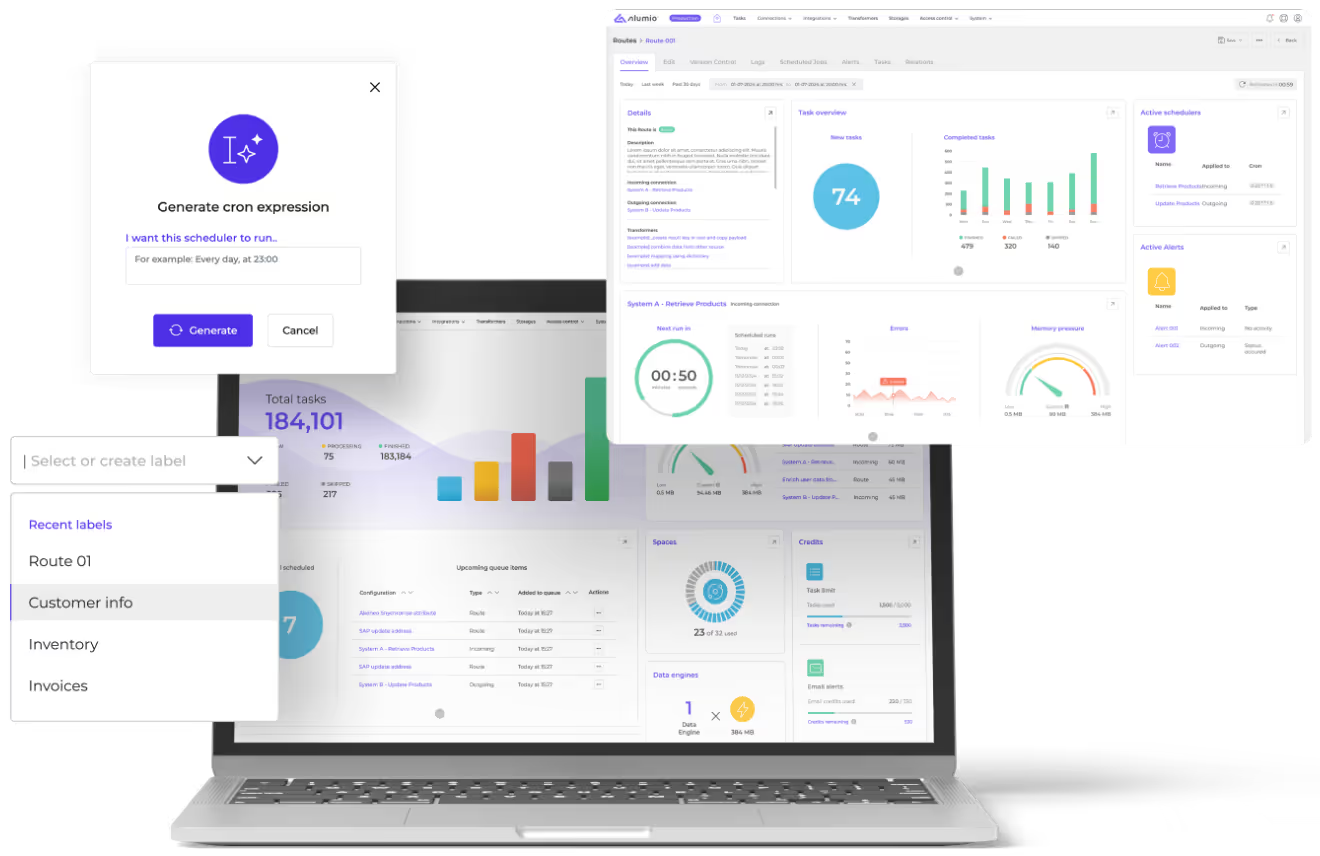
This is where the integration platform stops being plumbing and becomes the enforcement layer. Because every flow passes through it, an iPaaS (integration Platform as a Service) is the natural place to apply data validation and governance once and have them cover every system. The Alumio iPaaS is built for exactly this, as a governed integration backbone that keeps data reliable as the landscape grows.
In the Alumio platform, validation and enrichment happen in transit through configurable Transformers. A record is checked and corrected before a receiving system accepts it. Required fields, formats, value ranges, and references are verified as part of the flow, not left to each connection. Teams can isolate and test a single transformation with the Inspection Tool, catching a formatting error or missing field before it ever reaches production. When a record fails a check, it is caught and logged rather than passed on.
Governance is built into how the platform runs and applied consistently across every integration rather than per connection. Role-based access controls who can change each integration and its rules. Every task, event, and change is captured in an audit trail, with data lineage showing where each value came from and where it went. Isolated environments and version control mean rule changes are tested and tracked before they reach production. The result is structured, consistent data the business can trust for reporting and, in turn, for the AI initiatives that depend on it.
Making data quality a built-in property, not a hope
Manufacturers do not fix data quality by trying harder at the source. They fix it by building data validation and governance into the layer where data moves, so quality is enforced automatically every time systems exchange a record.
That shifts data quality from a recurring cleanup effort to a property of the system. Bad records are caught before they cause scrap or a failed audit. Changes to critical data are controlled and traceable. Reports and, increasingly, AI models run on data the business can actually trust. The golden record defines the standard. A governed integration backbone makes it hold across every system that uses it.
For a manufacturer, that is the difference between data that looks right in a master system and data that stays right everywhere it is used. It is what lets the business scale its operations, satisfy an audit, and act on its numbers without second-guessing them.





.svg)








.svg)
.svg)
.svg)
.svg)
.svg)
.svg)
