Why ERP selection criteria underrate integration
In a wholesale, distribution, or manufacturing business, the ERP is rarely used on its own. Orders arrive from a webshop, the warehouse system picks and ships against ERP stock, and customers and suppliers exchange orders and invoices through EDI integration.
Each of those links has to work with the new ERP from day one. Product codes, price lists, and order formats in a new system rarely match what the webshop and trading partners already expect. Each link then has to be rebuilt or translated.
Much of the advice on how to choose an ERP system treats this as an implementation detail. The demo shows an open API (application programming interface) and integration gets its tick. The real work is then scoped after signing, when the ERP's limits can no longer be negotiated. A few plain questions to each vendor bring that work into view while it can still change the decision.
Six vendor questions to add to your ERP selection criteria
Each of these can be asked in a demo by someone without a technical background, and each answer can be compared across the shortlist. Together they show how much of the connecting the ERP itself will support, and how much will have to happen around it.
- Which of our everyday data can your system share? Orders, customer-specific prices, stock per warehouse, and invoices are often handled separately, and some systems share far more of them than others.
- Does connecting other systems cost extra? Some vendors include it in the licence, some charge for a separate module, and some older on-premises products need an add-on with its own setup fee.
- Can stock and prices update as often as our webshop needs? A system that shares data comfortably once a night may struggle when a webshop needs stock figures every few minutes.
- Can other systems send orders and price changes back in? Sharing data out is the easier half, and some systems limit what they accept back to protect their own records.
- What happens to our connections when you release an update? Ask how much notice changes get and how long older versions stay supported, because unannounced changes turn every connection into ongoing maintenance.
- Can we speak to a customer who connects your system the way we would? Their experience is the one claim you can check outside the demo.
These vendor questions go deeper on one stage of a system project, deciding how the new ERP will connect. The full sequence, from mapping dependencies to budgeting the work, sits in the integration checklist.
How do ERP selection criteria undercount total cost?
Two ERP systems can score identically on features and differ sharply on what it costs to connect them. A system that shares orders and stock but not customer-specific prices leaves a serious gap for a wholesaler with negotiated prices per account.
The usual way to close gaps like that is custom code, written by the ERP vendor, a partner, or an in-house developer. It works, but custom connections are expensive to develop and maintain, and each major ERP update usually means testing and often reworking them.
An integration platform offers another route, keeping that work in one place outside the ERP, where the business can see and change it.
How an integration platform changes ERP selection
An iPaaS (integration Platform as a Service) is a cloud-based, central hub that connects a company's systems, instead of linking each pair directly. It transforms data into the format each system understands, and it automates the exchange in real time, on a schedule, or when something changes.
That eases the pressure on ERP selection. The webshop, the warehouse system, and EDI partners can connect to the hub, so the new ERP no longer needs a ready-made connector for each of them. The business can weigh each ERP on fit and decide how it will connect in the same selection, not after signing.
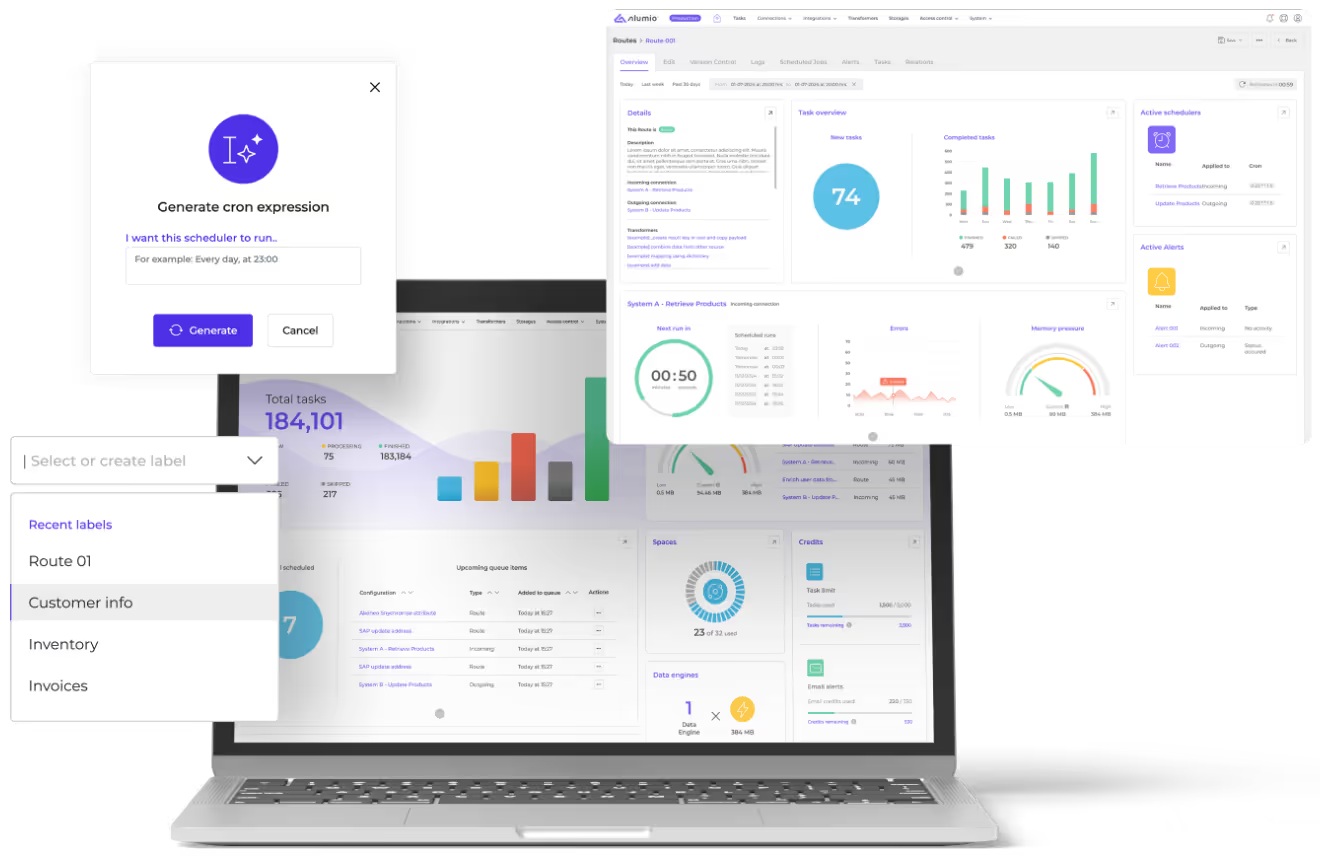
The Alumio integration platform provides features that can be configured around what each ERP shares:
- Orders and prices arrive in the format each system expects: a Transformer between the ERP and the webshop can map order and price formats.
- Stock reaches the webshop in real time or on a schedule: a Route between the ERP and the webshop can run as often as the ERP's limits allow.
- Confirmed orders reach the warehouse without retyping: a Route between the ERP and the warehouse system can pass each order on for picking and send shipment details back.
- EDI orders land in the ERP ready to process: a Route between trading partners and the ERP can translate each incoming EDI order into the ERP's own format.
- An ERP update means one change, not one per connection: because the other systems connect through the platform, a renamed field is fixed once, in the ERP's mapping. Version control and approval workflows let the business check that change before it goes live.
There are no transaction fees, and pricing scales with the number of integrations rather than with data volume.
Maxilia, a wholesaler of promotional products, chose its integration layer as part of replatforming rather than after it. Exact Online, Shopware, and Sales Layer each connect once through that layer, and Maxilia reuses those connections for every new market it enters.
Making integration cost part of your ERP selection criteria
Choosing an ERP decides which software runs finance, stock, and orders for years. Treated as a tick, integration turns into cost and delay after signing, when the ERP's limits are already fixed.
Asking each vendor a few plain questions turns that risk into something a shortlist can compare. With an integration platform in the plan, ERP selection criteria can then weigh what matters most: how well the ERP fits the way the business runs.
The business signs knowing how orders, prices, and stock will move between the ERP and the webshop, warehouse, and trading partners around it. It can also change those flows later without reopening the ERP contract.




.svg)






.svg)
.svg)
.svg)
.svg)
.svg)
.svg)
