


A Alumio vivid purple arrow pointing to the right, a visual representation of how to access more page material when clicking on it.
Go back

Easy WordPress site cackup: 4 trustworthy methods

By
Published on
May 28, 2023
Updated on
June 24, 2026
IN CONVERSATION WITH
Email icon
Email icon

A reliable WordPress backup strategy is crucial for safeguarding your website from potential threats and data loss. In this thorough guide, we'll introduce you to four user-friendly techniques to back up your WordPress site, ensuring its security and your peace of mind. Let's explore these methods together!

1. Manual Backup

Manually backing up your WordPress site is a dependable method for those who prefer a hands-on approach. Here's a step-by-step guide to performing a manual backup:

Database Backup

  1. Access your web hosting account and navigate to phpMyAdmin.
  2. Select your WordPress site's database from the list on the left-hand side.
  3. Click the Export tab at the top of the page.
  4. Choose Quick as the export method and select SQL as the format.
  5. Click Go to download your database backup.

File Backup

  1. Access your web hosting account and open the File Manager.
  2. Locate the public_html or www folder, which contains your WordPress files.
  3. Compress the entire folder into a ZIP or TAR.GZ file.
  4. Download the compressed file to your local computer.

Remember to store your backups in a safe location, such as an external hard drive or cloud storage.

2. Backup Plugins: Simplified and Automated

Using a backup plugin is a convenient way to automate the backup process. Here are some popular options to consider:

UpdraftPlus

UpdraftPlus is a widely used WordPress backup plugin that provides scheduled and on-demand backups. With options to store backups in remote storage services like Google Drive, Dropbox, and Amazon S3, you can rest assured that your site's data is secure.

BackWPup

BackWPup is another reliable plugin that offers automated scheduling, remote storage support, and the ability to restore your site from a backup. Its user-friendly interface makes it a favorite among WordPress users.

Remember, Alumio can assist with data integration when restoring your website from a backup, ensuring a seamless experience.

3. Web Host Backup Solutions: Extra Layer of Protection

Many web hosting providers offer built-in backup solutions for their customers. These services often come with automated scheduling and easy restoration options. Check with your hosting provider to see if they offer backup services and how to enable them.

4. Third-Party Backup Services: Professional and Comprehensive

If you prefer a more professional approach, consider using third-party backup services that specialize in WordPress site backups. These services typically provide advanced features, enhanced security, and expert support.

VaultPress (Jetpack Backup)

VaultPress is a premium backup service offered by Automattic, the company behind WordPress.com. It provides real-time backups, easy restoration, and top-notch security features like malware scanning and spam protection.

BlogVault

BlogVault is a popular third-party backup service known for its incremental backups, which save server resources and minimize the risk of backup failure. It also offers centralized site management, making it an excellent choice for those managing multiple WordPress sites.

By employing one or more of these backup methods, you can protect your WordPress site and ensure its safety in the face of potential threats.

Conclusion

Having a robust WordPress backup strategy is essential for the security and longevity of your website. With the four methods outlined in this guide – manual backup, backup plugins, web host backup solutions, and third-party backup services – you have a variety of options to choose from based on your preferences and needs. Don't forget that Alumio can help with data integration when restoring your site from a backup, making the process even smoother.

Remember to follow these best practices for an effective backup strategy:

Turn AI ambition into action

Portrait of Leonie Becher Merli, Business Development Manager at Alumio

Get a free assessment of your integration needs and next steps

Portrait of Leonie Becher Merli, Business Development Manager at Alumio

No items found.
Topics in this blog:
No items found.

FAQ

Integration Platform-ipaas-slider-right
Why is backing up a WordPress site important?

A WordPress backup is your protection against data loss from server failures, hacking, accidental deletion, or a failed plugin or theme update. Without a recent backup, a site can be permanently lost or require extensive manual reconstruction. A reliable backup strategy ensures you can restore to a known-good state quickly, minimizing downtime and protecting the content, configuration, and customer data your site depends on.

Integration Platform-ipaas-slider-right
What are the main methods for backing up a WordPress site?

The four main WordPress backup methods are manual backup (exporting the database via phpMyAdmin and downloading files via FTP), backup plugins (automated solutions like UpdraftPlus that schedule and store backups automatically), hosting provider backups (many managed hosts include daily backups as part of their service), and staging environments (a synchronized copy of the site). Most sites benefit from at least two methods in combination.

Integration Platform-ipaas-slider-right
What should a complete WordPress backup include?

A complete backup must include both the database (which contains all posts, pages, settings, and user data) and the files (WordPress core, themes, plugins, and uploaded media in wp-content). Backing up only one without the other leaves the site unrestorable to its full state. After a restore, verify that database and file versions match to avoid compatibility issues.

Integration Platform-ipaas-slider-right
How often should you back up a WordPress site?

Backup frequency should match how often the site changes. A high-traffic e-commerce site processing daily orders should back up the database at least daily. A content site updated weekly can use daily or weekly backups. The key question is: if you had to restore from your most recent backup right now, how much data and work would you lose? That answer defines the right backup interval.

Integration Platform-ipaas-slider-right
Where should WordPress backups be stored?

Backups should always be stored in at least one location off the server hosting your WordPress site. If a server fails or is compromised, backups stored on the same server are lost with it. Common off-site options include cloud storage (Google Drive, Dropbox, Amazon S3), a separate hosting account, or a local external drive. The 3-2-1 rule is a useful guide: three copies of the data, on two different media types, with one copy off-site.

Integration Platform-ipaas-slider-right
What are the best free backup plugins for WordPress?

The most widely used free WordPress backup plugins are UpdraftPlus (supports remote storage destinations including Google Drive, Dropbox, and Amazon S3, with easy in-dashboard restore), BackWPup (complete backup to cloud storage), and Jetpack Backup (real-time backup on paid plans). UpdraftPlus is the most popular for most users because it covers both scheduled backups and on-demand restores without requiring a premium upgrade for the core functionality.

Get a free assessment of your integration needs

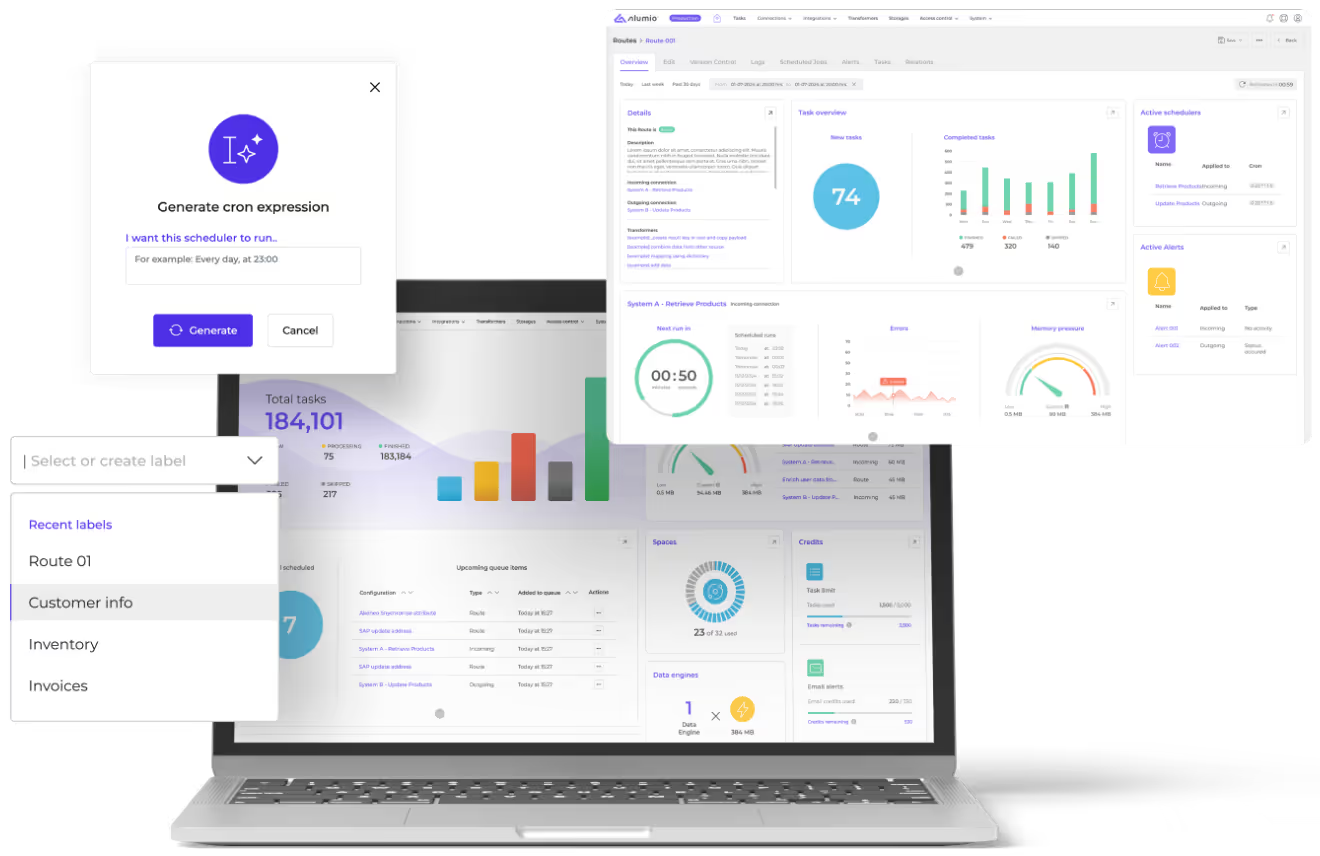
Laptop screen displaying the Alumio iPaaS dashboard, alongside pop-up windows for generating cron expressions, selecting labels and route overview.