





.svg)



Why AI needs better integration
Traditionally, integrating systems meant building APIs, mapping data fields, and scheduling synchronizations. AI changes the game by demanding real-time, context-aware access to data. A customer might ask an AI assistant, “What are our top-selling SKUs in the last 24 hours?,” and the AI needs to instantly retrieve, process, and interpret that data.
Without seamless integration, these requests lead to slow, inaccurate, or incomplete responses. With AI-powered integration platforms, however, that query can be fulfilled on-demand, securely pulling live data from connected systems.
Enter the Model Context Protocol (MCP): The "USB-C" for AI
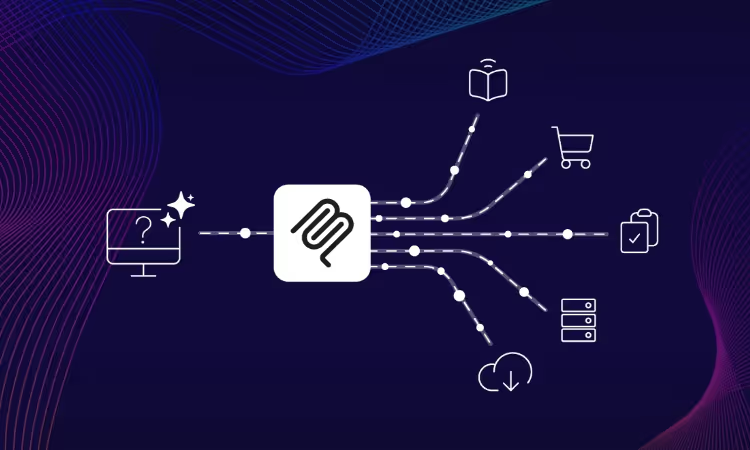
One of the most exciting developments is the Model Context Protocol (MCP), introduced by Anthropic in 2024. Think of MCP as the universal connector for AI, allowing large language models (LLMs) and AI assistants to interact with any application or dataset without building custom integrations.
According to Ray Bogman, Head of Innovation at Alumio, MCP standardizes the way AI models can retrieve and augment data from external applications and data sources. Just like an iPaaS connects ERP and CRM systems, MCP connects AI models to those systems via a consistent, model-agnostic interface.
Learn more about MCP and the future of integrations →
Practical applications of AI in iPaaS
The marriage of MCP and iPaaS opens up powerful use cases:
- Natural language data queries: Ask, “Which SKUs are part of our summer collection?” and receive real-time product data from your ERP or PIM.
- Agentic workflows: Deploy AI “agents” that automatically monitor inventory, generate sales summaries, and trigger alerts.
- Multi-cloud AI integration: Access datasets across AWS, Azure, and on-prem environments without building separate connectors.
- e-commerce personalization: Deliver tailored product recommendations by dynamically querying live stock, order history, and customer behavior.
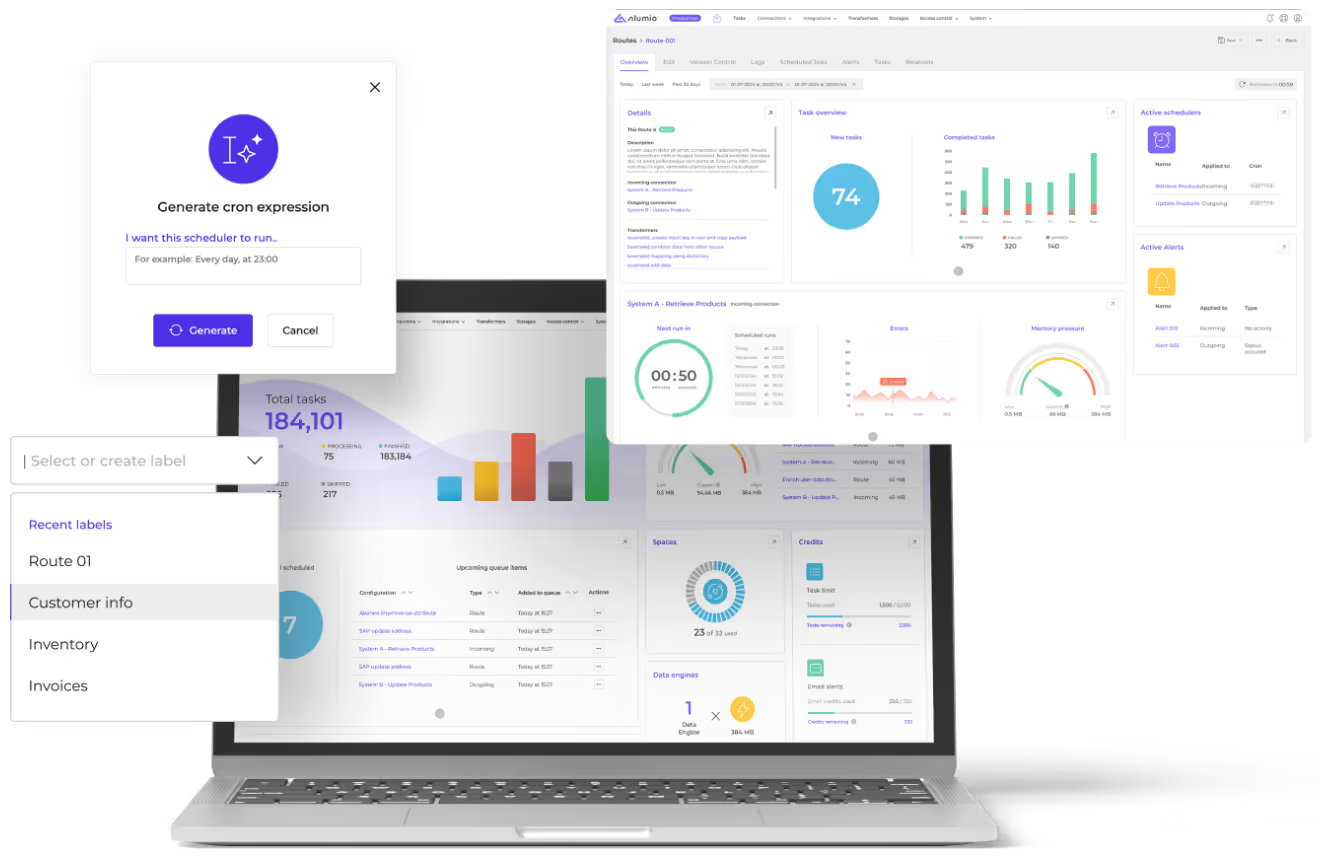
With Alumio’s API-first architecture, these integrations work across platforms like Shopify, Magento, Shopware, Spryker, and beyond, without heavy code customization.






.svg)
.svg)
.svg)
.svg)
.svg)
.svg)
