What 3PL integration moves between the brand and the warehouse
A customer orders on Friday. By Wednesday the parcel has not arrived, so they email support. The agent opens the order and sees that it was placed, paid for, and nothing after that. Everything that happened next happened in a building the brand does not run.
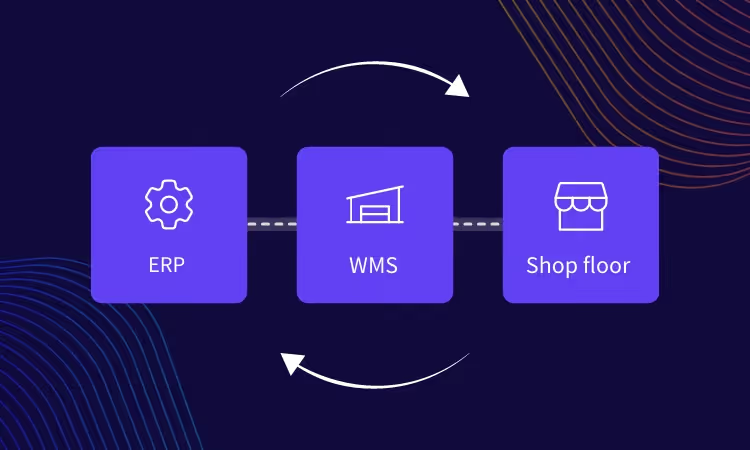
A 3PL, or third-party logistics provider, holds the stock and ships the orders. The provider runs its own warehouse management system (WMS). 3PL integration is the connection between that system and the brand's storefront and ERP. One thing goes out to the provider, and four have to come back:
- Orders out: what to pick, pack, and ship, with the service level and any special handling the customer paid for
- Stock levels back: what the provider actually holds, which is the figure the storefront sells against
- Dispatch confirmation and tracking: what shipped, when, and with which carrier reference
- Receipts and putaway: inbound deliveries confirmed, so purchased stock becomes sellable only when it really is
- Returns and adjustments: items received back, graded, and either restocked or written off
Orders out is the straightforward direction. Stock levels and dispatch confirmation are where the timing slips, and the storefront and the service desk both run on them. They sit alongside ERP, PIM, and payments among the essential e-commerce integrations.
Why does file exchange stop working?
Most 3PL relationships start with files on a schedule. A stock file arrives twice a day and an order file goes out overnight. That works until the business grows.
Frequency is the obvious limit. A stock file delivered twice a day means the storefront sells against a figure up to twelve hours old. At low volume nobody notices. During a promotion it produces oversells.
Format drift is the quieter problem. The provider changes a column, adds a status code, or renames a field. The import fails, or worse, it succeeds and misreads a value. Nobody monitors the file, so the damage surfaces days later as stock that will not reconcile.
Several providers multiply both. A brand might use one 3PL domestically, another in a second market, and a fulfillment marketplace for overflow. That is three formats, three status vocabularies, and three timings to reconcile against one order book.
What weak 3PL integration costs the brand
Outsourcing moves the warehouse work out of the business. It does not move the consequences, which land in the teams still facing the customer:
- Service answering blind: agents cannot say where an order is without emailing the provider and waiting for a reply
- Oversells during peak: stale stock files at the exact moment volume is highest
- Marketplace metrics damaged: dispatch confirmations arriving after Amazon's or Bol's window, which counts as late even when the parcel left on time
- Invoices nobody can check: storage and handling charges that cannot be reconciled against volumes the brand can verify
- A relationship that is expensive to leave: file formats built for one provider weaken every renewal negotiation
All of them are easy to miss at contract stage. Rates and service levels get negotiated hard. How the data moves gets left to implementation, and that decision sets the ceiling on everything in the list above.
Brands connect a provider three ways today. They use the provider's portal, which gives people somewhere to look and gives internal systems nothing to consume. They install a provider-supplied connector, which works if their systems are the common ones. Or they schedule file exchange, which is the default and caps how fresh any downstream figure can be. An integration platform-as-a-service (iPaaS) is the fourth route, and the only one that holds up across several providers at once.
How an integration platform connects a 3PL
An iPaaS is a cloud-native, central platform that every system connects to once, instead of connecting directly to each other. The storefront, the ERP, and each provider's WMS all connect to it. It then moves and reshapes the data between them.
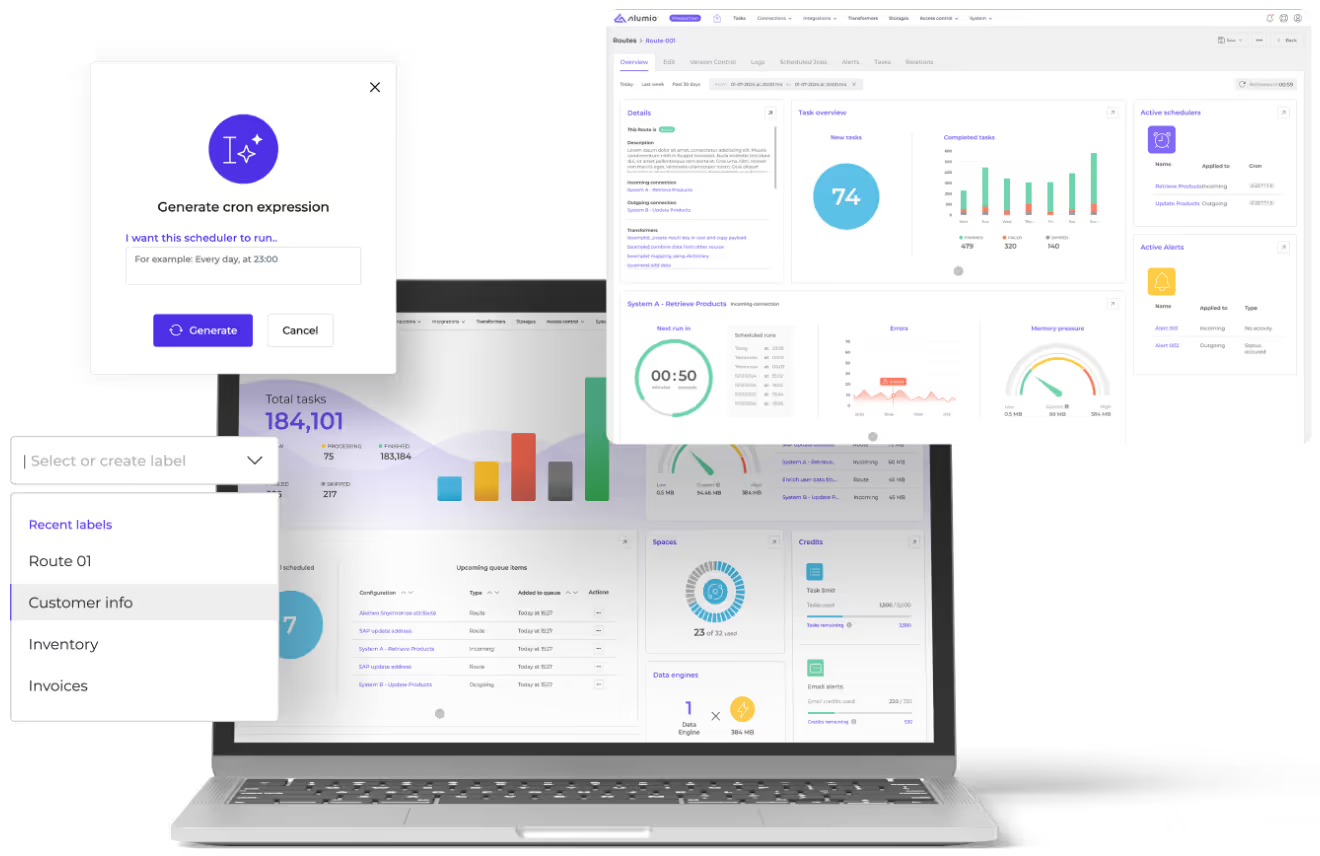
The Alumio integration platform can be configured to handle a 3PL connection in four ways:
- Orders released as they are placed: an event-driven Route within Alumio pushes each order to the provider immediately, so the pick window starts on the order rather than the next batch
- One internal vocabulary across providers: a Transformer in the Alumio iPaaS converts each provider's formats and status codes into one internal model, so a second or third 3PL does not multiply it
- Stock and dispatch returned continuously: availability and shipment confirmations flow back as they happen, which keeps the storefront and the marketplace listings accurate
- Discrepancies traceable: the Alumio iPaaS logs what was sent and what came back, so a stock difference or a missing confirmation can be checked rather than argued about
Drake & Farrell (now acquired by Logicall) is a Dutch reverse-logistics company that handles returns and fulfillment for customers selling on Shopify, Adobe Commerce, and WooCommerce. It implemented Alumio, delivered by Fresh Dynamics and Inteqrate, to connect Microsoft Dynamics 365 F&O to all of those storefronts. One platform replaced a separate connection for each customer. Read the case study.
What good 3PL integration gives the business
Outsourcing fulfillment is justified on cost per order and flexibility, and both arguments hold. The business case leaves out one thing. The provider becomes the source of truth for stock and shipment status, and those are the two facts customers ask about most.
An integration platform returns that visibility without taking the work back. The provider still picks and ships. The brand answers a customer from its own systems, sells against stock figures accurate enough to survive peak, and checks an invoice against volumes it can verify.
That leaves the business able to renegotiate or replace a provider on commercial terms rather than technical ones. At renewal that is worth more than anything on the rate card.





.svg)








.svg)
.svg)
.svg)
.svg)
.svg)
.svg)
