


.avif)


.svg)



How can you connect OpenAI to your business?
Connecting OpenAI to your e-commerce business means connecting it to all the systems that ensure your platform runs smoothly. Apart from connecting OpenAI with an e-commerce platform, this can also include integrating it with an ERP (Enterprise Resource Planning) system, a PIM (Product Information Management) system, a CRM (Customer Relationship Management), Marketplace software, WMS (Warehouse Management System), or a POS (Point of Sales), among others. In order to effectively integrate all these different software, modern businesses now implement an "integration Platform as a Service (iPaaS)" that ensures optimal, API-driven connectivity across all systems.
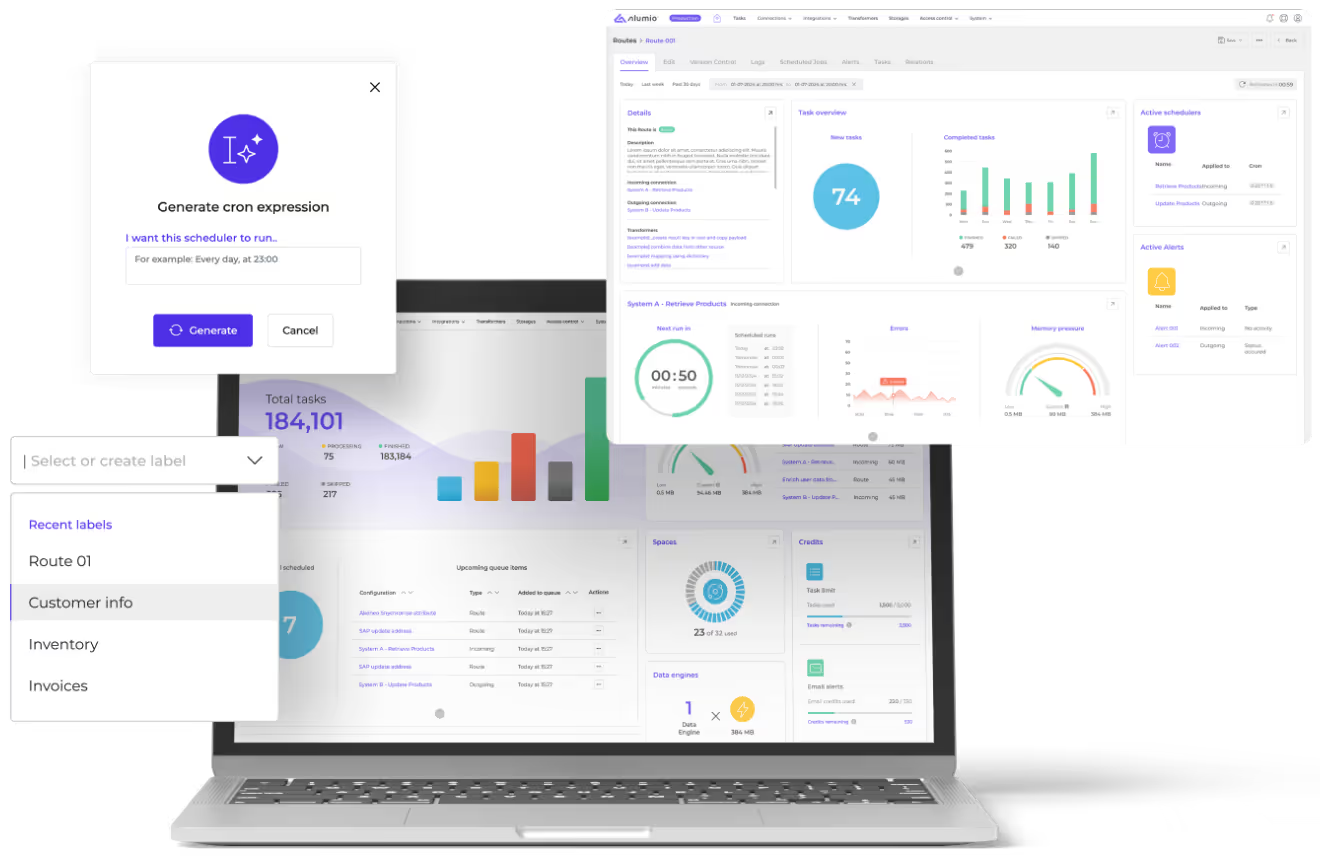
Alumio is a popular iPaaS solution that has developed an OpenAI connector. This connector contains pre-configured OpenAI data that helps businesses rapidly integrate the leading AI solution with any business systems or cloud applications, via the Alumio iPaaS, in order to explore endless automation capabilities.
What are the benefits of connecting OpenAI to your systems?
OpenAI can improve your business efficiency by directly enhancing automation. Here are the advantages of connecting OpenAI with the following popular systems to improve e-commerce operations and customer experiences:
E-commerce software
You can integrate OpenAI with E-commerce platforms like Adobe Commerce, BigCommerce, CommerceTools, or Shopify to automate and optimize tasks, resulting in enhanced operation efficiency, improved customer experiences, and increased revenue. The benefits of connecting OpenAI to your e-commerce platform include:
- Personalization: OpenAI can analyze different types of customer data such as search and purchase history. It can then us this data to generate personalized recommendations and product suggestions leading to increased customer engagement, conversion, and revenue generation.
- Sales forecasting: Using OpenAI, you can gather historical sales data to predict future sales trends and demands, helping you make informed decisions about future marketing strategies.
- Inventory management: Integrating OpenAI can help use data such as sales history, seasonality, and supplier lead time to help optimize your inventory levels. It can also ensure that you have the right products in stock at the right time, reducing stockouts, improving cash flows, and minimizing waste.
- Fraud detection: Leveraging data such as transaction history, shipping addresses, and device information, OpenAI can identify potential instances of fraud or financial discrepancies and avoid chargebacks.
- Chatbots: OpenAI can generate intelligent chatbots that assist customers with popular inquiries such as order tracking, returns, and product recommendations. These AI powered chatbots can generate responses based on previous interactions and identify potential issues before they escalate. These quick, accurate, and predictive responses can improve customer satisfaction and reduce the workload of your customer support team.
ERP
Connecting OpenAI to an ERP system like SAP, Microsoft Dynamics 365, Sage, or Odoo can enhance management capabilities across several channels and result in:
- Supply chain optimization: OpenAI can optimize your supply chain by analyzing data such as order history, inventory levels, and shipping times. By identifying patterns and predicting demand, OpenAI can improve inventory management, reduce stockouts, and upgrade shipping routes, leading to more efficient operations.
- Predictive maintenance: Analyze usage patterns, maintenance history, data from your ERP system, and sensor data to predict when equipment is likely to fail. This helps businesses take the necessary measures to avoid downtime and lower maintenance costs.
PIM
You can integrate OpenAI with a PIM system like Akeneo or Pimcore to optimize product management tasks and benefit from:
- Automated data quality control: Identify potential errors or inconsistencies in product data, such as missing or incorrect information, duplicate entries, or formatting issues, in order to improve the accuracy and completeness of your product information.
- Automated content creation: Generate product descriptions, titles, and other content based on product attributes and other data. This translates into saving time and resources on manual content creation, and guaranteeing that your product information is consistent and high-quality across all channels.
- Enchanced product categorization: Analyze product attributes, descriptions, and other data to suggest appropriate categories and classifications for your products. By automating this process, you can ensure that your products are easily discoverable by customers, leading to increased visibility and sales.
- Intelligent search: Enhance your PIM system’s search functionality by analyzing user behavior and search queries to provide personalized and relevant search results, increasing customer satisfaction and conversion rates.
- Predictive analytics: Use data from your PIM system and other sources to predict customer behavior, identify trends, and make recommendations for product improvements. By leveraging the power of predictive analytics, you can make informed decisions about product strategy and marketing efforts, leading to increased revenue and customer loyalty.
CRM
Connecting OpenAI to a CRM system like Salesforce can help automate several processes and enhance customer data insight. Here are some key benefits:
- Customer segmentation: OpenAI can segment your customer base by analyzing patterns in customer behavior and preferences. This results in an identification of customer groups with similar characteristics and behavioral patterns that make tailoring your marketing and communication an easy task.
- Lead scoring: Analyze the data in your CRM system to systematically qualify and score leads based on their potential of becoming a customer. By gathering data such as company size, job titles, and engagement history, OpenAI can identify the most promising leads and prioritize them for follow-up.
- Opinion mining: Scan through customer feedback and social media posts to identify trends in customer sentiment. Understanding how customers feel about your products or services can give you valuable insights that result in the ability to make informed decisions about product development, marketing strategies, and customer service initiatives.
The business advantage of OpenAI integrations
These mark just some of the many practical benefits of integrating OpenAI’s capabilities with different systems, but hopefully it gives you a fair gist. The bottom line is, the benefits of integrating OpenAI with your business are diverse and manifold. Many modern companies are already rushing to levearage these AI advantages. In an ever-changing e-commerce landscape, innovation and automation are the key to staying relevant. Don’t get stuck in the past. Integrate your business with OpenAI and integrate the future with Alumio!





.svg)
.svg)
.svg)
.svg)
.svg)
.svg)
