

Choose an iPaaS built for your use case

Get the guide
A Alumio vivid purple arrow pointing to the right, a visual representation of how to access more page material when clicking on it.
Go back

Solving data chaos in B2B distribution with an iPaaS

By
Carla Hetherington
Published on
October 20, 2025
Updated on
June 24, 2026
IN CONVERSATION WITH
Email icon
Email icon

The wholesale and distribution industry runs on data, but for many organizations, that data is scattered, inconsistent, and impossible to trust. From supplier spreadsheets and EDI orders to ERP, PIM, WMS, and e-commerce systems, information lives in silos. The result? Duplicate entries, manual work, and costly errors. In an era where speed and accuracy define competitiveness, this “data chaos” is holding wholesalers back. The solution lies in integration, and more specifically, in adopting a wholesale integration platform built on iPaaS (Integration Platform as a Service) technology.

The cost of disconnected wholesale data

When your ERP doesn’t match your e-commerce stock levels, or your supplier data conflicts with what sales sees in the CRM, small inconsistencies turn into big problems. Orders get delayed, invoices don’t reconcile, and customer trust erodes.

This isn’t just a technical issue, it’s a growth barrier. Many distributors spend hours manually fixing files, reconciling prices, or cleaning up product data. In a world of B2B digital transformation, this manual chaos is unsustainable.

How iPaaS brings order to data chaos

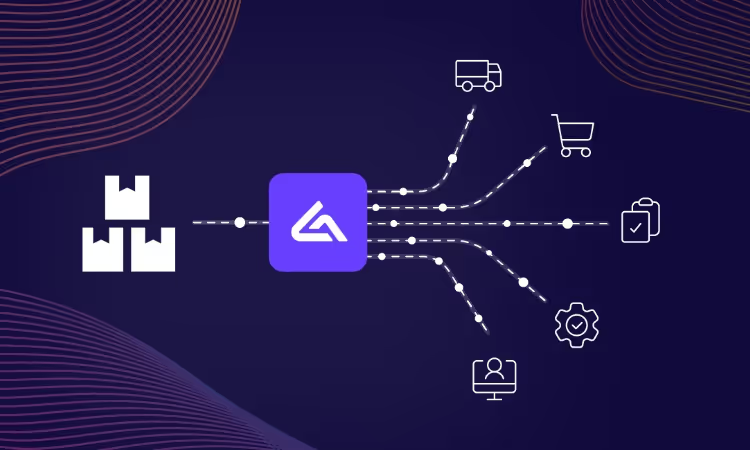
An iPaaS tailored to the needs of wholesalers acts as a unified layer that connects every system, partner, and data source across your value chain. Instead of juggling point-to-point connections, an iPaaS centralizes all integrations in one place, providing clean, consistent, and real-time data everywhere.

It standardizes information from your suppliers, customers, and internal systems so your ERP, WMS, and e-commerce platforms always “speak the same language.” By automating data transformations, validations, and syncs, iPaaS eliminates errors before they reach your customers.

Think of it as a digital backbone for your distribution network, one that powers B2B data automation, improves accuracy, and gives every department reliable insights.

Real results for modern distributors

With iPaaS, distributors gain end-to-end visibility across inventory, orders, and pricing. Partner onboarding that used to take weeks now happens in days. Real-time integration between ERP and e-commerce ensures products are always up to date, stock levels are accurate, and order confirmations are instant.

Most importantly, clean data becomes an engine for innovation. Once your systems are integrated, you can unlock AI-ready data, improve forecasting, and make smarter, data-driven decisions across your supply chain.

The path to clean, connected data

Start small. Identify where data breaks down most often, maybe it’s supplier price lists, stock updates, or customer order files. Then connect those touchpoints with a wholesale iPaaS solution to automate the flow. Over time, expand your integrations until every system runs in sync.

The result is clarity: accurate data, faster processes, and more confidence in every decision. No more manual imports, no more mismatched numbers, just a connected distribution network built for the digital age.

From wholesale data chaos to clarity

Data chaos doesn’t have to be part of doing business in wholesale. With the right integration platform for distributors, you can turn disorganized information into a single, trusted source of truth, powering automation, efficiency, and customer satisfaction. After all, clean data isn’t a nice-to-have anymore. It’s the foundation of modern wholesale digital transformation. And with iPaaS, achieving it has never been easier.


Turn AI ambition into action

Portrait of Leonie Becher Merli, Business Development Manager at Alumio

Get a free assessment of your integration needs and next steps

Portrait of Leonie Becher Merli, Business Development Manager at Alumio

No items found.
Topics in this blog:

FAQ

Integration Platform-ipaas-slider-right
What is data chaos in B2B distribution and what causes it?

Data chaos in B2B distribution describes a state where critical business data (inventory, pricing, orders, product information) is scattered across disconnected systems and in inconsistent formats, making it unreliable for operations and decision-making. It is caused by siloed systems (ERP, PIM, WMS, e-commerce, CRM each holding their own version of data), manual data entry and reconciliation processes, and fragile point-to-point integrations.

Integration Platform-ipaas-slider-right
How does disconnected data affect wholesale and distribution operations?

Disconnected data causes operational failures that compound as volume grows: stock levels in the ERP do not match what e-commerce shows customers, causing overselling; orders from e-commerce are not automatically reflected in the WMS, causing fulfillment delays; pricing agreements stored in CRM are not visible to the storefront, requiring manual overrides; and finance teams spend hours reconciling invoices that should reconcile automatically.

Integration Platform-ipaas-slider-right
How does an iPaaS like Alumio solve data chaos in B2B distribution?

Alumio centralizes data flows between the systems that cause data chaos (ERP, PIM, WMS, e-commerce, CRM) into a single governed platform. Rather than each system exchanging data through fragile custom connections, they connect once to the integration backbone, which handles transformation, routing, monitoring, and error recovery. This creates a single place to monitor all data flows, fix errors, and enforce data ownership rules across the distribution operation.

Integration Platform-ipaas-slider-right
What are the most important systems to integrate first in a wholesale distribution environment?

The highest-priority integration in wholesale distribution is typically between ERP and the e-commerce or order management system, because orders and inventory are the most operationally critical flows. Getting orders flowing reliably from e-commerce into the ERP and stock levels flowing back prevents the most common and costly errors. Connecting the WMS for fulfillment and the PIM for product data are typically the next priorities.

Integration Platform-ipaas-slider-right
When should a wholesale distributor invest in an integration platform?

The right time to invest in an integration platform is when manual data reconciliation between systems is consuming significant team time, when integration failures are causing operational errors (missed orders, wrong stock, invoice discrepancies), or when the business is planning to add new channels or systems that would each require another point-to-point custom integration. Acting before the data chaos reaches a crisis point reduces the migration complexity and cost.

Integration Platform-ipaas-slider-right
What are the long-term benefits of eliminating data chaos with an iPaaS?

The long-term benefits are: reliable, real-time data visibility across ERP, e-commerce, and logistics systems; elimination of the manual reconciliation work that consumes operations team time; the ability to scale transaction volume and add new channels without proportional increases in manual effort; and a governed audit trail of every data exchange that supports financial reporting and compliance. For wholesale distributors, the integration backbone is increasingly the difference between operations that scale and those that break under growth.

Get a free assessment of your integration needs

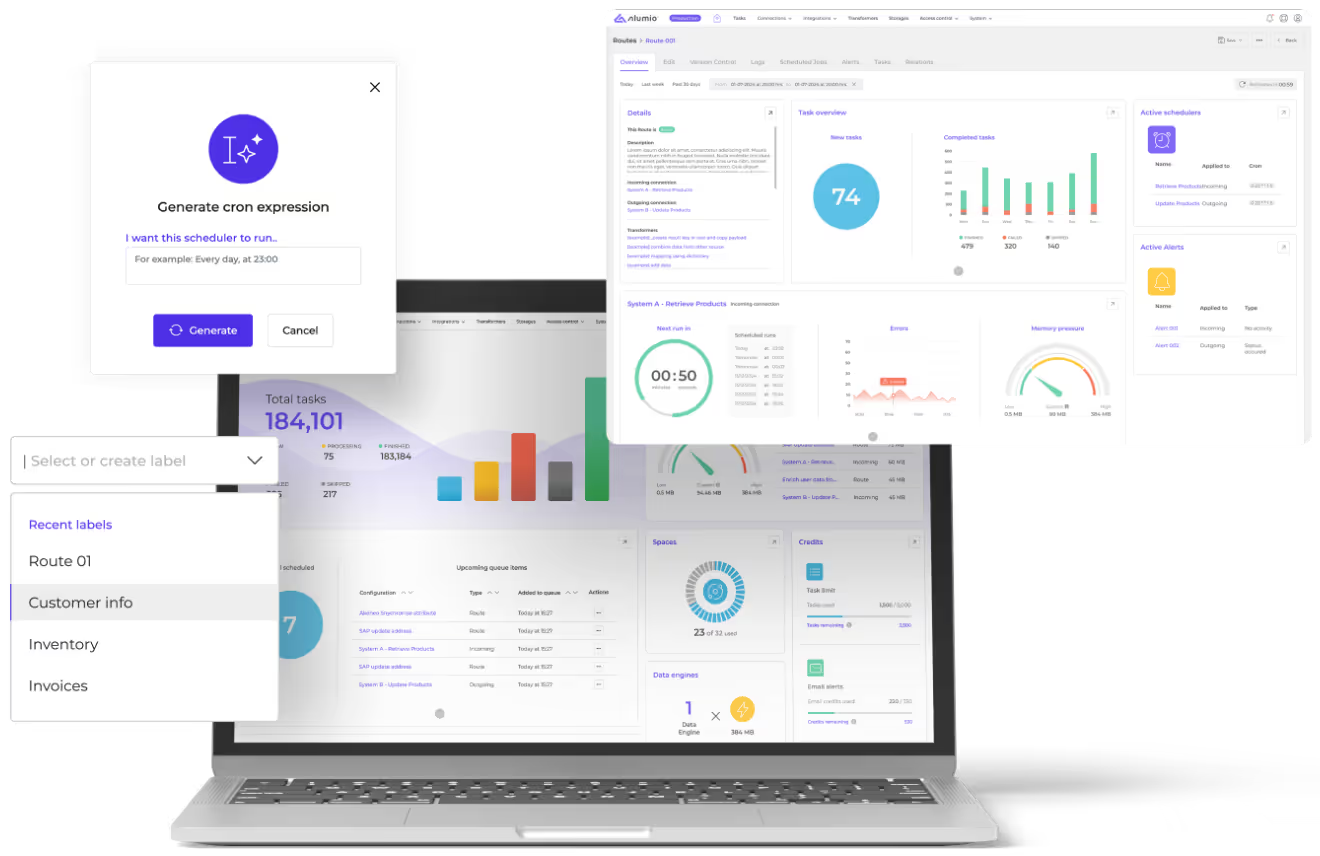
Laptop screen displaying the Alumio iPaaS dashboard, alongside pop-up windows for generating cron expressions, selecting labels and route overview.