How integration drives digital transformation in wholesale
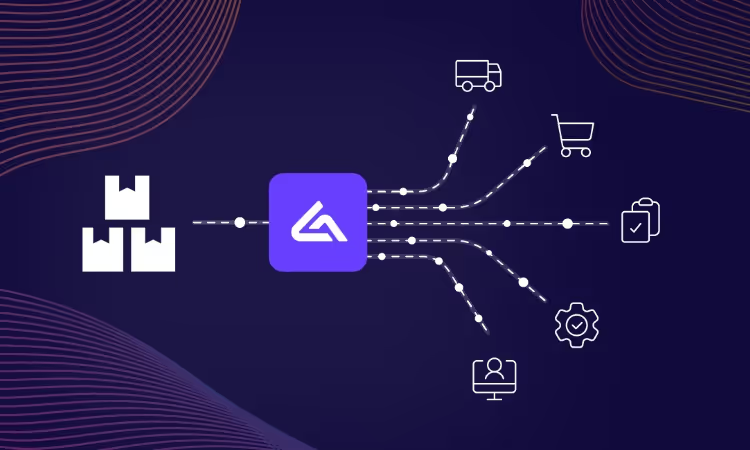
At the center of the wholesale evolution lies integration, not just simple data connectivity, but a strategic foundation for growth. A wholesale integration platform like an iPaaS for wholesalers allows companies to connect legacy ERPs with modern e-commerce, CRM, and logistics systems. This creates a unified data ecosystem that supports automation, scalability, and smarter business decisions. In short, integration drives digital transformation in wholesale by transforming disconnected data into a single, reliable source of truth.
The key trends reshaping wholesale
Several market shifts are accelerating the need for integration in the wholesale sector. The first is the rise of B2B e-commerce and the “Amazonized” buyer experience. Business customers now expect real-time product availability, personalized pricing, and self-service ordering portals. Wholesalers that can’t deliver that seamless experience risk losing customers to digital-first competitors.
At the same time, omnichannel sales and marketplace expansion are redefining how distributors sell. From webshops to B2B portals and third-party marketplaces, success now depends on being able to connect ERP to e-commerce systems and synchronize product, price, and stock data across every channel.
Meanwhile, AI and advanced analytics are moving from theory to practice. Wholesalers are using machine learning for demand forecasting, dynamic pricing, and predictive maintenance, but these tools only work when they have access to clean, connected, real-time data. Without integration, AI adds more complexity than clarity.
Supply chain disruption, sustainability demands, and increasing compliance requirements are also reshaping how distributors operate. Integration enables the agility and visibility needed to respond to geopolitical changes, manage reverse logistics, track materials, and comply with ESG or DPP regulations. And as IT shifts from a maintenance role to a driver of innovation, integration for distributors becomes the foundation for modular, data-centric architectures that future-proof their operations.
What makes wholesale different
While digital transformation is a buzzword across industries, wholesale faces unique challenges that make integration even more critical. Unlike manufacturers or retailers, distributors must manage high partner density, thousands of suppliers, customers, and logistics providers, all using different EDI standards, APIs, and file formats.
They also deal with complex pricing and contract logic, such as tiered pricing, rebates, and credit terms that vary per customer. This data needs to flow seamlessly between ERP, CRM, and e-commerce systems to prevent errors and disputes.
Add to that the burden of legacy systems and integration debt, aging ERPs or WMS platforms that weren’t built for API connectivity, and it becomes clear why integration is essential. Manual reconciliation, CSV imports, and inconsistent data continue to drain time, margin, and morale. Without B2B data automation, wholesalers lack real-time visibility into inventory, orders, and supplier performance.
The solution lies in building an intelligent, governed integration layer that connects every partner, platform, and process while maintaining control, accuracy, and scalability.
How iPaaS unlocks wholesale transformation
Modern integration platforms for wholesalers, commonly known as iPaaS (Integration Platform as a Service), offer a powerful, flexible alternative to traditional middleware or point-to-point integrations.
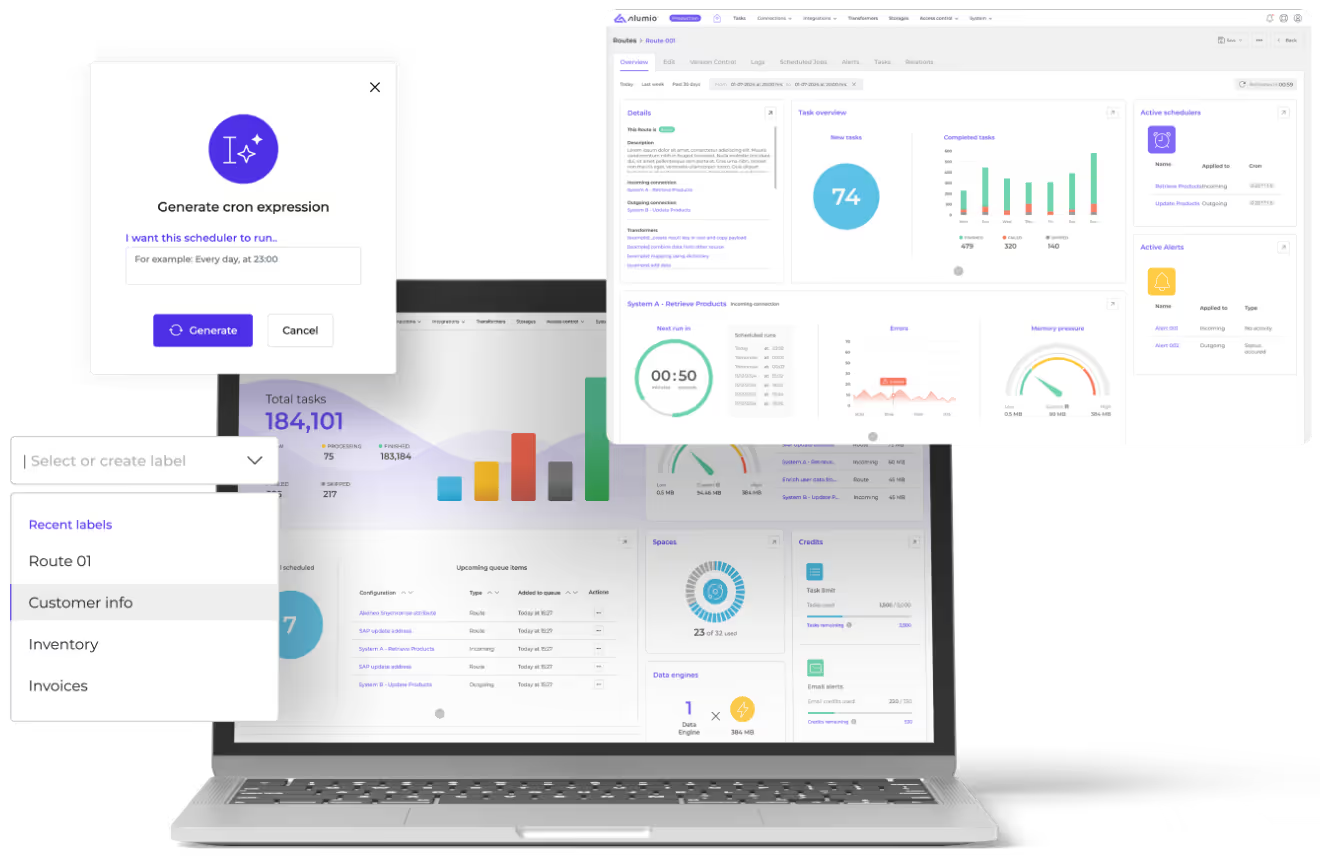
An iPaaS creates a canonical data model that standardizes supplier, product, pricing, and order data across all systems, ensuring every application “speaks the same language.” Prebuilt connectors and templates make it easy to integrate ERP, CRM, WMS, and e-commerce systems quickly, while advanced error handling, retries, and monitoring ensure that data never gets lost.
By enabling API-driven flows and event-based triggers, wholesalers can move from batch uploads to real-time updates, keeping inventory, pricing, and order data perfectly synchronized. Low-code tools allow business users, not just IT, to map data and adjust rules within guardrails, empowering teams while maintaining governance.
In essence, an iPaaS serves as the digital backbone for wholesale modernization, enabling speed, resilience, and long-term scalability.
The measurable benefits of integration-first architecture
When wholesalers embrace integration-first architectures, the business impact is immediate and measurable. Partner onboarding that once took months can now be done in days, thanks to reusable mappings and automated workflows. With real-time data synchronization, order errors, cancellations, and chargebacks are drastically reduced.
Clean, consistent data also improves fulfillment accuracy and on-time performance, ensuring the right stock is in the right place when customers need it. The total cost of integration drops as fragile, custom-built connections are replaced with centralized monitoring and reusable templates.
Most importantly, an integrated foundation unlocks advanced capabilities like predictive analytics and AI-driven decision-making. Forecasting, next-best offers, and route optimization all depend on the clean data pipelines that integration provides. With a modular, composable setup, wholesalers can replace or upgrade any system, ERP, CRM, or e-commerce, without disrupting the entire ecosystem.
A roadmap for wholesale digital transformation
For wholesalers just starting their modernization journey, the path forward doesn’t have to be overwhelming. The first step is to audit existing data flows and identify manual or redundant processes, such as CSV uploads, disconnected supplier data, or slow partner onboarding.
Next, define a canonical data model that standardizes how key elements like products, pricing, and customers are represented across systems. Start small with a high-impact integration, such as syncing ERP and e-commerce orders, to demonstrate quick ROI.
From there, reuse mappings and templates to accelerate future projects, and establish clear monitoring and alerting to ensure ongoing reliability. Once your data foundation is stable, you can layer on AI, forecasting, and other advanced analytics confidently, knowing your data is clean and connected.
The future of wholesale belongs to the connected distributor
In the end, the future of wholesale won’t be determined by who offers the lowest prices or widest catalog, it will be shaped by who can move the fastest, automate the most, and deliver the most accurate, real-time information to customers and partners.
Integration is the quiet force behind that agility. It transforms your business from a collection of disconnected systems into one intelligent network, ready for AI, digital commerce, and the demands of tomorrow.
By embracing an integration-first strategy, powered by a scalable wholesale integration platform, you’re not just keeping up with modernization, you’re leading it. The distributors who invest today in connected data, governed automation, and adaptable architectures will define the next decade of wholesale success.





.svg)









.svg)
.svg)
.svg)
.svg)
.svg)
.svg)
