


A Alumio vivid purple arrow pointing to the right, a visual representation of how to access more page material when clicking on it.
Go back

Shopify App Store 2023: Your ultimate guide

By
Published on
July 30, 2023
Updated on
June 24, 2026
IN CONVERSATION WITH
Email icon
Email icon

Welcome to the in-depth exploration of the Shopify App Store! Whether you're a business owner, an online retailer, or someone interested in maximizing the potential of their Shopify platform, this guide is designed to provide you with vital insights about the Shopify AppStore and its expansive offerings.‍ The Shopify App Store is a treasure trove of powerful tools and applications designed to enhance your Shopify store's functionality and performance. With thousands of apps available, it can be overwhelming to navigate and select the right ones for your specific needs. That's where this guide comes in – to help you unravel the possibilities and make informed decisions.

What are Shopify apps?

Shopify’s apps are software applications that integrate seamlessly with your Shopify store, adding new features and functionalities. These apps are developed by various providers and cover a wide range of categories, including: finding products, selling products, orders and shipping, store design, and more.

By leveraging Shopify apps, you can expand your store's capabilities and customize it to meet your unique business requirements. Whether you're looking to optimize your marketing efforts, streamline operations, or improve customer experience, there's likely an app available to help you achieve your goals.

Exploring the Shopify App Store

The Shopify App Store is your gateway to discovering and accessing the diverse range of apps available. Here's what you need to know: 

Extensive app categories: The App Store is organized into categories, making it easier to find apps relevant to your specific needs. You can explore categories such as: finding products, selling products, orders and shipping, store design, marketing and conversion and store management.

App listings and descriptions: Each app in the store has a detailed listing and description, providing you with insights into its features, functionalities, pricing, and user reviews. Take the time to thoroughly read app descriptions, as well as user reviews, to understand how an app can benefit your business.

App ratings and reviews: User ratings and reviews are valuable resources for gauging the quality and performance of an app. Pay attention to both positive and negative reviews to get a well-rounded understanding of an app's strengths and weaknesses.

Developer support: Once you have installed an app, you can contact developers about the app. You can contact the developers via the administrator page of your Shopify store.

How to choose the right Shopify apps

With numerous apps to choose from, selecting the right ones for your store can be challenging. Here are some tips to help you make informed decisions:

Define your needs: Begin by identifying the specific areas of your business that can benefit from app integrations. Determine your goals, pain points, and areas where automation or additional features can make a significant impact.

Read, reviews and ratings: Pay attention to user reviews and ratings to gauge the overall satisfaction and performance of an app. Look for reviews from users with similar business needs to gain insights into how well the app addresses those specific requirements.

Testing demos: Many apps offer demos, allowing you to test their functionalities before making a commitment. Take advantage of these opportunities to ensure that an app aligns with your expectations and requirements. The demos can be found on the product page of the Shopify AppStore.

Check the changelogs: To keep apps functioning well in the future, it is important that apps are updated regularly. Before deciding which app you want to use, check the changelogs to see if the app is updated regularly. All the updates to the app are described in the changelogs.

Conclusion

Remember, the Shopify App Store is a dynamic marketplace, with new apps and updates released regularly. Stay updated with the latest offerings and keep exploring to find new tools that can propel your business forward.

If you can’t find the ideal solution in theShopify App Store, you can always consider using an iPaaS like Alumio. An iPaaS, or Integration Platform as a Service, is a cloud-based service that automates and manages the integration and flow of data between disparate applications, systems, and databases. We’re offering Shopify integrations between 1,000+ platforms.

The Shopify App Store is an indispensable resource for anyone looking to augment their Shopify stores.By harnessing the power of its diverse apps, you can uncover fresh functionalities, simplify processes, and spur growth. Investing time in research, perusing reviews, and selecting the right apps that align with your business vision and objectives is essential for success.


Turn AI ambition into action

Portrait of Leonie Becher Merli, Business Development Manager at Alumio

Get a free assessment of your integration needs and next steps

Portrait of Leonie Becher Merli, Business Development Manager at Alumio

No items found.
Topics in this blog:
No items found.

FAQ

Integration Platform-ipaas-slider-right
What is the Shopify App Store and what kinds of apps does it offer?

The Shopify App Store is a marketplace of applications that extend Shopify store functionality, built by Shopify and third-party developers. Apps cover marketing and email automation (Klaviyo, Omnisend), product reviews and loyalty (Yotpo, Stamped.io), inventory and fulfillment management, SEO optimization, subscription billing, live chat, and marketplace integrations. Most apps are installed directly from the Shopify admin with a few clicks.

Integration Platform-ipaas-slider-right
How do you choose the right apps from the Shopify App Store?

The key criteria are: review count and rating (a high volume of recent reviews is more reliable than a small number of five-star reviews), update recency (apps not updated in the past year may have compatibility issues), pricing clarity (understand whether charges are per transaction, per month, or usage-based before installing), and whether a free trial is available to test before committing. Install one app at a time when evaluating options to identify which causes a conflict if one arises.

Integration Platform-ipaas-slider-right
How do Shopify apps connect to the rest of a business's systems?

Most Shopify apps integrate directly with the Shopify platform via Shopify's APIs and webhooks, receiving order, customer, and product data automatically from the store. Apps that need to connect to systems outside Shopify (ERP, PIM, or a marketing data warehouse) require either native connectors built into the app or an integration platform that routes data between Shopify, the app, and the external systems. As the system landscape grows more complex, a central integration platform is more sustainable than relying on individual app-to-app native integrations.

Integration Platform-ipaas-slider-right
Do Shopify apps affect store performance?

Yes. Every active Shopify app that injects scripts into storefront pages adds to the page's JavaScript load and can affect Core Web Vitals scores and load times. The practical approach is to audit installed apps regularly, remove any that are inactive or redundant, and check whether performance-impacting apps can be configured to load scripts only on the pages where they are needed rather than globally across the storefront.

Integration Platform-ipaas-slider-right
What are the limits of Shopify App Store integrations for growing businesses?

Shopify's app-based integrations work well for connecting the storefront to SaaS tools within the Shopify ecosystem. Their limits appear when back-office system connectivity is required: integrating Shopify with SAP, Microsoft Dynamics 365, or a custom ERP requires more than a Shopify app can provide. These integrations need a dedicated integration platform that can handle complex data transformation, bidirectional sync, and the monitoring required for business-critical data flows.

Integration Platform-ipaas-slider-right
What are the best Shopify apps for marketing and customer retention?

For email and SMS marketing, Klaviyo is the most widely used Shopify app, offering deep behavioral segmentation and automated flows triggered by purchase and browse events. For customer loyalty and reviews, Yotpo and Stamped.io are popular choices. For abandoned cart recovery beyond email, adding SMS as an additional recovery channel increases recovery rates. The right combination depends on the channels your customer base responds to and the level of personalization your team can operationally support.

Get a free assessment of your integration needs

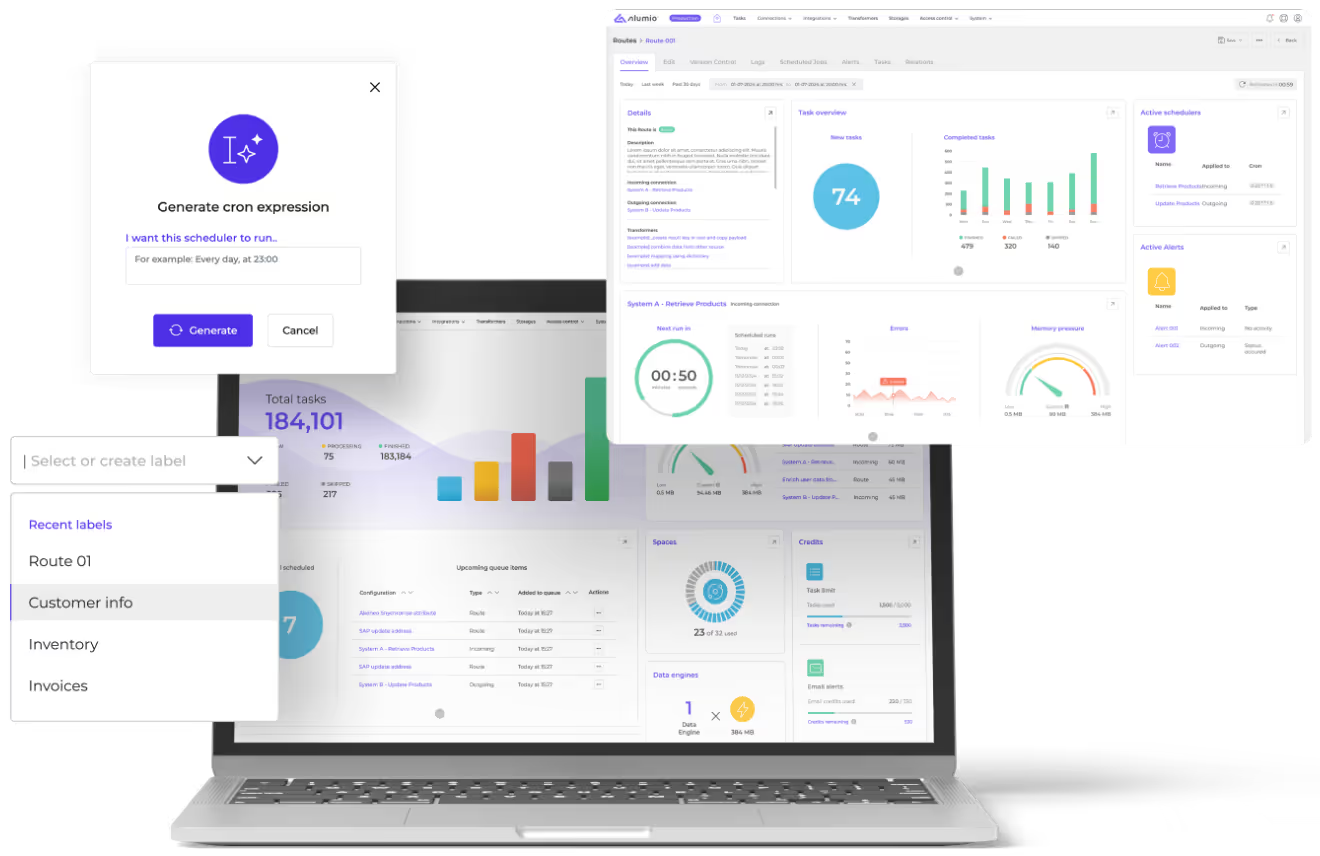
Laptop screen displaying the Alumio iPaaS dashboard, alongside pop-up windows for generating cron expressions, selecting labels and route overview.