




.svg)


LLM integration with an iPaaS is the production pattern most prototypes never reach
The conversation about LLMs in business tech stacks has shifted in the last twelve months. The early stage was about whether to use LLMs at all. The current stage is about how to integrate them properly. Most businesses now run at least one LLM-powered workflow, and many run several. The question worth answering is what separates the workflows that produce reliable returns from the ones that produce incidents.
The honest answer is the integration layer. The LLM provider handles the model. The downstream system handles the customer or operational experience. The integration platform in between is where production reliability lives, including prompt construction from live data, output validation, cost controls, multi-provider routing, observability, and the governance that prevents the LLM from doing something the business doesn't want. The teams that have shipped multiple LLM workflows have built this layer once and reused it. The teams still on their first workflow are usually about to discover why it matters.
Why does LLM integration with an iPaaS beat direct API wiring?
LLM integration with an iPaaS beats direct API wiring because the production version of an LLM workflow needs five capabilities the prototype version doesn't include. The prototype works with an API key, a hardcoded prompt, and a single LLM. The production version needs live data, validated output, cost discipline, fallback handling, and audit trails.
The five capabilities the integration layer adds:
- Live data construction - pulling current data from PIM, ERP, CRM, and commerce systems each time the LLM gets called, instead of working from prototype-era snapshots
- Output validation - running checks on LLM responses (length, brand voice, factual accuracy, format) before they reach customer-facing systems
- Cost and rate management - monitoring token usage, enforcing budgets, and queueing calls when rate limits hit instead of failing them
- Multi-provider routing - switching between Claude, GPT, Gemini, or Mistral based on cost, latency, or availability, with the routing logic centralized
- Observability - logging every LLM call with its prompt, response, cost, latency, and validation outcome so production issues can be traced back to the specific call
The integration platform is also where new LLM use cases get added at marginal cost. The first workflow carries the architectural investment. The second, third, and fifth workflows reuse the same prompt construction, validation, routing, and observability infrastructure.
How the Alumio iPaaS specifically handles LLM integration
An integration platform-as-a-service (iPaaS) is the category of software that handles the connectivity, transformation, and orchestration work LLM integration depends on. The Alumio iPaaS includes native connectors for the major LLM providers, including Claude, GPT, Gemini, Mistral, and Perplexity, alongside connectors for commerce platforms (Shopify, Adobe Commerce, BigCommerce, Shopware), ERPs (SAP, Microsoft Dynamics 365, Exact), PIMs (Akeneo, Pimcore, inRiver), CRMs (Salesforce, HubSpot), and the rest of the typical tech stack.
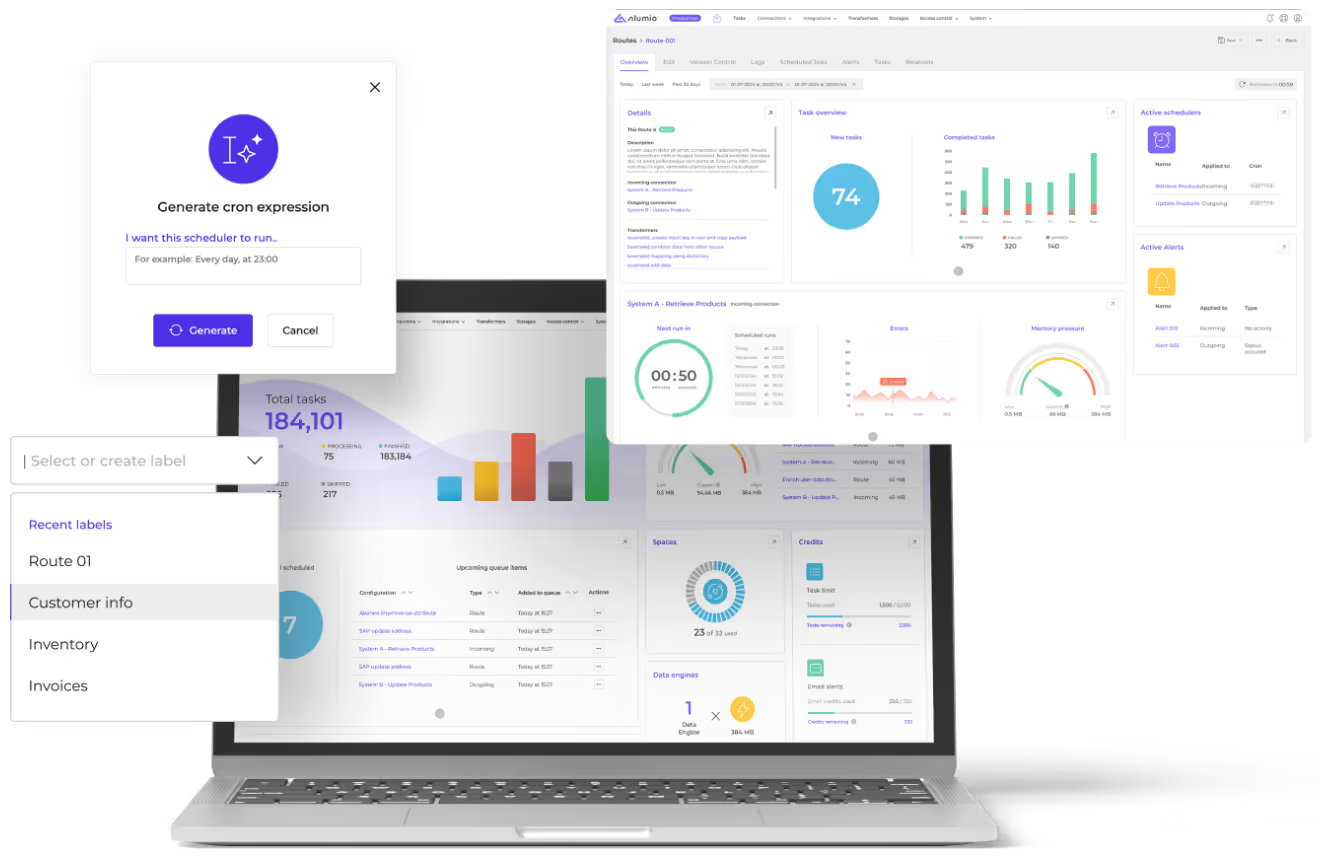
The Route Builder, Transformers, and Mappers in Alumio handle the prompt construction work. A Route pulls live data from the systems that hold context, a Transformer formats it into the prompt structure the LLM expects, and the LLM connector handles the API call. Validation logic in the response Route checks the output before it gets written downstream. Storage handles intermediate state and deduplication. The Inspection Tool provides message-level observability across every LLM call.
That same pattern is how Alumio integration partners have been helping clients connect LLMs into production workflows since 2025. Discover how Happy Horizon has been building AI integrations with Gemini for their clients, automating workflows like translation, document extraction, and product data enrichment through the Alumio iPaaS. The pattern works because the iPaaS is where contextual data flows into LLM calls systematically rather than ad hoc, and the integration layer absorbs the production complexity that direct API wiring leaves on the developer.






.svg)
.svg)
.svg)
.svg)
.svg)
.svg)
