What a transportation management system decides
A transportation management system makes five choices for every shipment, and each one moves money. The origin decides whether a parcel travels forty miles or four hundred. The service level decides whether the business pays for overnight delivery on an order that had five days of slack. A four-hour wait decides whether two shipments heading to the same region travel together or separately.
None of those choices is visible from inside the TMS alone. Each depends on knowing something held in another system at the moment the decision is made, rather than as it stood at last night's export.
The failure mode is not an error message. It is an answer built from stale inputs that looks identical to an answer built from current ones, which is why the cost stays invisible for months.
Why does carrier selection happen in the dark?
Outbound shipping usually sits at the end of a chain that was integrated in the other direction. Order capture to ERP is connected because it is revenue. ERP to warehouse is connected because it is fulfillment. Warehouse to carrier is often a label printer and a manifest file, and the choice of carrier happens upstream of that, in someone's habit.
That leaves the shipping decision without the two facts that most affect it. One is what the shipment actually costs on each available carrier today. The other is whether a different location could serve the order faster or cheaper.
This is the same class of gap as data consistency across ERP, MES, and WMS, arriving at the end of the process instead of the middle. It survives because each individual shipment looks fine, and the cost only becomes visible in aggregate months later, in a freight spend review.
The cost of shipping without TMS integration
Freight is usually one of the larger controllable line items in a distribution business, and one of the least examined at the level of individual decisions. The losses take recognizable forms:
- Shipping from the wrong origin: the parcel travels four hundred miles because closer stock was invisible at the point of decision
- Paying for speed nobody needed: an express service on an order that had five days of slack in its promised date
- Consolidations missed: two orders heading to the same region picked four hours apart and shipped separately
- Surcharges that were predictable: dimensional charges visible in the shipment data but never checked at the point of booking
- Service answering blind: with no tracking events on the order record, an agent answers "where is my order" from a carrier portal instead
The decisions TMS integration has to support
Outbound logistics is easier to fix when it is broken into the specific decisions that need current data to be made well.
- Sourcing location: which site ships the order, which requires live stock and capacity from every location rather than a default
- Carrier and service selection: the cheapest option that still meets the promised date, which requires current rates alongside the order's delivery commitment
- Consolidation: whether this shipment should wait to travel with others going the same way, which requires visibility of the open order book
- Booking and documentation: the shipment created with the carrier and the paperwork generated without re-entry from the warehouse system
- Status back to the customer: tracking events returned to the order record, so service and the customer see the same thing
The first three are decisions and the last two are execution. Most businesses automate the execution and leave the decisions to habit. That is the wrong way round, because the decisions are where the cost sits.
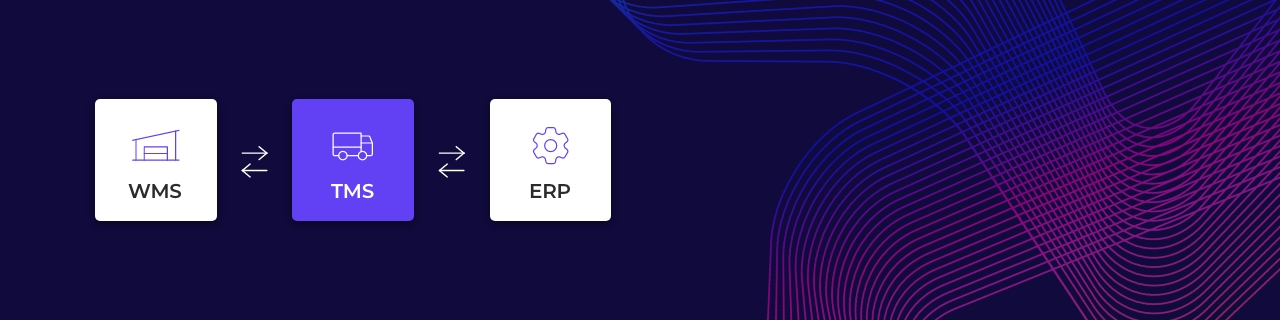
How an integration platform connects TMS to ERP and WMS
Connecting a TMS to the systems holding its inputs can happen three ways, and each carries a limit worth knowing. Many TMS products ship with connectors for the largest ERPs, which works when your combination is the common one and stops when it is not. Carrier-provided integrations connect one carrier well and multiply as carriers are added. Manual selection through a carrier portal is what most smaller operations do, and it is exactly what produces default-carrier shipping.
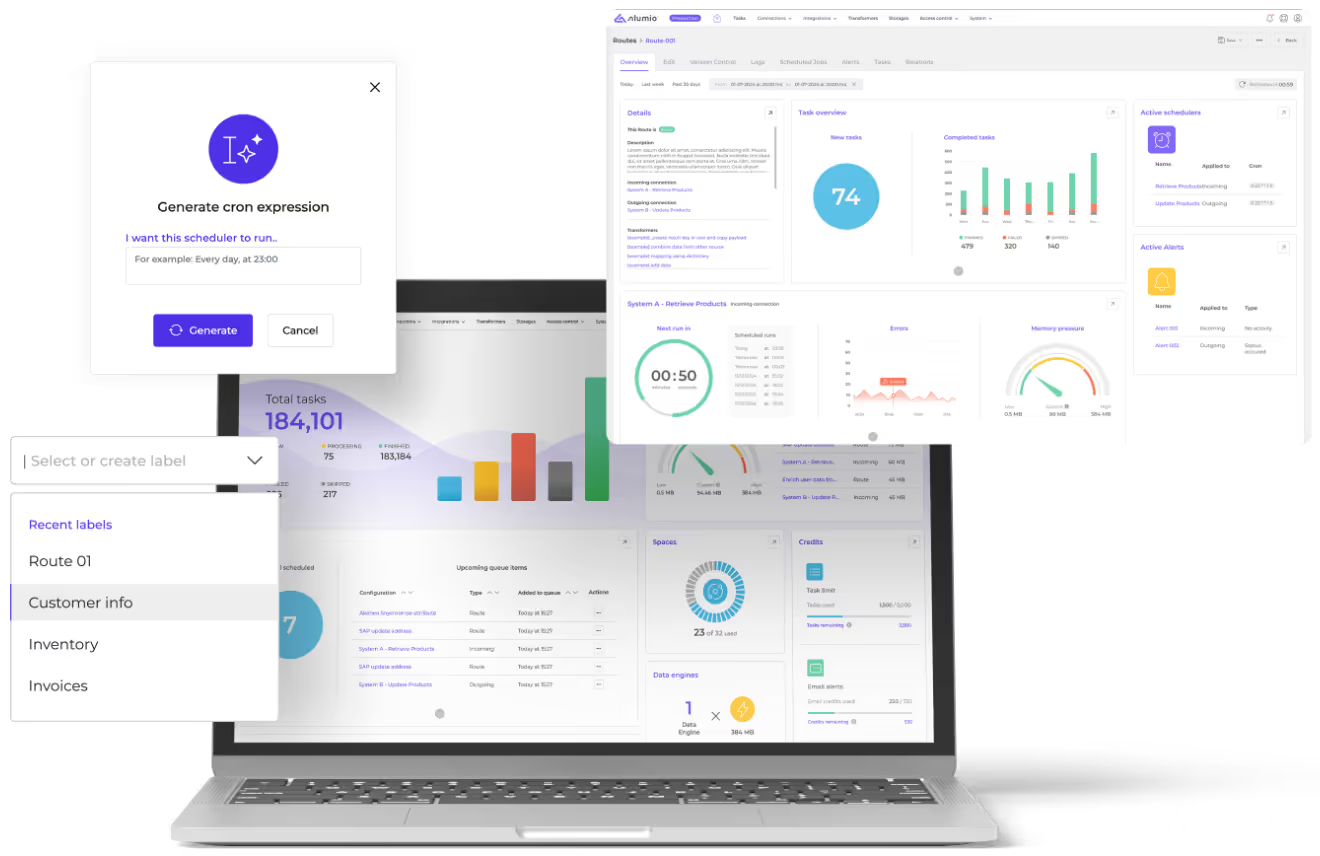
An integration platform-as-a-service (iPaaS) connects whatever combination is actually in place. On the Alumio iPaaS that work takes four forms:
- Decisions made on current data: event-driven Routes push order details and stock positions to the TMS as they change, so selection runs on today's picture rather than last night's
- One process across carriers: a Transformer handles each carrier's format, so adding or switching a carrier is a configuration change rather than a new project
- Status returned automatically: tracking events flow back to the order record and the customer, so service answers from the same system that took the order
- Freight cost matched to the order: actual shipping cost lands against the order in the ERP, which makes true margin per order and per channel visible
Those flows are configured rather than hand-built per system pair, with the Code Transformer available where configuration cannot express a rule. Adding a warehouse or a carrier reuses the existing process. That also means real-time inventory data serves the shipping decision as well as the sales one.
What TMS integration changes about freight spend
The businesses that get outbound logistics right are rarely the ones with the best carrier rates. They are the ones making a real decision per shipment, because the systems involved can see each other at the moment the decision is made.
That changes what the freight conversation is about. Instead of negotiating a lower rate once a year, the business chooses the right carrier and the right origin for each order. That usually saves more than the annual negotiation does, and it improves delivery dates at the same time.
What an integration platform delivers here is freight spend that reflects deliberate choices rather than defaults. Delivery promises hold because the origin was picked on live stock. And per-order margin is known at the point of shipping, rather than three weeks later when the carrier invoice lands.




.svg)








.svg)
.svg)
.svg)
.svg)
.svg)
.svg)
