Why data consistency breaks down between manufacturing systems
ERP, MES, and WMS were each built for a different domain, and their designs reflect it. The ERP thinks in transactions and daily business documents. The MES thinks in real-time shop floor events: starts, stops, yields, scrap. The WMS thinks in physical movements between bins and docks. Same factory, three data models, three clocks.
Drift creeps in through the joints. A cycle count adjusts stock in the WMS, but the nightly sync to the ERP fails silently, or converts units wrong, or simply has not run yet. An operator corrects a yield figure in the MES that never reaches the ERP at all. Point-to-point interfaces and manual re-entry each add a place where the same fact can fork into two versions.
Once forked, versions do not converge on their own. Every downstream decision inherits whichever version its system happens to hold, which is how a planning meeting ends up arguing about whose number is right instead of what to do next.
What does inconsistent data cost a manufacturing operation?
It costs the operation its ability to plan against reality. Consider one concrete chain. The WMS records a cycle-count write-down on a component, but the sync that should carry it to the ERP fails silently. The ERP keeps showing the old on-hand quantity, and the MES schedules tomorrow's production run against material that physically is not there. The line stops mid-shift, expedited replacement stock arrives at premium freight cost, and the delivery promise to the customer slips.
The quieter costs accumulate around that drama. Buyers pad safety stock because they distrust the numbers, tying up working capital. Finance spends the close reconciling inventory valuations between systems. And traceability suffers, because an audit trail assembled from three disagreeing systems is not a trail, it is an investigation.
Master data and the single source of truth problem
Consistency starts with deciding which system owns which fact. The practical answer in manufacturing is rarely one system for everything. The ERP typically owns items, suppliers, and financial quantities. The MES owns production execution data. The WMS owns physical stock locations and movements. A single source of truth works per data entity, not per landscape.
That ownership map only has value if it is enforced in the connections. When ownership lives in a shared understanding rather than in the actual data flows, every interface becomes a place where a non-owning system quietly overwrites the owner. The hard part of keeping ERP, MES, and WMS consistent is not moving data, it is moving it in the right direction with the right authority.
How does an integration layer maintain data consistency?
An integration layer maintains data consistency by making every system exchange data through one governed hub instead of through a web of direct interfaces. This is the role of an iPaaS (integration Platform as a Service). Each system connects once. The platform transforms formats and units in transit, validates every message against the ownership rules, and propagates changes to the systems that consume them, so a stock adjustment in the WMS reaches the ERP and the MES as one verified update rather than forking into three versions along the way.
Just as important is what the layer sees. Every flow is monitored and logged, so a sync that fails or starts sending malformed data raises an alert instead of silently forking the numbers. Consistency stops depending on someone noticing a discrepancy and becomes a property the infrastructure enforces.
Keeping ERP, MES, and WMS aligned with the Alumio iPaaS
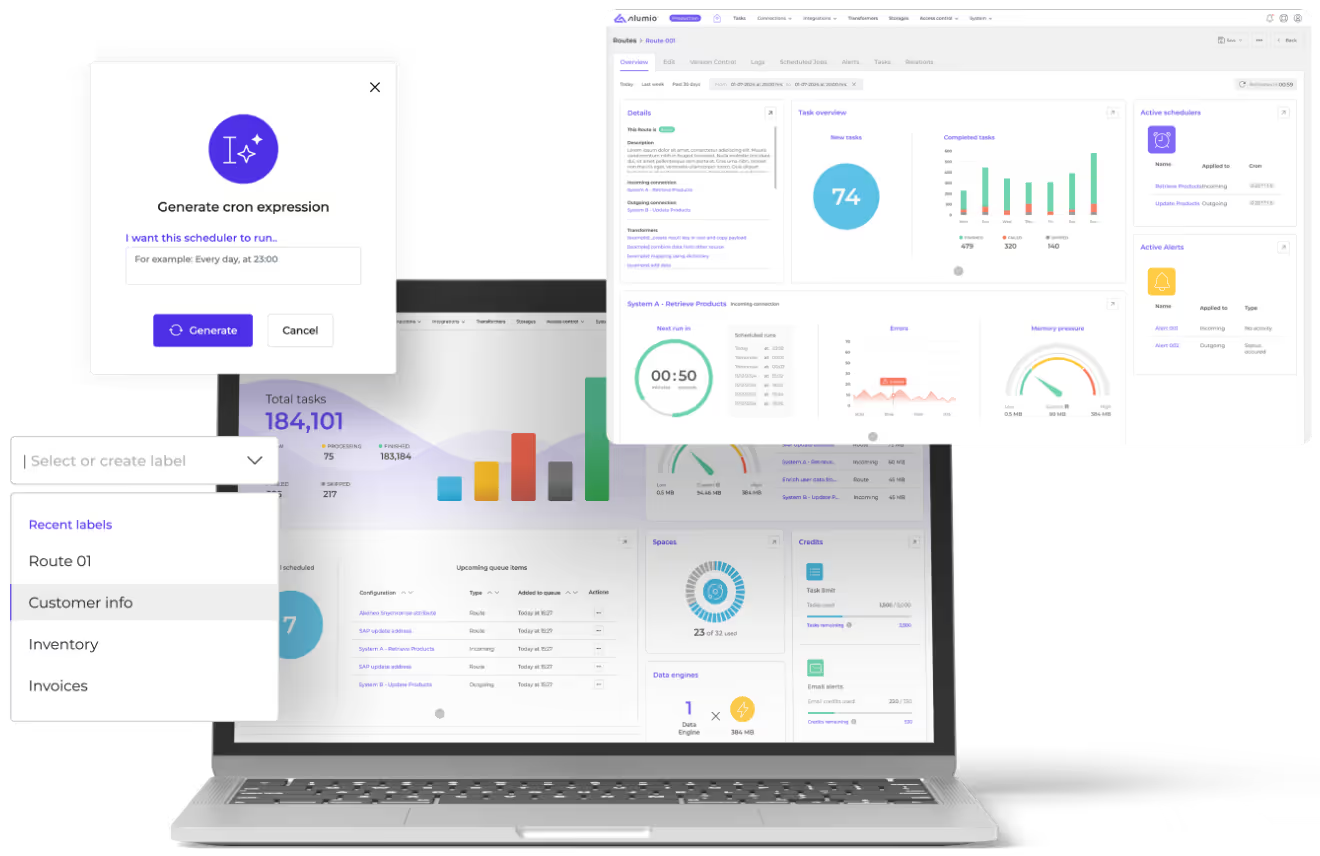
In a manufacturing landscape, the Alumio iPaaS acts as that governing hub: event-driven flows carry shop floor and warehouse changes to the business systems, transformations reconcile units and formats between them, and dashboards with audit trails make every exchange inspectable. When two systems disagree, the logs show which message went where and when, which turns reconciliation from an investigation into a lookup.
California-based protective gear manufacturer Pelican Products, which runs 11 manufacturing facilities and operations in 27 countries, hit this problem in the finance and inventory errors caused by a disconnected accounting setup. Integrating SAP ECC to Adobe Commerce through the Alumio platform for real-time data synchronization resolved those errors and put its commerce channel on the same numbers as its ERP. Most manufacturers implement this with a certified integration partner, who maps the data ownership once and reuses it as systems are added or swapped.
Data consistency as manufacturing infrastructure
Manufacturers do not have a data shortage. Every system on the floor and in the warehouse is generating precise records all day. What they have is a consistency problem: the same fact living in three places with three values, and decisions inheriting whichever value is closest.
Treating data consistency as infrastructure, enforced by an integration layer rather than patrolled by people, changes what the operation can do with its systems. Planning runs on numbers that match the warehouse. Audits trace cleanly. And the next system added to the landscape inherits the ownership rules instead of adding a new place for the truth to fork. That reliability, more than any single system upgrade, is what lets a manufacturer automate with confidence.





.svg)








.svg)
.svg)
.svg)
.svg)
.svg)
.svg)
