What warehouse automation integration sends to the equipment
A conveyor runs because something told it to start. An automated storage system retrieves a bin because something decided which bin and which station. A picking robot travels to a shelf because something calculated the route. Warehouse robotics attracts most of the attention. But a conveyor and a barcode scanner run on the same instructions. The intelligence sits in the software around the hardware.
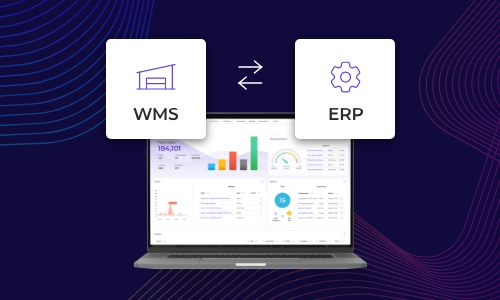
The instruction chain starts at the sales channels and the ERP, where orders and stock live. It passes through the WMS, the warehouse automation software that turns orders into pickable work. It ends at the equipment, which carries that work out. Four things travel down the chain, and one has to travel back up:
- Work to do: orders turned into tasks the equipment can carry out, released steadily so it is not waiting in between
- Priority and sequence: which orders matter most at this point in the day, as carrier cut-offs approach
- Item data: dimensions, weights, and handling constraints, because the equipment makes physical decisions from those values
- Inbound expectations: what is arriving and when, so goods can be put away in planned locations rather than wherever there is room
- Completions and exceptions back: what was picked, what could not be found, and what the equipment could not handle
The last one decides whether the rest of the business stays accurate. An exception that the WMS records and the ERP never receives becomes a stock difference nobody can explain. Two things break the instruction chain in practice: the timing of the instructions, and the quality of the item data.
Why does warehouse automation end up waiting?
Orders usually reach the WMS in scheduled batches called waves. The equipment works hard for a stretch, finishes the wave, and then idles until the next release. Capacity is sized for the busiest part of each wave, and paid for during the gaps.
Priority is the second timing problem. A carrier cut-off moves, or an expedited order arrives, and the work already queued needs reordering. Where the connection only runs one way, nobody can revise the queue once it has been released.
Both come down to when the instructions arrive, which is decided by how the ERP and the WMS are connected in the first place. That is the same constraint described in ERP integration in manufacturing. The second thing that breaks the chain has nothing to do with timing.
Automation removes the tolerance that hid bad data
A manual warehouse absorbs bad data. A picker sent to the wrong location looks in the next bay, finds the item, and carries on. Nobody records that the location was wrong.
The equipment has no equivalent. Given a wrong dimension, a picking robot attempts a movement that fails. Given a missing weight, it rejects the task, and a person handles the item instead. A warehouse that has automated eighty percent of its volume and sees fifteen percent fall back to manual handling does not have a hardware problem. It has an item data fault that the manual operation used to hide.
This is where automation and integration stop being interchangeable words. The automation carries out the instruction. The integration decides whether the instruction is correct.
The practical consequence is that item data accuracy, location accuracy, and steady release of work decide what any piece of equipment actually delivers. None of them improves when a business chooses a better robot.
What weak warehouse automation integration costs
Automation converts labor cost into fixed capital cost. A manual warehouse running below capacity pays for fewer hours. An automated warehouse running below capacity still pays for the equipment. That is why a weak instruction chain is expensive in a different way:
- Equipment idle between waves: capacity paid for around the clock and used only in bursts, because that is how the instructions arrive
- Exception handling that needs people: the labor the automation was meant to remove, brought back to deal with what the equipment rejected
- Cut-offs missed on reprioritized orders: an expedited order that could not jump a queue already released
- Stock differences nobody can explain: an item picked short, recorded in the WMS and never sent to the ERP, so the two drift apart quietly
- Payback periods that stretch: a business case built on throughput the instruction chain cannot sustain, discovered a year after the money was spent
These arrive looking like hardware underperforming, which is why they get raised with the automation vendor rather than with IT. The equipment is usually running exactly as specified. It is either waiting for work or acting on data it cannot use.
Both problems sit between systems rather than inside any one of them. That is why direct connections between each pair of systems rarely hold for long. A WMS with built-in support for one vendor's equipment covers that pairing and narrows the next choice. A warehouse execution system coordinates the equipment well and still has to be fed from the ERP and the channels. Every direct connection has to be maintained by whoever built it, through every upgrade on both sides. The number of those connections also grows faster than the number of machines on the floor. The alternative is to put one platform between the systems and connect each system to it once.
How an integration platform supports warehouse automation
An integration platform-as-a-service (iPaaS) sits between the systems rather than inside any of them. It is cloud-native. The sales channels, the ERP, the WMS, and each vendor's control system connect to it once instead of connecting directly to each other. It then moves and reshapes the data between them.
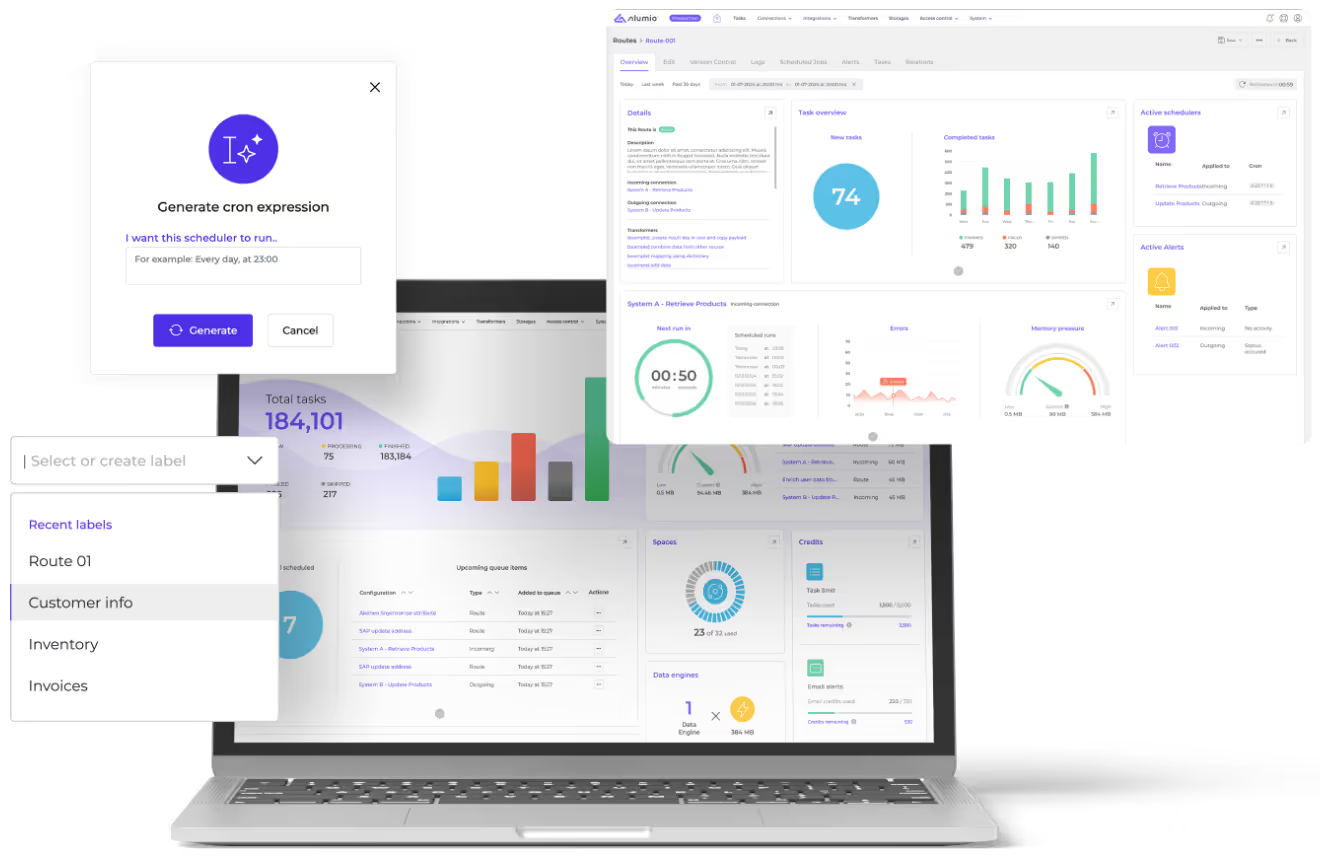
The Alumio integration platform can be configured to keep the instruction chain moving in four ways:
- Releasing orders continuously: an event-driven Route built in Alumio carries orders into the WMS as they are placed, so work is always available rather than batched
- Validating item data before it reaches a machine: the Alumio iPaaS can be used to check for missing dimensions, weights, and handling flags before the task is sent on
- Holding one model across mixed equipment: a Transformer in Alumio reconciles the formats each vendor's system expects, so a second automation supplier does not mean a second integration model
- Reporting exceptions everywhere: an item picked short can be routed back to the ERP and the order systems as it happens, so stock figures stay accurate
These are configured rather than built as a separate direct connection for each vendor. The next phase of automation then connects to what the first phase established. That matters, because almost nobody automates a warehouse in one go.
What connected warehouse automation delivers
Warehouse automation business cases are built on throughput and labor reduction. Both assume the equipment runs at the rate the vendor demonstrated. That rate is achievable. It depends on conditions the hardware specification does not mention.
An integration platform holds those conditions in place. It keeps work flowing at the rate the equipment can absorb. It catches the item data faults that would otherwise become exceptions, and reports what happened back to the business.
The business gets equipment working through the day instead of in bursts, fewer exceptions falling back to people, and a payback period close to the one in the original case.




.svg)








.svg)
.svg)
.svg)
.svg)
.svg)
.svg)
