





.svg)



Where API security breaks down in modern e-commerce
Connecting more systems is what makes a modern e-commerce operation work. It is also what creates more risk. Every new tool you add is another API sharing data with the rest of the stack. The risk grows with the number of connections, not with how new your platform is.
The problem is rarely one big hole. It is small gaps that add up. One connection uses a modern login method, another still runs on an old key someone typed into the code years ago. One encrypts its traffic, another was set up quickly and never checked again. No two connections are secured the same way, and no one has a full record of which data crosses which link. This is the wider issue that e-commerce data security deals with, but the API layer is where it actually shows up.
Good API security is not something you buy once. It is a set of habits you apply to every connection, every time. The sections below cover the ones that matter most. Then we look at the part most teams struggle with, which is doing all of this consistently as the stack grows.
Authenticate and authorize every API call
Start with identity. Every request into your systems should show who is making it and what it is allowed to do. No connection should run on a shared or permanent key.
Use login methods where access expires, such as OAuth 2.0, instead of fixed API keys that sit in a script forever. Give each connection only the access it needs. That way, a stolen key for your shipping tool cannot reach customer payment records. Where a system supports it, manage access in one central place through SSO, so you can grant or remove it quickly.
Tip: Start by listing every credential your integrations use. You cannot protect what no one has written down.
Which data should actually cross each connection?
Only the fields the receiving system needs, and nothing more. A shipping tool needs an address and an order line. It does not need a customer's full payment history, so it should never get it.
Encrypt everything as it moves, on every call, including traffic between internal systems. Then limit each connection to the data it actually carries, and hide or drop fields the other system has no reason to hold. Sending less data lowers your exposure if a connection is breached. It also reduces your obligations around where regulated data is allowed to sit, which is the heart of most cross-border data transfers.
Log and monitor every data flow
You cannot protect what you cannot see. Every API call and error should be recorded: what moved, when, and between which systems.
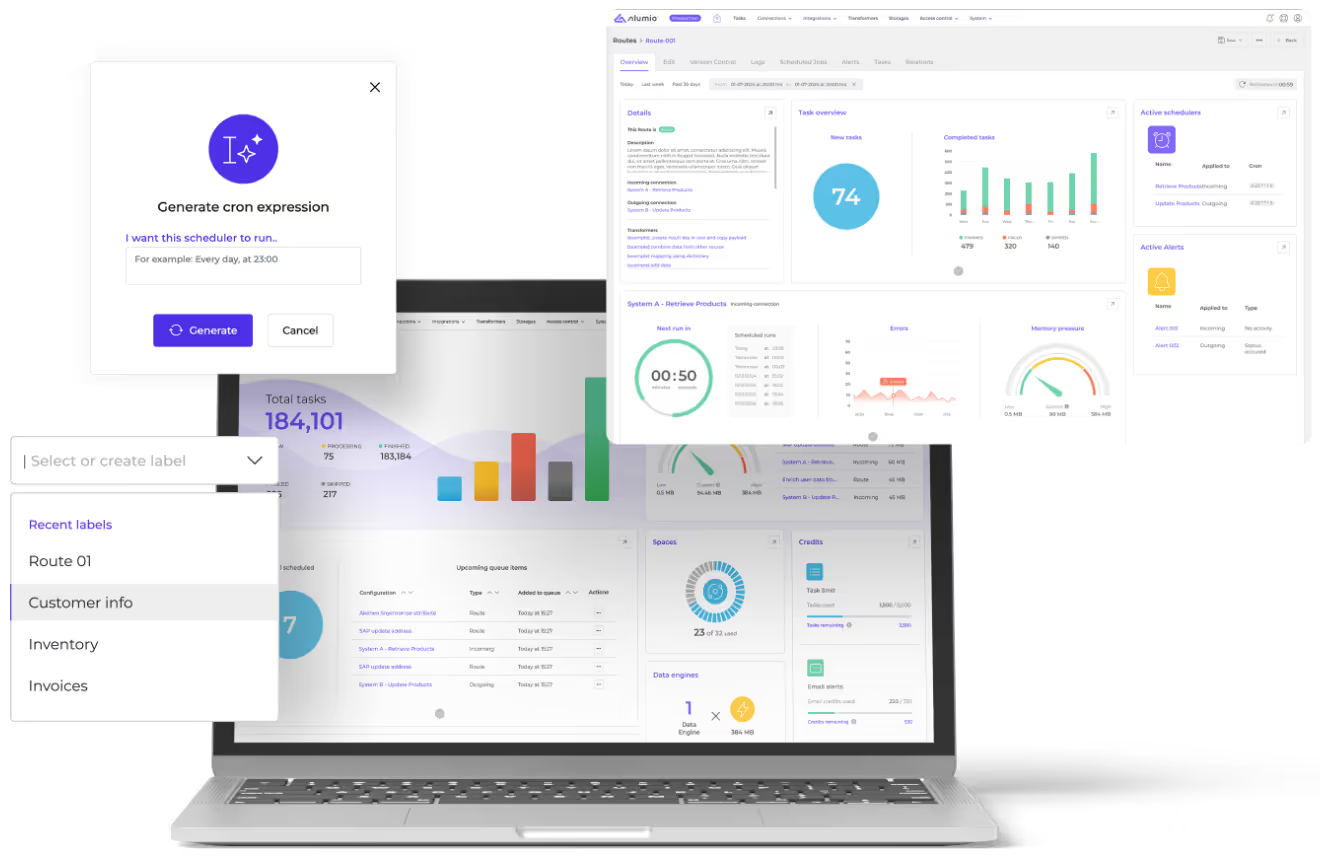
Recording is only half the job. The other half is watching those records for anything unusual, like a jump in failed logins, a connection suddenly pulling far more records than normal, or activity at an hour when that flow never runs. Alerts on these signs catch a problem in minutes instead of at the next audit. A full, searchable history also lets you prove, after an incident, exactly what was and was not exposed.





.svg)
.svg)
.svg)
.svg)
.svg)
.svg)
