




.svg)



What is e-commerce security?
E-commerce security is the protective measures and protocols that online businesses put in place to safeguard online transactions, customer data, and business operations from cyber attacks, data breaches, and unauhorized access. It can include data encryption to secure customer transactions, authentication procedures to verify user identities, and compliance with data privacy regulations like GDPR.
By prioritizing e-commerce security, businesses can build trust with their customers, ensure the integrity of their transactions, and maintain a secure online shopping environment. However, before we understand how e-commerce security works, let's understand the different types of e-commerce security threats.
What is a cyberattack?
A cyberattack (or cyber attack) is a deliberate and malicious attempt to compromise the integrity, confidentiality, or availability of computer systems or networks. Cyber attacks can take various forms, including malware infections, phishing attacks, denial-of-service attacks, and more. The goal of a cyber attack may not always be a data breach; it could also involve disrupting services, stealing sensitive information, or causing damage to the targeted systems.
An example of a popular e-commerce cyberattack took place in 2019 in the form of a phishing scam, wherein hackers posed as Magento (now Adobe Commerce), and sent emails to users compelling them to click on a link to update their software, which resulted in their login details being stolen. Another notorious cyberattack is the 2018 Ticketmaster incident by way of payment fraud, which resulted in customer credit card details being stolen and used to conduct fraudulent purchases.
What is a data breach?
A data breach is a security incident that involves the unauthorized access, acquisition, or disclosure of sensitive information, such as personal identifiable information (PII), financial data, or intellectual property. Data breaches can result from various factors, including cyberattacks, human error, or system vulnerabilities.
The primary intent of a data breach is to gain access to and potentially misuse sensitive information. On the other hand, a cyberattack may have different motives, such as disrupting operations, stealing information, financial gain, or causing damage.
How can you ensure the security of your customer data?
Given the large volume of customer data e-commerce businesses handle on a daily basis, they are extremely frequent targets for cyberattacks. As such, e-commerce businesses must adopt a layered approach to ensure customer and business data security. Some of the industry best practices include:
Secure Sockets Layer (SSL) encryption:
Implementing SSL encryption helps secure data transmission between the customer's browser and your website. This helps protect sensitive information such as credit card details during online transactions. The presence of a padlock icon and the 'https' in the address bar now serves as a signal for consumers, indicating that a website's connection is securely encrypted.
Regular software updates:
Keeping all software, including e-commerce platforms, web servers, and plugins, up to date with the latest security patches is crucial to address known vulnerabilities and protect against potential exploits.
Periodic security audits:
Conducting regular security audits and vulnerability assessments to identify and address potential weaknesses in your systems can help prevent cyber threats before they can be exploited.
Trusted payment gateways:
Choosing reputable and secure payment gateways that comply with industry standards will ensure the safe processing of payment transactions and reduce the risk of financial data breaches.
Secure hosting and cloud services:
Opting for reliable and secure hosting providers with a focus on data protection that comply with industry regulations and have robust security measures in place is a must.
Compliance with data protection laws:
Staying informed about and complying with relevant data protection laws and regulations, such as the General Data Protection Regulation (GDPR) or the Payment Card Industry Data Security Standard (PCI DSS), is paramount.
Having a robust integration platform in place:
An e-commerce business needs several software systems or apps to stay up and running, such as an e-commerce platform, a PIM system, a customer service system, and a payment gateway solution, to name a few. These different systems all have vast amounts of data flowing through them, such as critical corporate data, financial-related data, and customers' Personal and Identifiable Information (PII). Due to the sensitive nature of this data, it can become a target for cyberattacks.
In order to ensure all these different systems remain interconnected, and the subsequent data protected, an integration Platform as a Service, like Alumio, must be put in place.
How can an integration platform ensure e-commerce data security?
The Alumio integration platform offers a cost-effective solution to centralize all integrations on one platform, allowing users full control over their data, ensuring API security, and reducing the risk of cybersecurity attacks by upholding the highest data security standards. Here's how:
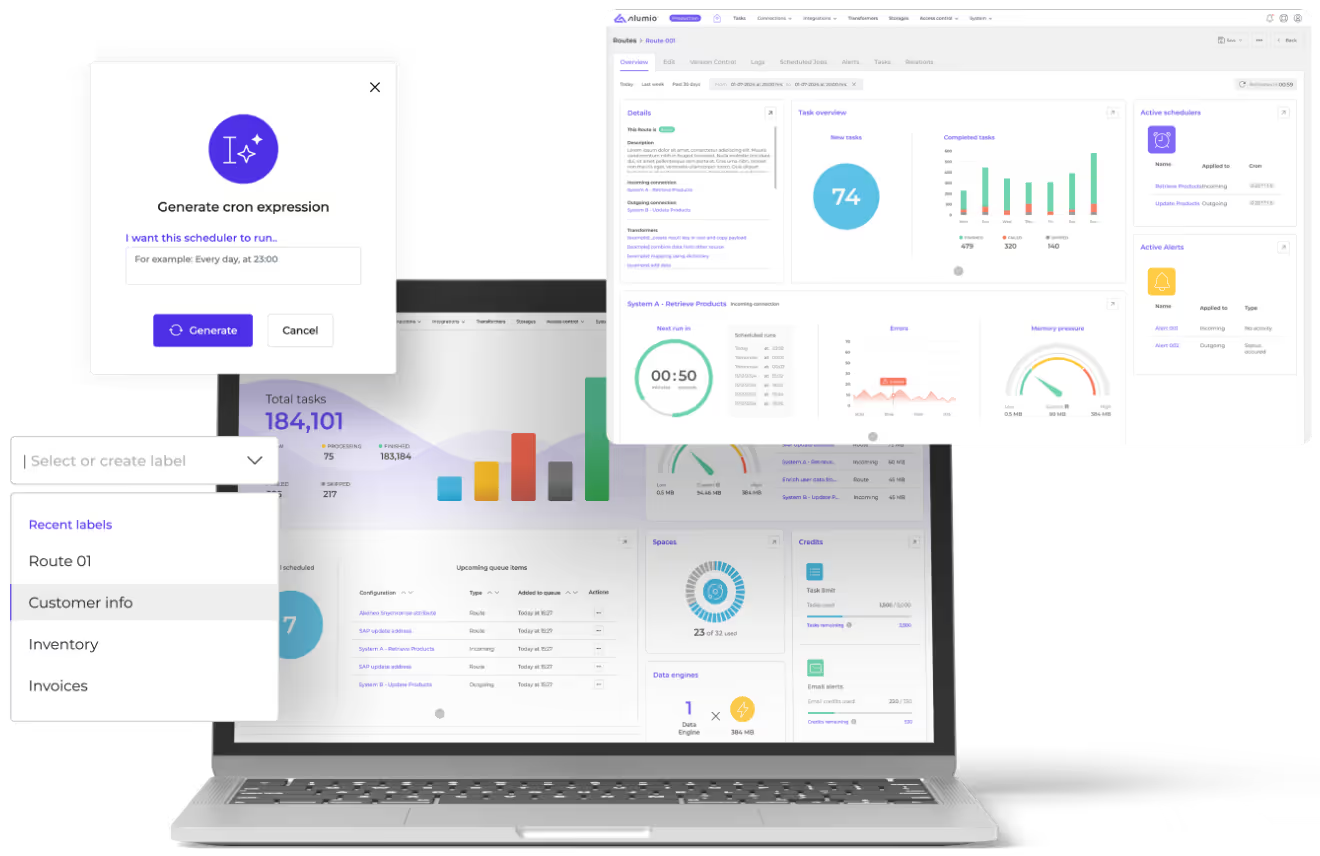
Built-in monitoring and logging features
Alumio ensures business and customer data security through extensive end-to-end monitoring and logging features, which provide a complete record of data processes and events. Logs are securely stored in an Elastic Stack data log, allowing users to set up triggers for alerts on multiple task failures within an hour. Furthermore, our platform conducts continuous health checks and notifies users of security hacks or data errors to swiftly resolve conflicts.
Cloud-native platform
Being cloud-native, the Alumio integration platform leverages the power of clustered microservices technology, enabling exceptional performance, scalability, and data security by reducing attack surface, enhancing data resilience, enabling customizable security configurations, and ensuring business continuity even in the face of hardware failures, software glitches, or cyberattacks.
Alumio uses AWS (Amazon Web Services) hosting services and relies on AWS security measures. As such, the platform offers dedicated storage and isolation for each customer's data, minimizing the risk of breaches and unauthorized access and allowing for customizable security configurations aligned with specific requirements.
Ensured privacy compliance
With Alumio, businesses stay compliant with crucial privacy legislations like GDPR, SOC2, CCPA, FERPA, HIPAA, and more, allowing them to prove how they track and manage customer data every step of the way. Alumio enhances the existing individual customer rights over their data by allowing them:
- A right to erasure and the right to be forgotten
- The right to have data deleted from multiple connected software
- The right to receive personal data on a user-friendly interface
- The right to notice, access, change, and object to personal data being shared
- The right to remove data from (external) sources
- The right to choose what personal information can be collected
Learn more about Alumio's security and compliance commitment. Learn more about relevant privacy legislation.
ISO 27001 certification
Alumio adheres to the highest security standards and holds an ISO 27001 certification that validates our risk-awareness and proactive identification of any potential weaknesses. The ISO 27001 certification promotes a holistic approach to information security: vetting people, policies, and technology. An information security management system implemented according to this standard is a tool for risk management, cyber-resilience, and operational excellence.
Access control
Alumio implements strong identity and authentication mechanisms, such as multi-factor authentication, to ensure that only authorized users can access the platform. Furthermore, the platform enables businesses to define and enforce granular access policies, ensuring that only approved users or applications can interact with sensitive data. This prevents unauthorized access to data and reduces the risk of data breaches.
What does the future of e-commerce security look like?
As technology progresses, the landscape of e-commerce security faces ongoing changes in threats, protocols, measures, and challenges. However, emerging trends in the IIoT (Industrial Internet of Things), such as AI and ML, will be crucial players in ensuring corporate data protection and business data security. This will be exemplified by way of detecting and preventing threats through the identification of unusual patterns and anomalies in user behavior that might escape human monitors' attention.
In terms of AI-driven solutions, fraud detection algorithms can analyze numerous transactions in real-time. These algorithms will swiftly flag suspicious ones for further review and substantially minimize the risk of fraud, ensuring a secure transaction environment for users. Additionally, AI-powered chatbots are capable of providing secure and efficient customer assistance while responsibly handling sensitive data.
Conclusion
Ensuring the protection of customer data is crucial to preserve a good business reputation and maintain the trust and loyalty of shoppers. Essentially, if your customers can't trust you to safeguard their data, they can't be blamed for taking their business elsewhere. As such, companies of all types and sizes must take preventive measures to avoid falling prey to cyberattacks that can harm their customers and, by extension, their business.
With hackers continuously innovating their attack strategies, the most effective way to remain ahead is to be proactive and educated on the subject. After all, almost all cyberattacks can be entirely avoided or severely diminished with the right behaviors.
An integration platform like Alumio is the key to ensuring data security across an entire IT landscape. With security at the top of our priority list, Alumio ensures that e-commerce businesses stay up to date with the latest security standards through robust safety measures that can adapt to meet evolving threats. Our goal? To provide a secure and reliable platform both business owners and customers can trust.




.svg)
.svg)
.svg)
.svg)
.svg)
.svg)
