What purchase order automation sends to the supplier
Supplier-direct fulfillment means the retailer sells an item it never physically holds. The customer buys from the retailer, and the supplier picks, packs, and ships. Drop-ship is the retail name for the same arrangement, and wholesalers call it supplier-direct.
The retailer still owns the promise. It took the money, it set the delivery date, and it answers the phone when the parcel is late. It does not own the stock, the warehouse, or the shipping system. Everything it tells the customer comes from data a supplier sent it.
One thing goes out to the supplier, and four come back:
- The purchase order out: what to ship, to whom, at the agreed cost price, with the service level the customer paid for at checkout
- Availability in: what the supplier can actually ship this week, which is the figure the storefront sells against
- Lead times in: how long the supplier takes, which is what the delivery date at checkout is calculated from
- Shipment confirmation in: what left, when, and with which carrier reference, so the customer gets tracking
- Invoice lines in: what the supplier charged against what the retailer sold, line by line
The outbound direction is the easy one, and most businesses get it working. Everything that comes back is harder, because it changes at the supplier end. These flows sit alongside ERP, PIM, and payments among the essential e-commerce integrations.
Why does drop-ship break at the delivery promise?
The storefront quotes a delivery date at checkout. That date is calculated from stock the retailer does not hold and a lead time the supplier controls. If either number is stale, the promise is wrong before the order is placed.
Spreadsheets are how most of these relationships start. A supplier emails a stock file weekly, someone uploads it, and the storefront sells against last Tuesday's availability. It holds until the supplier has a busy week.
Product codes are the second problem. The retailer's SKU and the supplier's article number are different strings, mapped in a spreadsheet that one person maintains. Every new product is a manual mapping, and every unmapped product is an order that fails silently.
Several suppliers multiply both. A retailer running twenty drop-ship suppliers has twenty file formats, twenty lead-time conventions, and twenty people to email when something goes wrong.
What manual supplier ordering costs
Drop-ship is sold internally as a way to expand the catalog without buying stock. The cost shows up somewhere else, in the gap between what the storefront says and what the supplier can do:
- Orders that sit overnight: a customer buys at 18:00 and the purchase order reaches the supplier at 09:00 the next day, losing a full picking day on every order
- Promises nobody can keep: a delivery date calculated from a lead time the supplier revised two weeks ago
- Overselling into an empty supplier: a cancellation email the customer did not expect, because the stock file was five days old
- Tracking that arrives by hand: a carrier reference copied from a supplier email into the order system, or not copied at all
- Margin nobody can verify: supplier invoices that cannot be reconciled line by line against what was sold
None of these are supplier failures. The supplier shipped what it was told, when it was told. The retailer simply told it late, using numbers that had already changed.
How an integration platform automates purchase orders
An integration platform-as-a-service (iPaaS) gives a business one place where all its systems connect. Every system connects to it once instead of connecting directly to each other, and the platform moves and reshapes the data between them. Retailers already use it for ordinary work: pushing storefront orders into the ERP, returning stock figures to the sales channels, and sending shipments to a carrier.
A supplier connects the same way. The supplier becomes one more connected system rather than an inbox. The purchase order becomes a message like any other, carrying the item, the quantity, the address, and the agreed cost price.
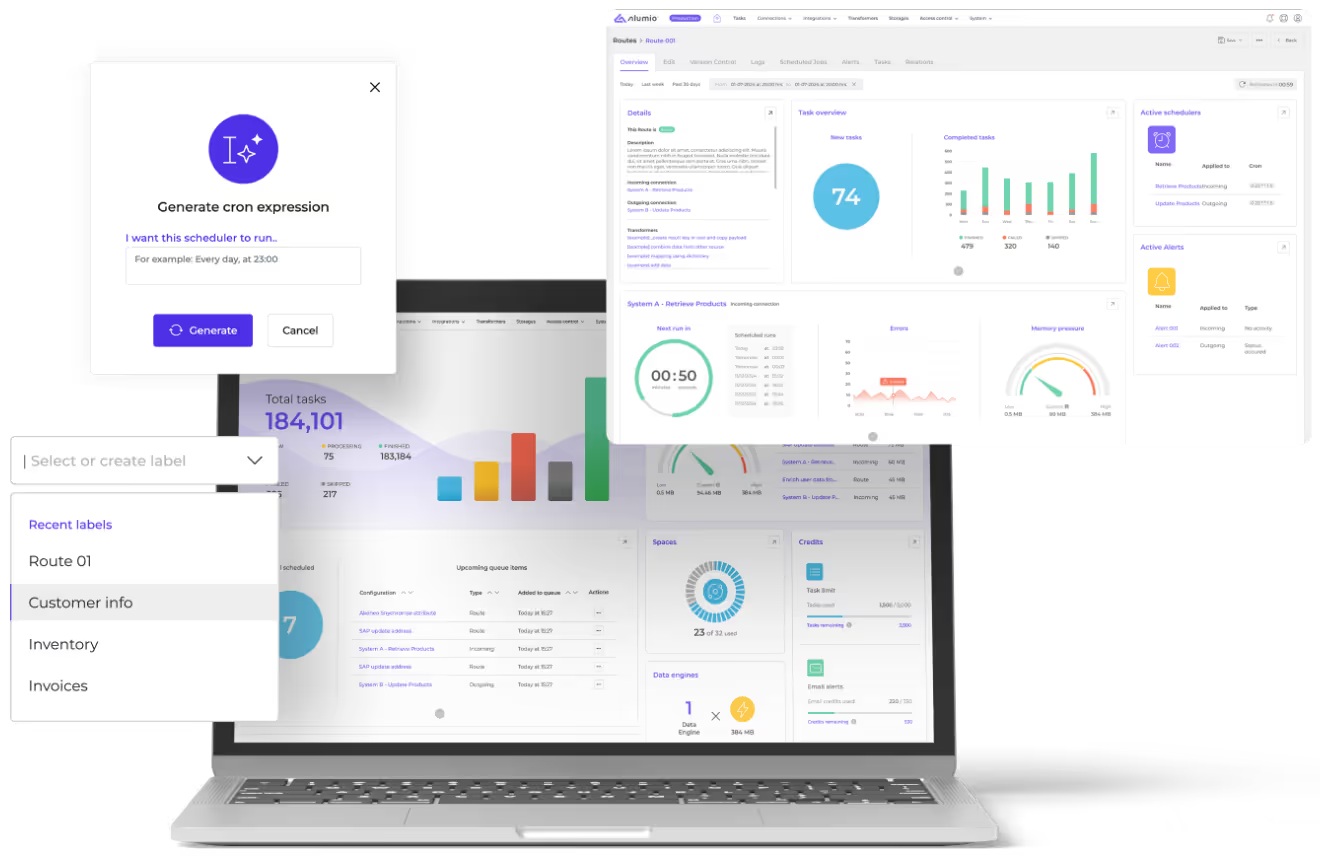
The Alumio integration platform provides features that can be configured to run supplier-direct fulfillment end to end. Four of them do most of the work:
- A Route that raises the purchase order: a Route can be built between the storefront or ERP and the supplier's system, so a customer order becomes a supplier purchase order within minutes of checkout
- A Transformer that handles product codes: a Transformer can be configured to map each supplier's article numbers and units onto the retailer's SKUs, so a new supplier is a mapping rather than a project
- Availability and lead times flowing back: supplier stock and lead-time changes can be carried into the storefront as they happen, so checkout quotes what the supplier can actually do
- Confirmations and costs recorded: shipment confirmations and invoice lines can be routed back into the order system and the ERP, which makes tracking automatic and margin checkable
Because the supplier connects to the platform rather than to each internal system, the twentieth supplier costs roughly what the second one did. The same pattern applies to B2B e-commerce features, where the storefront is a channel onto systems that already hold the answers.
AFL Groep is a Dutch wholesale logistics supplier running webshops across the Netherlands and Belgium. It implemented Alumio to automate day-to-day order processing and inventory management, connecting Kerridge, Adobe Commerce, and the Optiply replenishment system through one platform. Orders, stock, and prices now stay in sync across every shop.
What automated purchase orders give the business
Supplier-direct fulfillment is a commercial decision that gets implemented as an operational one. The commercial case is a wider catalog with no stock risk. The operational reality is that a retailer's reputation now depends on data it receives from companies it does not control.
An integration platform closes the distance between those two things. It raises the purchase order while the customer is still on the thank-you page, and keeps availability current enough to quote from. It also records what the supplier confirmed, so the retailer can answer a question without sending an email.
The business ends up being able to add suppliers without adding headcount, and to make a delivery promise it has some reason to believe.




.svg)










.svg)
.svg)
.svg)
.svg)
.svg)
.svg)
