

A Alumio vivid purple arrow pointing to the right, a visual representation of how to access more page material when clicking on it.
Go back

What is Headless CMS and why is it important?

By
Published on
October 16, 2023
Updated on
June 24, 2026
IN CONVERSATION WITH
Email icon
Email icon

In today’s fast-paced digital landscape, efficiently managing and delivering content across various platforms is crucial. Enter Headless Content Management Systems (Headless CMS)—a game-changing approach to content management. In this blog, we’ll explore what a Headless CMS is, its key features, and why it’s becoming essential for modern businesses.

What is a Content Management System (CMS)?

A Content Management System (CMS) is a software application that allows users to create, edit, and organize digital content through an intuitive interface, without requiring extensive technical knowledge. A CMS empowers users to control their website content, including text, images, videos, and audio, making updates, replacements, or deletions straightforward.

What is a Headless CMS?

A Headless CMS is a content management system that decouples the content from the presentation layer. Unlike traditional CMS platforms, where content and design are intertwined, a Headless CMS manages content independently of the front-end delivery. This separation allows content to be created and stored in the cloud and accessed via APIs, making it available across various platforms without being tied to a specific format.

Explore the differences between Headless and traditional CMS ->

Key features of Headless CMS

Headless CMS platforms come with several powerful features that make them invaluable for businesses:

  • Structured content: Organize and reuse content components efficiently with a structured content approach.
  • Media management: Manage images, videos, and other media assets through built-in libraries.
  • Version control: Track content revisions and changes to enhance collaboration among content creators.
  • RESTful APIs: Retrieve and deliver content to various front-end channels using RESTful APIs.
  • Flexibility: Use APIs to display content on websites, mobile apps, IoT devices, and more.
  • Omnichannel content delivery: Seamlessly deliver content across multiple channels, including websites and smart devices.
  • Localization: Manage and deliver content in multiple languages and regions.
  • Scalability: Effortlessly scale to accommodate growing content demands with a robust infrastructure.

Advantages of Headless CMS for modern businesses

A Headless CMS offers numerous benefits that can enhance your business operations:

  • Faster content updates: Rapidly update content without altering the website’s design or structure.
  • Real-time publishing: Publish content instantly across all platforms, ensuring consistency.
  • Flexibility for developers: Choose the most suitable front-end technologies and frameworks for building user interfaces.
  • Streamlined development: Separate content and design workflows for smoother development processes.
  • Improved performance: Fetch only necessary data via APIs, reducing page loading times and enhancing user experience.
  • Cross-device compatibility: Ensure content looks and functions seamlessly on various devices and screen sizes.
  • Easy integration: Incorporate new technologies as they emerge without overhauling the entire CMS.
  • Cost-effectiveness: Pay only for the resources you need, making Headless CMS a budget-friendly solution for businesses of all sizes.

Conclusion

In the digital era, where content reigns supreme, Headless CMS empowers businesses to stay agile, deliver content across multiple channels, and provide an exceptional user experience. With its API-first approach, scalability, and flexibility, Headless CMS is becoming a must-have tool for businesses aiming to excel in the modern digital landscape.

Ready to elevate your content management strategy? Consider adopting a Headless CMS to unlock the full potential of your digital presence and stay ahead of the competition.


Turn AI ambition into action

Portrait of Leonie Becher Merli, Business Development Manager at Alumio

Get a free assessment of your integration needs and next steps

Portrait of Leonie Becher Merli, Business Development Manager at Alumio

No items found.
Topics in this blog:

FAQ

Integration Platform-ipaas-slider-right
What is a Headless CMS and how does it differ from a traditional CMS?

A Headless CMS is a content management system that separates the content repository (back end) from the presentation layer (front end). Content is stored in a structured way and delivered to any consuming application via API, whether a website, mobile app, or other digital channel. A traditional CMS couples content storage with presentation: the same system manages both what the content is and how it renders on the website. Headless removes that coupling, giving developers freedom over the front end while editors manage content in one central place.

Integration Platform-ipaas-slider-right
Why is a Headless CMS considered important for modern content delivery?

A Headless CMS is important because modern digital experiences span multiple channels: websites, mobile apps, digital signage, voice interfaces, and more. A traditional CMS can only render content to its own front end; a headless CMS delivers the same content to any channel via API, making it possible to manage content once and publish everywhere. It also allows front-end teams to use modern frameworks without the constraints of a CMS-bundled templating system.

Integration Platform-ipaas-slider-right
What are the key features to look for in a Headless CMS?

The most important features are: content modeling flexibility, a clean editing interface (non-technical editors must be able to create and update content without developer help), API performance (fast, well-documented GraphQL or REST delivery), localization and multilingual support, webhooks or event triggers for integration with other systems, and a clear pricing model as content and API call volume grows.

Integration Platform-ipaas-slider-right
What rendering approaches are used with a Headless CMS front end?

The three main rendering approaches are: Static Site Generation (SSG, pages pre-built at deploy time for maximum performance), Server-Side Rendering (SSR, pages rendered on the server at request time for dynamic content), and Incremental Static Regeneration (ISR, a Next.js pattern that rebuilds static pages on demand without a full site rebuild). The right approach depends on how frequently content changes and how critical it is for updates to appear immediately.

Integration Platform-ipaas-slider-right
How does a Headless CMS integrate with an e-commerce platform?

A Headless CMS integrates with an e-commerce platform by linking editorial content (product descriptions, brand stories, buying guides) with commerce data (product variants, pricing, availability) from the e-commerce back end or PIM. An integration platform ensures that product-linked content stays consistent as the catalog evolves, synchronizing product identifiers between the two systems so editors can link content to specific catalog items without manual maintenance.

Integration Platform-ipaas-slider-right
What are the best Headless CMS platforms available today?

The leading Headless CMS platforms are Contentful (enterprise adoption, strong API and localization), Storyblok (visual editing combined with headless delivery, popular for e-commerce and marketing teams), Sanity (developer-friendly with flexible content modeling and real-time collaboration), Strapi (open-source and self-hostable), Prismic (straightforward document-based content management), and Hygraph (GraphQL-native with federation capabilities). The right choice depends on content modeling complexity, editor experience requirements, and whether self-hosting or managed SaaS better fits the organization.

Get a free assessment of your integration needs

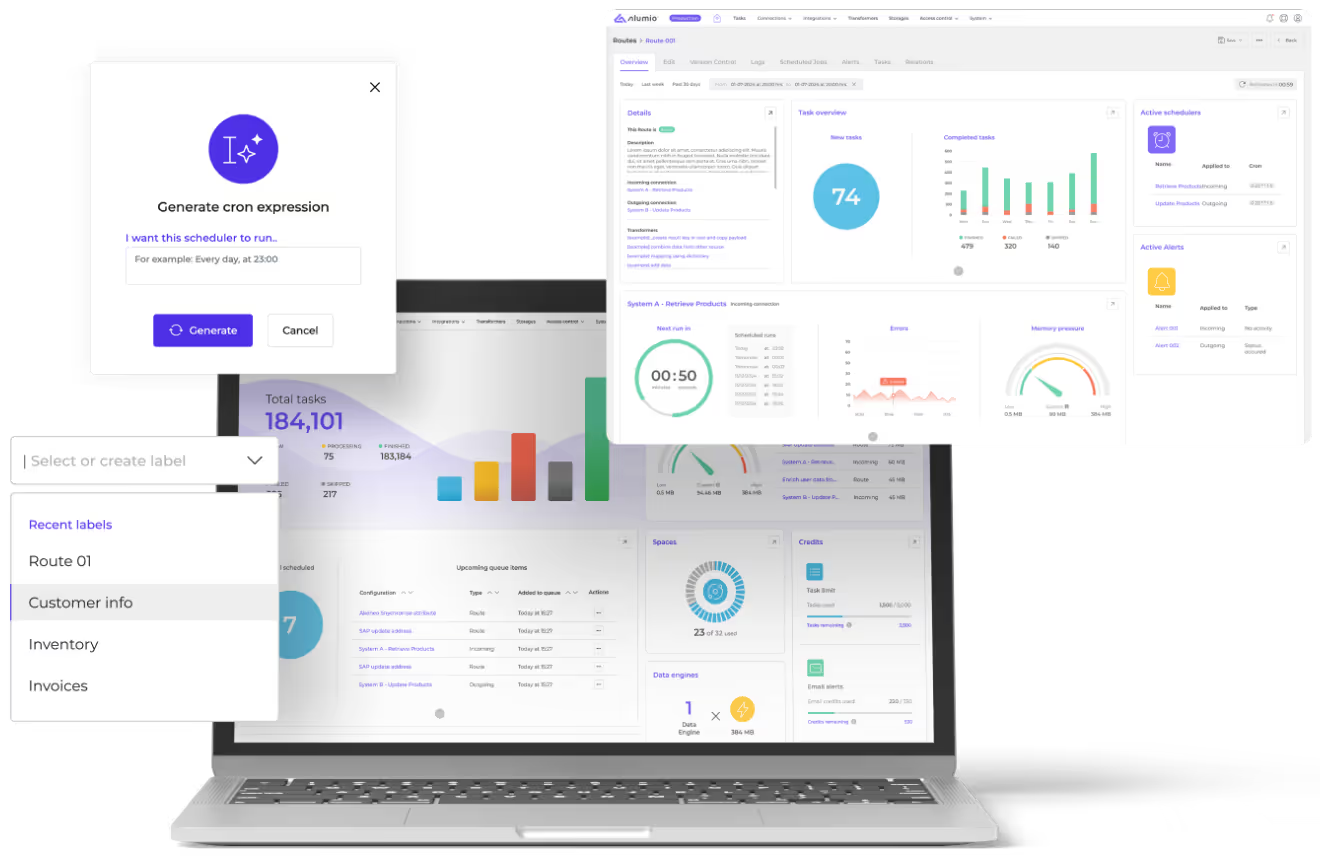
Laptop screen displaying the Alumio iPaaS dashboard, alongside pop-up windows for generating cron expressions, selecting labels and route overview.