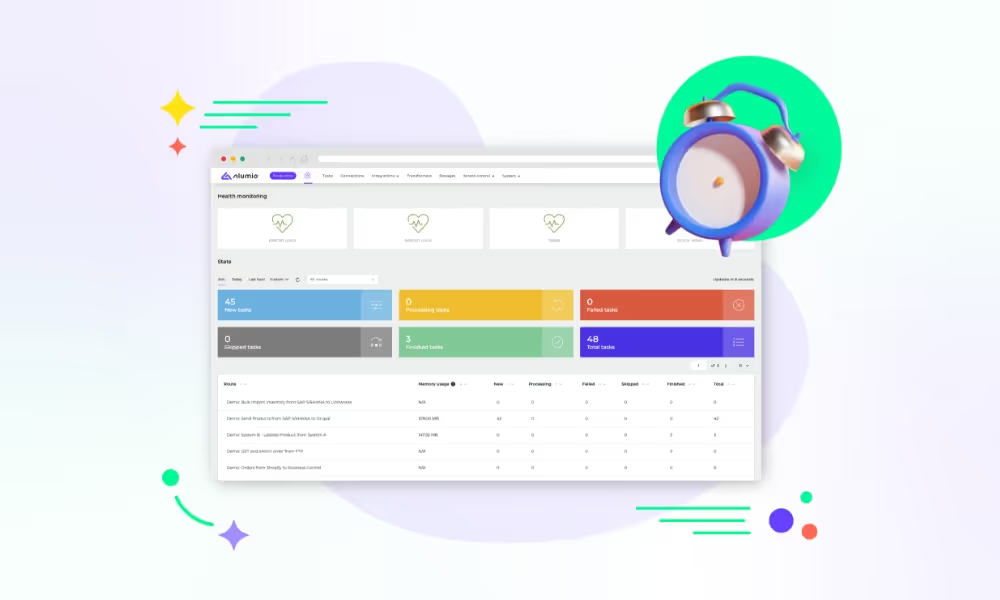
Introducing the Alumio Route Builder
Now connect, orchestrate, and govern integrations at scale from one visual interface

The SAP to Microsoft Power BI integration delivers ledger, order and stock figures into reporting on a known cadence, so a dashboard and the ERP answer the same question in the same way.



























When Microsoft Power BI reports on SAP through an extract somebody maintains, nobody can say for certain whether a figure on a dashboard is the figure in the ledger. At period close the two disagree, and the meeting becomes an argument about the data rather than the business. Controllers rebuild the file, and the version circulated is whichever was opened last. Connecting SAP and Microsoft Power BI makes the source traceable: ledger, order and stock records are collected, shaped and delivered on a set cadence, with every transfer recorded, so a figure can always be traced back to what produced it.
DATA THAT FLOWS BETWEEN THEM
Financial postings
Open items
Sales orders
Goods movements
Vendor master data
Period balances


Each number in Microsoft Power BI traces to the transfer that carried it out of SAP, so a disputed total is settled by looking rather than by two people defending spreadsheets.
Period balances arrive in Microsoft Power BI on a known cadence, so controllers spend close explaining movements in SAP instead of proving that the report and the ledger agree.
The maintained export between SAP and Microsoft Power BI becomes a configured flow, so reporting does not pause when the analyst who originally built the file is away.
Alumio connects to the SAP estate you run today and delivers to Microsoft Power BI, so better reporting does not have to wait behind a wider migration programme.
At close, Alumio delivers period balances from SAP into Microsoft Power BI with the transfer recorded, so finance reviews one agreed set of figures instead of reconciling a dashboard against the ledger line by line.
Open items held in SAP feed a Microsoft Power BI view of receivables ageing, so credit control chases against the current position rather than a report that was only accurate when somebody exported it last week.
Goods movements recorded in SAP land in Microsoft Power BI beside planned quantities, so the operations team can see where actual flow diverged from the plan while there is still time left to do something about it.
Alumio sits between sales channels and fulfillment systems as a governed integration backbone. Orders are routed, transformed, and validated, while status updates return to every channel.

Authenticate your systems using Alumio's pre-built connectors. Choose from 200+ connector packages in the marketplace, plus unlimited custom integrations.

Define how data fields map between systems in a visual interface. Adjust formats, enrich records, and apply business logic, no custom code required.

Configure flows to run in real time on events, on a schedule, or both. Reduce manual data entry and let Alumio handle movement and transformation between systems.
.svg)
Once your first integration is live, adding your ERP, PIM, WMS, or CRM connects to the same hub. Existing flows keep running. No rebuilding from scratch.

Adding another source is the normal next step. Businesses reporting on SAP in Microsoft Power BI commonly bring in their commerce platform, because channel revenue sits outside the ERP and a report without it describes only part of the trading. Alumio holds both connections, so channel data is shaped and delivered alongside the SAP records rather than joined by hand inside the report.
Yes, on a defined cadence rather than by manual export. Alumio collects financial postings, open items and goods movements from SAP, shapes them for reporting and delivers them on the schedule you set. Each delivery is recorded, so a report carries a known position as at a known time instead of whatever the last refresh happened to pick up.
No, these flows are configured, not written. Selecting the SAP records, shaping them and setting the delivery cadence to Microsoft Power BI all happen in Alumio's interface, which retires the extract scripts finance teams tend to inherit rather than choose. Group reporting rules are another matter, and custom logic through the Code Transformer covers those, so a bespoke consolidation across several SAP entities does not hand the job back to development.
Use a stored snapshot for anything you will be held to. A live read moves while the close is still posting, so two people opening the same Microsoft Power BI report minutes apart can each see a different total and both be right. A snapshot delivered at a known cut-off gives everyone in the room the same basis. Live reads suit operational monitoring of SAP, where movement is the thing you want to see.
Alumio catches the failed delivery before it becomes a wrong number in a meeting. Every transfer is monitored in real time and recorded with the records it carried, alerts go out immediately, and retries run automatically where they are configured. The log names the point at which the load from SAP stopped and what was still outstanding, so a partial refresh shows as a gap rather than passing quietly as a complete set of figures.
Talk to an Alumio integration specialist. We'll map the right architecture for your systems, at the right scale, so your operations stay reliable through every change.














.svg)


