Introducing the Alumio Route Builder
Now connect, orchestrate, and govern integrations at scale from one visual interface

Goods coming back from an Amazon customer reach Sage X3 with their condition attached, so returned stock is either offered for sale again or taken out of the available count deliberately by somebody.



























A return is two events that arrive apart: the money, which finance handles, and the goods, which turn up in a box with a reason written on them. Sage X3 needs to know which of them can be sold again, and if nobody decides, the safe answer becomes the default, so returned stock either sits in a corner uncounted or goes straight back on sale in a condition the next customer will also reject. Both cost money and neither is visible. Connecting Sage X3 and Amazon records the disposition with the credit, so returned goods are counted where they actually are.
DATA THAT FLOWS BETWEEN THEM
Return requests
Return reasons
Stock dispositions
Credit notes
Item records
Warehouse locations


A return reaching Sage X3 carries the reason and the condition it came back in, so the item is booked to sellable or unsellable stock by decision rather than by an old default.
Because returned goods land in the right location, the availability Sage X3 reports is stock a customer could actually receive, which stops a second return of the same item.
Return reasons accumulate against the item in Sage X3, so a product that keeps coming back for the same reason is visible to the business rather than only to the warehouse.
Unsellable stock is written down when it is booked in, so the value on the balance sheet reflects what can be sold instead of everything that has ever been received back.
When Amazon records a return, Alumio writes it into Sage X3 with its reason and condition and books the goods to the location that matches, so sellable and unsellable stock are separated at the point of receipt.
Items returned in a condition that cannot be resold are booked to a holding location rather than back into available stock, so the figure Sage X3 publishes to any channel stays a figure the warehouse can honour.
Return reasons are recorded against the item in Sage X3 as they arrive, so a pattern in one product becomes visible in the ERP and the decision to change the listing, the packaging or the supplier has something behind it.
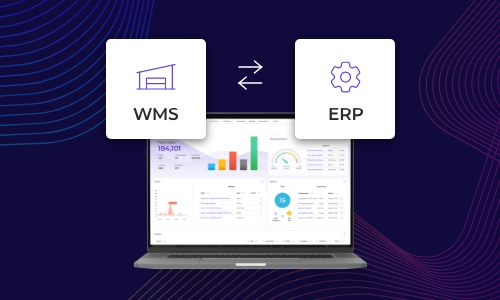
Alumio sits between sales channels and fulfillment systems as a governed integration backbone. Orders are routed, transformed, and validated, while status updates return to every channel.

Authenticate your systems using Alumio's pre-built connectors. Choose from 200+ connector packages in the marketplace, plus unlimited custom integrations.

Define how data fields map between systems in a visual interface. Adjust formats, enrich records, and apply business logic, no custom code required.

Configure flows to run in real time on events, on a schedule, or both. Reduce manual data entry and let Alumio handle movement and transformation between systems.
.svg)
Once your first integration is live, adding your ERP, PIM, WMS, or CRM connects to the same hub. Existing flows keep running. No rebuilding from scratch.

Following the goods rather than the money is what points at the next connection. Once unsellable Amazon returns are separated in Sage X3, somebody has to do something with them, and the outlet or liquidation channel they go to is the usual addition, because a holding location that only ever fills up is a write-off waiting to be discovered. Alumio holds that connection alongside this one, so what leaves as clearance leaves the stock record too.
The disposition is read first, because it decides where everything else goes. Alumio takes each Amazon return with its reason and condition and books it into Sage X3 against the location that treatment maps to, raising the credit note alongside. A return whose condition is not yet known is held rather than defaulted into available stock, so nothing becomes sellable by accident.
No, and what looks like logic is really a decision tree somebody has to draw once. Which Amazon return reason maps to which Sage X3 location and treatment is a table in Alumio's interface, and it changes as a business learns which reasons predict a resalable item. Where a condition has to be inferred from more than one field, the Code Transformer takes that rule and the rest stays configuration.
In the location its condition maps to, which is a mapping the business defines rather than something either system decides. An Amazon return arrives with a reason, and the goods arrive in a state that reason only partly predicts, so Sage X3 has to receive both the credit and a disposition. Booking sellable and unsellable stock to different locations is what keeps published availability honest.
Stock in two places at once is the failure to catch: counted as available in Sage X3 while physically sitting in a returns cage. Alumio monitors each transfer in real time and logs the Amazon return it read, so a receipt Sage X3 refuses raises an immediate alert naming the return and the reason. Retries run where configured and unresolved returns stay listed rather than being booked to a default location, so nothing is quietly resold.
Talk to an Alumio integration specialist. We'll map the right architecture for your systems, at the right scale, so your operations stay reliable through every change.














.svg)


