Introducing the Alumio Route Builder
Now connect, orchestrate, and govern integrations at scale from one visual interface

Shopify orders reach Orderwise as pickable documents and stock, batch and dispatch data returns, so the warehouse and the storefront stop keeping separate versions of the same trading day.



























Orderwise runs the warehouse: stock by location, batch and serial control, courier selection, order routing. Shopify runs the shop window. When they are not connected, orders are downloaded in batches, so the warehouse works from a list that was accurate an hour ago, storefront stock lags behind picking, and a customer asking where their parcel is gets an answer from whoever can see the courier portal. A Shopify to Orderwise integration through Alumio removes the batch: orders arrive as placed, stock reflects the warehouse, and tracking returns to the customer.
DATA THAT FLOWS BETWEEN THEM
Sales orders
Stock by location
Batch and serial data
Dispatch confirmations
Tracking references
Returns
Customer records


Shopify orders reach Orderwise as they are placed, so picking starts from a current queue rather than from an import that was already an hour behind when it ran.
Orderwise stock positions update Shopify continuously, so availability reflects what the warehouse can dispatch rather than a figure taken before picking began.
Dispatch and tracking data returns to the Shopify order, so buyers follow their parcel from their account and support stops fielding calls that a courier portal already answers.
Batch and serial references recorded in Orderwise are carried back against the Shopify order, so traceability covers online sales as completely as it covers trade shipments.
A completed Shopify order creates the Orderwise document with lines, delivery service and address in place, so it enters the pick queue immediately and the warehouse works a flow rather than a batch landing hourly.
As Orderwise stock changes through picking, receiving and stock takes, Alumio updates Shopify availability, so the storefront stops selling the last unit of something that has already been allocated to a picked order elsewhere.
When Orderwise confirms dispatch, the tracking reference and carrier are written back to the Shopify order, so the customer sees progress in their account and the support team is not translating warehouse status by hand.
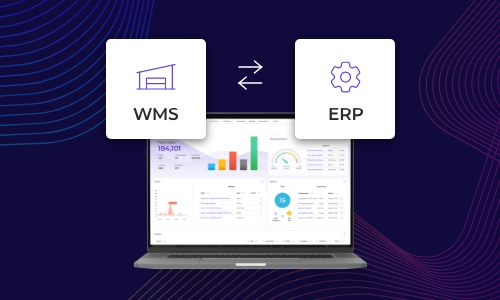
Alumio sits between sales channels and fulfillment systems as a governed integration backbone. Orders are routed, transformed, and validated, while status updates return to every channel.

Authenticate your systems using Alumio's pre-built connectors. Choose from 200+ connector packages in the marketplace, plus unlimited custom integrations.

Define how data fields map between systems in a visual interface. Adjust formats, enrich records, and apply business logic, no custom code required.

Configure flows to run in real time on events, on a schedule, or both. Reduce manual data entry and let Alumio handle movement and transformation between systems.
.svg)
Once your first integration is live, adding your ERP, PIM, WMS, or CRM connects to the same hub. Existing flows keep running. No rebuilding from scratch.

More can be connected, and an accounting system is usually next, because Orderwise handles fulfilment while invoices and settlement belong in the ledger. Alumio connects them together, so a dispatched Shopify order becomes both a warehouse movement and a posted transaction without anyone re-entering the same sale into a third system afterwards.
Yes. Alumio reads stock positions from Orderwise and updates Shopify inventory as movements occur, with location and buffer rules applied on the way through. Because Orderwise tracks stock by location, you decide which locations feed the storefront, so a warehouse holding trade-only or damaged stock does not inflate what the website is willing to sell.
Configuration covers it. Order mapping, delivery service translation, stock rules and dispatch write-back are set up in the Alumio interface, replacing the download-and-import routine this pairing usually runs on. Warehouse setups differ in how locations and services are coded, and where a service mapping resists configuration the Code Transformer accepts custom logic for that rule.
At the point the order is accepted and created in Orderwise, which is worth deciding explicitly rather than by habit. Shopify owns the customer-facing record and payment; Orderwise owns allocation, picking and dispatch from that moment. Alumio carries status back so the Shopify order stays informative for the buyer, but fulfilment decisions live in one system rather than being negotiated between two.
Warehouse and storefront never drift apart unnoticed. Alumio keeps a logged copy of every message exchanged with Orderwise, watches both connections live, and alerts the team the moment one is refused, with the order and the cause shown side by side. Automatic retries absorb transient faults, and an order that has not been created waits in the exception queue rather than going missing silently.
Talk to an Alumio integration specialist. We'll map the right architecture for your systems, at the right scale, so your operations stay reliable through every change.









.svg)


