Introducing the Alumio Route Builder
Now connect, orchestrate, and govern integrations at scale from one visual interface

Warehouse data from Orderwise reaches Microsoft Power BI as a scheduled dataset, so pick performance, stock accuracy and courier reliability all become measured rather than argued about.


























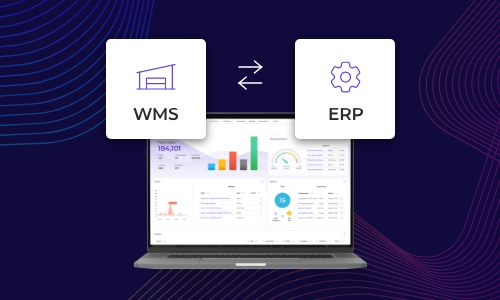
A warehouse generates the most measurable data in a business and usually reports the least of it. Orderwise records every pick, movement and dispatch, but the weekly figures come from somebody's spreadsheet, so a debate about whether accuracy is improving depends on who built the file. Courier performance is judged by memory of complaints. An Orderwise to Microsoft Power BI integration through Alumio makes the operation reportable: pick, stock and dispatch data is delivered on a schedule in a consistent shape, so warehouse performance can be tracked like anything else in the business.
DATA THAT FLOWS BETWEEN THEM
Pick activity
Stock movements
Stock accuracy checks
Dispatch records
Courier performance
Order throughput


Pick activity reaches Power BI as structured data, so throughput per shift and per area is charted rather than estimated from how busy the warehouse felt that week.
Count and adjustment data is delivered consistently, so accuracy becomes a trend the operation can act on instead of a figure quoted differently in every meeting.
Dispatch and delivery data supports reporting per carrier, so a service conversation is backed by rates from the record rather than by recollection of recent complaints.
Definitions live in the flow rather than in each analyst's file, so two reports on the same operation cannot quietly disagree about what a completed pick means.
Alumio delivers Orderwise pick and dispatch activity to Power BI on a schedule, so a manager can compare throughput across shifts and areas and act on a genuine pattern rather than on the impression left by a difficult week.
Stock count and adjustment data is reported over time, so a warehouse can see whether accuracy is genuinely improving after a process change instead of relying on the absence of complaints as evidence that it worked.
Dispatch records with their carrier and outcome are delivered to Power BI, so a service review with a courier opens with measured failure rates by route rather than with a list of the incidents somebody happened to remember.
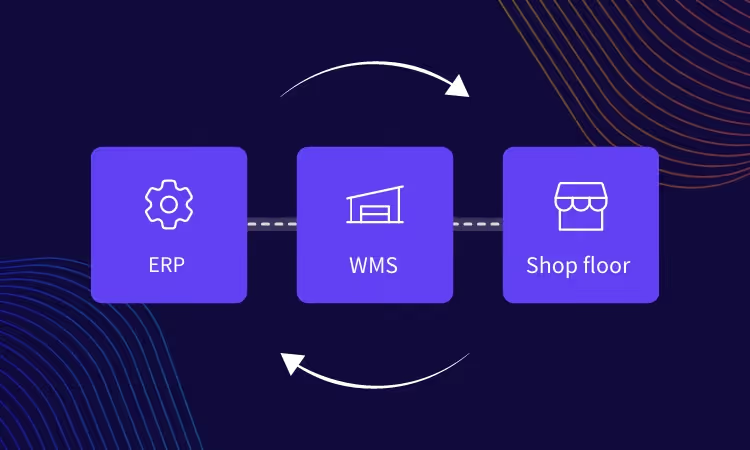
Alumio sits between sales channels and fulfillment systems as a governed integration backbone. Orders are routed, transformed, and validated, while status updates return to every channel.

Authenticate your systems using Alumio's pre-built connectors. Choose from 200+ connector packages in the marketplace, plus unlimited custom integrations.

Define how data fields map between systems in a visual interface. Adjust formats, enrich records, and apply business logic, no custom code required.

Configure flows to run in real time on events, on a schedule, or both. Reduce manual data entry and let Alumio handle movement and transformation between systems.
.svg)
Once your first integration is live, adding your ERP, PIM, WMS, or CRM connects to the same hub. Existing flows keep running. No rebuilding from scratch.

More can be connected, and the commerce platform is the usual addition, because warehouse throughput only means something next to the demand that created it. Alumio delivers both into the same Power BI model, so a report can show whether a pick backlog followed a promotion rather than leaving that connection to be inferred in a meeting.
Yes. Pick, stock and dispatch activity is read from Orderwise and delivered on a schedule in the structure your Power BI model expects. The value here is consistency rather than speed: because identical definitions apply on every refresh, a change in throughput reflects the warehouse and not a change in how somebody built the extract.
Extract definition, shaping and scheduling are configured in the Alumio interface, replacing the spreadsheets that warehouse reporting normally depends on. Warehouse configurations differ in how locations, areas and services are coded, so the Code Transformer covers deriving a measure that your operation defines differently from the default.
As throughput falling against a stable order intake, usually a day or two before late dispatches appear. That leading signal only exists if pick activity and order volume sit in the same model, which is the argument for delivering both rather than reporting dispatch alone. By the time late deliveries show, the customer already knows.
A report shows an older complete dataset rather than a partial one. Alumio monitors each delivery in real time, records every message and manifest, and notifies you at once when one is refused, with the dataset and the reason attached. Unattended retries repeat a failed refresh, and an incomplete delivery is held back rather than publishing without anyone noticing.
Talk to an Alumio integration specialist. We'll map the right architecture for your systems, at the right scale, so your operations stay reliable through every change.















.svg)


