


A Alumio vivid purple arrow pointing to the right, a visual representation of how to access more page material when clicking on it.
Go back

How to replatform without losing SEO: 7 best practices

By
Saad Merchant
Published on
March 6, 2025
Updated on
June 24, 2026
IN CONVERSATION WITH
Email icon
Email icon

Replatforming can be a double-edged sword for businesses. On one hand, it offers the potential to unlock new growth opportunities by modernizing outdated systems, enhancing scalability, improving performance, and elevating user experience. On the other hand, if not executed properly, it can derail your business by disrupting operations, impacting SEO performance and overall traffic, while any broken functionalities can result in dissatisfied customers. In this guide, we'll explore replatforming best practices that will focus on how to replatform without losing SEO and to ensure seamless migration without disrupting growth, data integrity, and user experience.

7 replatforming best practices: Migrating without disrupting growth

Are you looking to upgrade the performance, security, scalability, user experience, or technological capabilities of your digital platform? Replatforming without careful planning and execution can result in a decline in search rankings, disruptions in user experience, and even revenue loss. Ensuring a smooth transition requires a well-defined strategy that addresses these risks head-on, allowing businesses to reap the benefits of modernization while mitigating potential pitfalls.

1. Assessing whether it’s time to replatform

Replatforming is the process of migrating from one digital platform, such as switching from WooCommerce to Shopify or from a legacy system to a cloud-based solution. Some of the key signs you need ecommerce replatforming or enterprise software replatforming (ERP, CRM, CMS) include:

  • Performance issues: Slow load times or frequent downtime can impact both user experience and SEO. Consistently high bounce rates, increasing page abandonment, and customer feedback indicating laggy interactions can all signal that your current platform isn’t keeping pace with your user demands.
  • Lacking integration capabilities: This could mean your platform does not support emerging business needs, like seamless API integrations, advanced analytics, omnichannel marketing, or personalized user experiences. If your system can’t integrate new technologies or support innovative business strategies, it’s a clear sign that an upgrade is needed.
  • Scalability concerns: Consider whether your system can handle growth in traffic, transactions, and data volume. If performance degrades under peak loads or if integrating future technologies is problematic, it indicates that your platform may not be robust enough to support long-term business expansion.
  • Security gaps: Beyond outdated security protocols, assess your platform’s vulnerability to emerging threats and its ability to comply with evolving standards (such as GDPR). Frequent security patches, vulnerability scan results, or data breach concerns highlight that the platform may not be equipped to protect both customer data and your brand reputation.

Conduct a comprehensive platform audit to identify gaps and assess whether your current system aligns with your long-term goals and when to replatform your website, system, or application. This step will guide you in determining whether replatforming is necessary, and it will help you assess how to plan a replatforming project.

2. Building your replatforming strategy

Well-crafted migration strategy steps or ecommerce platform migration planning is the backbone of a successful replatforming project. Follow these steps:

  • Define clear business goals: Outline your objectives—whether it’s preserving SEO, boosting site speed, or enabling cloud integration and omnichannel capabilities.
  • Involve key stakeholders early: Include team members from IT, marketing, customer service, and external consultants (if required) such integration partners to align technical requirements and capabilities with business needs.
  • Create a realistic timeline: Develop a project timeline with achievable milestones, such as auditing the current platform, evaluating potential platforms and their capabilities, data migration, testing, etc.

3. Safeguarding SEO during replatforming

Building a robust SEO foundation is painstaking work—every backlink, piece of content, and technical optimization is earned over time. You risk undoing years of effort if you don’t carefully assess how to replatform a website without losing SEO. Here’s a website or e-commerce replatforming SEO checklist:

  • Comprehensive site audit pre-migration: Start with a comprehensive audit to pinpoint your highest-performing pages and critical SEO elements.
  • URL mapping and 301 redirects: Develop a detailed mapping of old URLs to new ones. A meticulous 301 redirect strategy is key to transfer your painstakingly built SEO equity and prevent ranking losses.
  • Preserve metadata and internal links: Keep critical SEO signals intact by transferring metadata, canonical tags, and internal linking structures that contribute to your site’s SEO strength.
  • Testing and validating SEO: Rigorously test your new platform both before and after launch. This helps catch any issues early, ensuring that no detail slips through and undermines your SEO progress.

By implementing these practices, you can easily preserve SEO during platform migration and ensure your meticulously built tracking continues enhancing your digital presence, without having to be rebuilt.

4. Improving user experience and performance

Replatforming should enhance user experience rather than compromise it, and thus whatever new platform is selected to migrate to must be designed to boost engagement. Wondering how to maintain website UX when replatforming or how to improve site speed during replatforming? Here are some best practices:

  • Improve site speed during replatforming: Ensure the platform is optimized for rapid page load times to reduce bounce rates and positively influence search rankings, apart from improving user experiences. Fast-loading pages retain visitors and reduce abandonment, especially during peak traffic.
  • Mobile-first optimization: With an increasing number of users browsing on mobile devices, it’s vital to optimize your site for mobile-first indexing. Focus on delivering excellent Core Web Vitals scores through responsive design and streamlined content that meets modern search engine standards.
  • Seamless navigation: Craft an intuitive navigation structure and efficient checkout processes that guide users effortlessly through your site. Clear pathways and easy-to-find information boost user engagement, enhance overall satisfaction, and ultimately drive higher conversion rates.


Turn AI ambition into action

Portrait of Leonie Becher Merli, Business Development Manager at Alumio

Get a free assessment of your integration needs and next steps

Portrait of Leonie Becher Merli, Business Development Manager at Alumio

5. Enabling data migration without disruption

Data is the lifeblood of your online operations, and errors or disruptions while migrating customer data during replatforming can jeopardize performance, customer trust, and revenue. Here are some product data transfer best practices:

  • Back up critical data: Create a full backup before beginning the migration to safeguard against potential losses.
  • Stage environment testing: Conduct thorough tests in a staging environment to validate data integrity and system compatibility.
  • Accurate transfer: Ensure customer details, order histories, and product catalogs are migrated precisely and securely.
  • Leverage a data integration platform: Utilize a robust data integration platform to streamline the transfer, harmonize disparate data sources, and enable real-time synchronization across systems.

6. Testing and launch integrations

Before initiating your platform replatforming launch plan, comprehensive testing is critical for uncovering hidden technical issues. It helps verify performance under varied conditions and confirm every functionality meets user expectations. Here’s a good website migration testing checklist:

  • Pre-launch testing: Conduct detailed functional, usability, and performance tests to ensure every feature operates correctly and intuitively.
  • Load testing: Simulate peak traffic conditions to confirm the platform can sustain surges without compromising speed or stability.
  • Detailed testing checklist: Develop a thorough “website migration testing checklist” that encompasses security, third-party integrations, and all site components.

7. Post-launch monitoring and optimization

The work doesn’t stop after completing your replatforming structure. Monitoring site performance after replatforming and iterative improvements are essential:

  • Track key metrics: Use analytics tools to monitor traffic, search engine rankings, and conversion rates, ensuring that performance benchmarks are met, and any deviations are quickly addressed.
  • Address broken links: Regularly scan your site for 404 errors and other technical issues that could disrupt the user experience or negatively impact SEO.
  • Collect user feedback: Gather and analyze customer input to pinpoint areas for refinement, optimizing the user interface and overall functionality.
  • Conduct regular SEO Audits: Periodically perform a website post-migration SEO audit to verify that all SEO elements are preserved, and the site continues to perform at its best after the transition.

Common replatforming pitfalls to avoid

Apart from implementing replatforming best practices, some mistakes to avoid when replatforming a website or e-commerce replatforming risks to avoid include:

  • Overlooking SEO considerations: Integrate SEO into every phase of the migration to ensure that on-page elements, backlink structures, and technical optimizations remain intact.
  • Underestimating project complexity: Recognize that replatforming involves detailed tasks such as data migration, URL mapping, and system integration. Develop comprehensive timelines, allocate sufficient resources, and establish clear milestones.
  • Inadequate staff training: Invest in training sessions and documentation so that all teams understand the new system’s workflows and capabilities from the outset.

By directly confronting these challenges, you can prevent issues that might otherwise lead to lost traffic, revenue declines, and operational disruptions.

A well-executed replatforming process is not just a technical upgrade—it’s a strategic growth opportunity. By planning carefully, safeguarding your SEO, and continuously optimizing your new platform, you can unlock significant improvements in performance, user experience, and revenue. Embrace replatforming as a chance to evolve and position your business for long-term success.

The replatforming advantage

Replatforming isn’t just a technical upgrade, it’s a strategic transformation that can redefine your digital future. By rigorously assessing your current platform, planning meticulously, safeguarding your SEO, and continuously optimizing post-launch, you can protect your hard-earned digital equity and unlock new avenues for growth. Embracing these best practices will help you navigate the complexities of replatforming, minimize disruption, and set the stage for enhanced performance, improved user experience, and long-term business success. It’s a great opportunity to modernize your infrastructure and stay ahead in today’s competitive market.

No items found.

FAQ

Integration Platform-ipaas-slider-right
Why does replatforming put SEO at risk?

Replatforming puts SEO at risk primarily through URL structure changes: if product, category, and blog page URLs change between platforms, the search engine authority accumulated by the old URLs is lost unless 301 redirects are correctly implemented. Additional SEO risks include changes to meta title and description formats, loss of structured data markup, slower page performance on the new platform, and crawl interruptions during the migration period. Each of these can cause organic ranking drops that take months to recover from if not planned for specifically during the replatforming project.

Integration Platform-ipaas-slider-right
What are the 7 best practices for replatforming without losing SEO?

The seven best practices are: 1) Audit all existing URLs before migration and map each to its new equivalent. 2) Implement 301 redirects for every changed URL before launch. 3) Preserve meta titles and descriptions from the old platform on the new one. 4) Maintain or improve page load speed on the new platform. 5) Preserve structured data (schema markup) on product, category, and article pages. 6) Submit the new sitemap to Google Search Console immediately after launch. 7) Monitor rankings, crawl errors, and organic traffic daily for the first four weeks post-launch and address issues immediately rather than waiting for the next reporting cycle.

Integration Platform-ipaas-slider-right
How should URL redirects be managed during an e-commerce replatforming?

URL redirects during replatforming should be managed through a complete mapping exercise before any code is written: export all current URLs (product, category, blog, static pages), identify which will change on the new platform, and create a redirect map file that pairs every old URL with its new equivalent. This map is then implemented as 301 (permanent) redirects on the new platform before launch day. Redirect chains (where old URL redirects to an intermediate URL that redirects again to the final URL) should be eliminated: each hop in a chain loses some link equity. Test all redirects before launch using a crawl tool.

Integration Platform-ipaas-slider-right
What role does integration play in minimizing SEO risk during replatforming?

Integration plays a direct role in SEO-safe replatforming through: ensuring product data (including SEO metadata) migrates correctly from the old platform or PIM to the new one without data loss, maintaining consistent URL structures by having the integration platform route URLs as a configurable parameter rather than regenerating them from product names, and keeping the new platform's product catalog synchronized with the authoritative PIM source during the parallel-run period so that content on both platforms is identical before cutover. An integration platform that manages the content flows during migration reduces the risk of SEO-impacting content discrepancies between old and new platforms.

Integration Platform-ipaas-slider-right
How does page performance on the new platform affect post-replatforming SEO?

Page performance is a direct Google ranking factor through Core Web Vitals (Largest Contentful Paint, Interaction to Next Paint, Cumulative Layout Shift). If the new platform loads slower than the old one (a common outcome when moving from a performance-optimized legacy platform to an unoptimized new one) organic rankings can decline even when all other SEO factors are preserved. Performance benchmarking on the new platform should be part of the pre-launch checklist, comparing Lighthouse scores against the old platform for key page types (homepage, category pages, product detail pages).

Integration Platform-ipaas-slider-right
What monitoring should be in place immediately after a replatforming launch?

Immediately after launch, monitoring should cover: Google Search Console (crawl errors, coverage issues, sitemap processing status), organic traffic and ranking trends for the top 50 to 100 keywords (any significant drops in the first 48 hours indicate a systematic redirect or indexing issue), page speed scores for key page templates, 404 error rate (spikes indicate redirect gaps), and structured data errors in Search Console's rich results report. Set up daily alerts for the first four weeks rather than relying on weekly or monthly reporting cycles, as early detection and resolution of SEO issues prevents weeks of ranking loss that would otherwise accumulate.

Get a free assessment of your integration needs

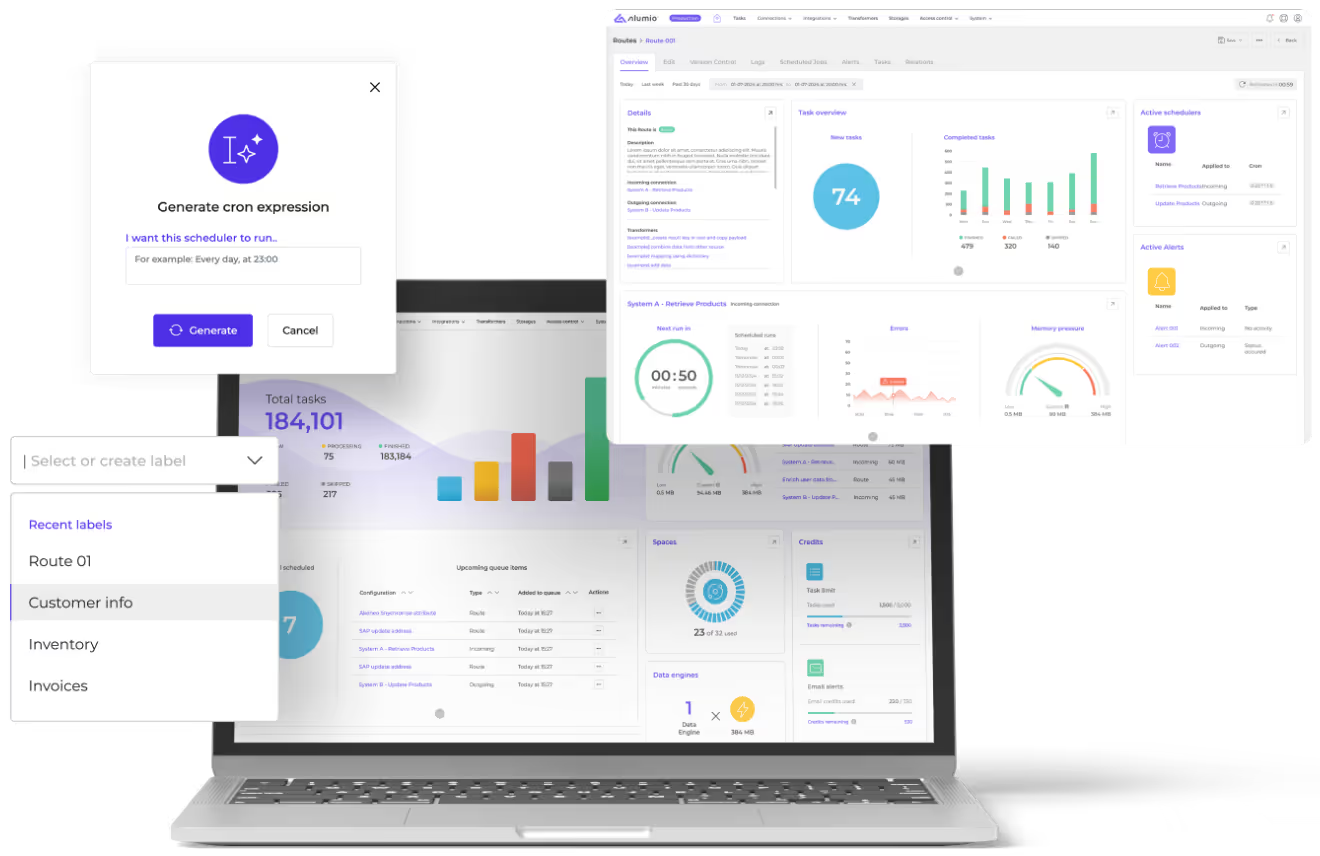
Laptop screen displaying the Alumio iPaaS dashboard, alongside pop-up windows for generating cron expressions, selecting labels and route overview.