


A Alumio vivid purple arrow pointing to the right, a visual representation of how to access more page material when clicking on it.
Go back

What is omni channel commerce?

By
Saad Merchant
Published on
September 14, 2023
Updated on
June 24, 2026
IN CONVERSATION WITH
Email icon
Email icon

In today’s fast-paced and interconnected world, shoppers are finally starting to prefer online purchasing to brick-and-mortar stores, and it is in fact due to this interconnectedness. The convenience of modern online shopping now consists of providing a consistent online shopping experience across multiple channels and devices. This means shoppers can now browse and purchase their products from web stores, social media, or their favorite online marketplaces like Amazon or bol, using their mobile devices, desktops, or even in-store purchases. Most importantly, their shopping data updates in real-time across all these channels, allowing them to enjoy a seamless shopping experience with the convenience of switching between channels as per preference. This dynamic shopping experience is called omni channel commerce.

What is omni channel commerce?


Omni channel commerce is an e-commerce integration method (online and offline) in modern retail that involves building a seamless, interconnected shopping experiences across multiple channels and devices. These channels include physical stores, websites, mobile apps, social media, and even customer service interactions. And omni channel commerce involves unifying all these channels and touchpoints to provide a consistent shopping experience.

Amazon is the most popular example of an omni channel experience. With Amazon, users can browse products on its webshop and add-to-cart or wishlist them, then complete their purchase later from their mobile device, and then receive constant order updates by email or SMS. They can access a chatbot or request live support from customer service at any point, across any device or channel. The user’s shopping data will consistently update across all these channels and devices with each interaction in real-time, because they are all integrated in one seamless omni channel experience. This allows users to keep track of all their orders, purchases, invoices, and to trigger returns or complaints across channels. With stores like H&M or IKEA, this integrated experience also extends to in-store purchases that are reflected online or in the mobile app, which in turn provide store locators.

3 key benefits of omni channel experiences for customers!

Today’s customers want the convenience and flexibility to shop when and how they prefer. And omni channel commerce caters to these demands, by providing a unified shopping experience not just across digital devices and channels, but as mentioned - also one that extends to in-store experiences as well.

Here are some of the key benefits that omni channel commerce provides to customers:  

  1. Consistent Customer Experience: Offering a consistent experience across channels enhances customer satisfaction. Allowing customers to track the products they purchase across devices and channels increases brand reliability and loyalty.
  2. Enhanced Product Discovery: Omni channel experiences ensure customers can discover a brand’s products across various channels apart from their e-commerce webshop, which includes social media, mobile browsing, or marketplaces such as Amazon, Ali Baba, and bol.
  3. Efficient Customer Support: Integrating customer support across channels allows businesses to provide efficient and timely assistance to customers. This could include implementing a chatbot on a website that seamlessly transfers complex customer requests to live agents through mobile apps or social media. This doesn’t just solve issues and complaints swiftly but also exponentially increases customer loyalty.

What are the benefits of an omni channel experience for businesses?

Brands that embrace omni channel strategies are often seen as more innovative and customer-focused, giving them a competitive edge. Here are a few of the many ways omni channel benefits businesses:

  1. Unified Customer Profiles: Centralizing customer data from different touchpoints, buying preferences, behavior, and purchase history, omni channel commerce enables personalized and targeted interactions.
  2. Data-Driven Insights: Omni channel strategies collect valuable data from various touchpoints. Analyzing this data can help you understand customer behavior and preferences, allowing you to make informed decisions and refine your marketing strategies.
  3. Competitive Advantage: In a crowded marketplace, standing out is essential. Implementing Omni channel commerce sets you apart from competitors who may still be relying on outdated single-channel approaches.
  4. Increased Sales: When customers can seamlessly transition from one channel to another, you increase the chances of closing a sale. It's about meeting the customer where they are in their buying journey.

How to implement an omni channel experience effectively?

Since omni channel is an integrated experience, it relies on integrating various applications, SaaS solutions, or data sources, via their APIs, and across cloud and on-premises environments. One of the most effective to build these connections is the implementation of a next-gen middleware solution called the iPaaS (integration Platform as a Service).

What is the iPaaS and how does it help with omni channel integrations?

The iPaaS is a cloud-based, low-code or no-code integration platform that helps businesses connect multiple systems, SaaS, and data sources, across on-premises and cloud environments. As an API-driven solution, the iPaaS enables real-time data exchange between all these integrated systems, provides flexible data transformation features, and helps build complex workflows to automate processes between all connected systems. Most iPaaS solutions like Alumio provide connectors (pre-configured integrations) to integrate popular software faster. This allows businesses to swiftly integrate e-commerce platforms, ERP systems, PIM, CRM, WMS, POS, Marketing automation software, Online Marketplaces, and more cloud apps, in order to build and grow their omni channel experiences.

Read more about how modern businesses can create seamless omni channel experiences with an integration platform →  

Omni channel commerce is essential to future-proof growth

While omni channel commerce has always been an inevitable evolution of the digital world, events like the COVID-19 pandemic have drastically accelerated our transition to online shopping. Where once shoppers swore by the reliability of brick-and-mortar shopping experiences, they are now starting to crave the convenience and interconnectedness of online omni channel commerce experiences.

Omni channel commerce is not just a trend but a fundamental shift in how businesses engage with customers. It's about creating a holistic and consistent shopping experience that meets the evolving needs and expectations of today's consumers. But, most importantly, it also prepares businesses to be ready to integrate future technologies and applications as part of their growth journey.


Turn AI ambition into action

Portrait of Leonie Becher Merli, Business Development Manager at Alumio

Get a free assessment of your integration needs and next steps

Portrait of Leonie Becher Merli, Business Development Manager at Alumio

No items found.
Topics in this blog:

FAQ

Integration Platform-ipaas-slider-right
What is omnichannel commerce and why has it become the standard for modern retail?

Omnichannel commerce is an integrated retail approach where all sales channels (physical stores, websites, mobile apps, social commerce, and marketplaces) operate as a smoothly connected ecosystem, sharing inventory, customer data, and order history so the customer's experience is consistent and continuous regardless of which channel they use. It has become the standard because customer behavior has evolved to channel-hopping as the norm: research on one channel, purchase on another, service on a third is a typical modern purchase journey. Retailers that manage channels independently create the friction of inconsistent experiences that customers increasingly attribute to poor brand quality.

Integration Platform-ipaas-slider-right
What are the defining characteristics of a true omnichannel commerce operation?

The defining characteristics are: unified inventory visible across all channels in real time (no channel-specific stock allocation that creates artificial scarcity), smooth cross-channel purchase and return (buy online, return in-store; reserve online, collect in-store), customer recognition across all touchpoints (loyalty, order history, and preferences available in every channel interaction), consistent product information and pricing from authoritative sources (PIM and ERP, not independent channel databases), and service visibility across all channels (any service agent can see any channel's order and interaction history). Each characteristic requires a specific integration flow between the systems managing each function.

Integration Platform-ipaas-slider-right
What technology infrastructure makes omnichannel commerce operationally achievable?

The technology infrastructure for omnichannel commerce requires: a unified inventory management system (ERP or WMS) as the single source for stock availability across all channels, a CRM or CDP for unified customer profiles aggregated from all touchpoints, a PIM for consistent product data distribution to all channels, an order management system that handles orders from all channels through unified fulfillment workflows, and an integration backbone that governs real-time data flows between all of these systems and all of the channel-facing platforms (storefronts, marketplaces, POS, apps). The integration backbone is the enabler that makes all other infrastructure components work together as an omnichannel system.

Integration Platform-ipaas-slider-right
How has the shift to online purchasing changed retail integration requirements?

The shift to online purchasing has expanded retail integration requirements from primarily in-store operational systems (POS, stock management, loyalty) to a full digital-to-physical integration ecosystem: e-commerce platforms generating orders that flow to the same WMS as in-store orders, online inventory visibility that reflects both warehouse and store stock, digital marketing platforms that personalize based on cross-channel purchase behavior, and marketplace channels that expand the retail footprint without physical space. Each new digital channel adds integration surface area that must be governed, which is why integration platform investment has grown proportionally with the shift to digital-first retail.

Integration Platform-ipaas-slider-right
How does Alumio help retailers build omnichannel commerce capabilities?

Alumio helps retailers build omnichannel by connecting all channel systems to the shared operational backbone: inventory from ERP or WMS reaches all digital channels simultaneously via real-time Routes, product data from PIM is consistent across storefronts and marketplaces, customer data from all touchpoints flows to a unified CRM, and orders from all channels flow to a single ERP for unified processing. The config-first backbone scales as new channels are added: each new marketplace, app, or social commerce channel connects to Alumio rather than requiring separate integrations to all existing back-office systems, making the path from single-channel to true omnichannel a series of Route additions rather than integration rebuilds.

Integration Platform-ipaas-slider-right
What metrics should retailers track to measure omnichannel integration quality?

Retailers should track: inventory synchronization latency across channels (how quickly a sale on one channel is reflected in all others: sub-minute is the target for high-frequency SKUs), cross-channel return rate (returns initiated online and completed in-store are a sign of successful omnichannel policy and integration), customer recognition rate at checkout across channels (what percentage of in-store transactions are matched to a known digital customer profile), omnichannel basket size versus single-channel basket size (omnichannel customers typically purchase more), and integration reliability metrics (Route success rates for inventory and order flows: failures directly translate to channel inconsistency). These metrics reveal integration quality through its operational and commercial consequences.

Get a free assessment of your integration needs

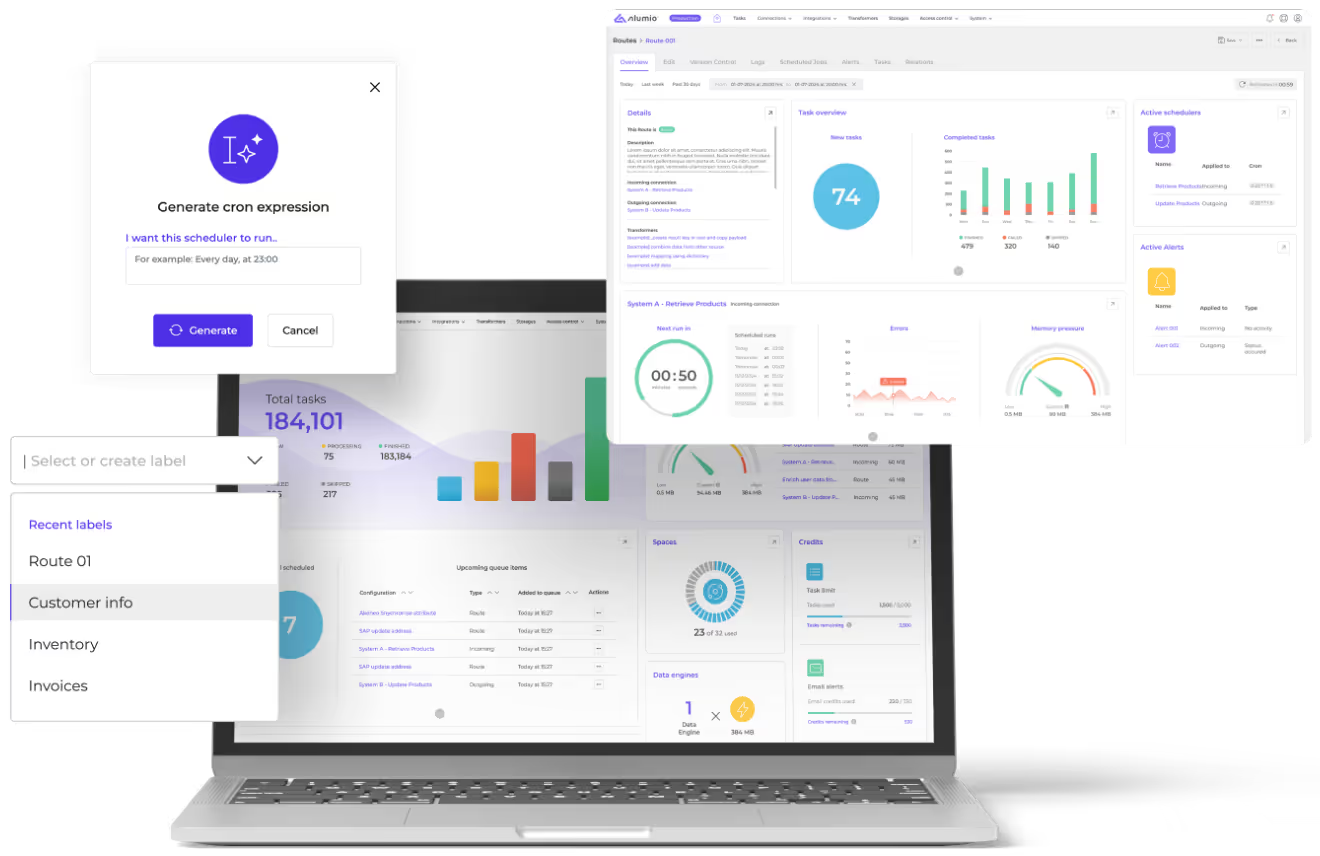
Laptop screen displaying the Alumio iPaaS dashboard, alongside pop-up windows for generating cron expressions, selecting labels and route overview.