


A Alumio vivid purple arrow pointing to the right, a visual representation of how to access more page material when clicking on it.
Go back

What are data integration tools and why do you need them?

By
Carla Hetherington
Published on
March 21, 2025
Updated on
June 24, 2026
IN CONVERSATION WITH
Email icon
Email icon

Data is your most valuable asset, but only if you can actually use it. Businesses are generating data from every direction: e-commerce platforms, ERP systems, CRMs, PIMs, SaaS applications, payment providers, and more. Yet many are still struggling to connect the dots between these systems. That’s where a data integration tool comes in. If your teams are spending hours manually transferring data, fixing broken APIs, or juggling different data formats, this blog is for you. Let’s unpack what a data integration tool actually is, why your business needs one, and why Alumio might just be the key to scaling smarter, not harder.

What is a data integration tool?

A data integration tool is software that connects different systems, apps, and data sources, enabling them to share information seamlessly. It eliminates data silos and lets you automate the flow of information across platforms accurately, securely, and in real-time.

Think of it as the translator, mediator, and peacekeeper for your entire digital ecosystem. Whether you're syncing customer data between Shopify and Salesforce, or updating stock levels between your ERP and marketplace channels, a data integration tool makes it happen behind the scenes, smoothly and without manual effort.

Core features of a modern data integration tool

While integration tools come in many shapes and sizes, the best ones have these essential capabilities:

  • No-code/low-code interface: Enables business users and IT teams to configure integrations without deep technical expertise.
  • Real-time and batch processing: Flexibility to move data instantly or at scheduled intervals.
  • Pre-built connectors: Ready-to-use templates for popular platforms like Magento, SAP, HubSpot, BigCommerce, and more.
  • Error monitoring and logging: Stay in control with clear visibility into what’s working and what’s not.
  • Scalability: Handle large data volumes and an expanding ecosystem as your business grows.
  • Security and compliance: Protect sensitive data and meet global privacy regulations.

Now that we’ve covered what a data integration tool is, let’s talk about the “why.”

Why your business needs a data integration tool

If you're scaling fast, launching new systems, or navigating digital transformation, integrating your software stack isn’t optional; it’s essential. Here's why:

1. Eliminate manual work and human error

Manual data entry is not only slow, but it’s also prone to mistakes. A data integration tool automates processes like syncing orders, updating inventory, or consolidating customer data, freeing up your team to focus on higher-value tasks.

2. Break down data silos

When systems don’t talk to each other, valuable insights get trapped. Integration connects the dots, giving you a 360-degree view of your operations, customers, and performance.

3. Enable real-time decision-making

When data flows instantly between systems, teams get the information they need right when they need it. That means better decisions, faster reactions, and more agility in a competitive market.

4. Accelerate time-to-market

Want to launch a new product, open a new channel, or expand internationally? With seamless integrations, your tech stack won’t slow you down. You can move fast and stay nimble.

5. Improve customer experience

From accurate stock levels to personalized marketing, a connected data ecosystem ensures customers get a smoother, more consistent experience across all your touchpoints.


Turn AI ambition into action

Portrait of Leonie Becher Merli, Business Development Manager at Alumio

Get a free assessment of your integration needs and next steps

Portrait of Leonie Becher Merli, Business Development Manager at Alumio

Why Alumio is the smart choice for modern businesses

There are many data integration tools out there, but Alumio stands out for a few key reasons. It’s not just a tool; it’s a strategic enabler for digital growth.

Alumio is built for complexity, but made simple

Alumio’s intuitive, no-code interface makes it easy to connect systems and configure integrations, without writing a single line of code. Whether you're an IT pro or a business user, you'll feel right at home.

Future-proof your integrations

Systems change. Platforms evolve. Alumio’s flexible architecture and vendor-agnostic approach mean you're never locked in. You can easily replace or scale systems without breaking your integrations.

100+ pre-built connectors

Speed up your implementation with Alumio’s vast library of pre-configured connectors. Whether you’re connecting Shopify to Exact, Magento to SAP, or HubSpot to your ERP, Alumio gets you there faster.

Discover all available connectors →

Real-time error handling and insights

Stay in control with Alumio’s powerful monitoring tools. You can detect, troubleshoot, and fix issues before they impact your operations or your customers.

Scalable for every stage of growth

From startups to enterprises, Alumio grows with you. Whether you're integrating five systems or fifty, Alumio scales to match your ambition.

But Alumio is more than just a data integration tool; it’s a comprehensive iPaaS (Integration Platform as a Service). While data integration is one of its core strengths, Alumio also empowers businesses to automate workflows, transform data, orchestrate complex processes, and manage APIs, all from one centralized platform. It’s built to handle not just system-to-system connections but the entire lifecycle of data and integration management. That means fewer tools, less complexity, and more control over your digital infrastructure.

Find out how Alumio works →

Stop letting disconnected systems slow you down

The cost of disconnected data isn’t just technical; it’s strategic. Delayed decisions, frustrated teams, lost sales opportunities… it adds up fast. A modern data integration tool like Alumio doesn’t just fix a problem; it opens the door to operational excellence, agility, and growth. If you're ready to bring your systems together and take your business to the next level, it’s time to consider Alumio.

Looking to future-proof your tech stack with seamless data integration? Explore what Alumio can do for your business.

No items found.
Topics in this blog:

FAQ

Integration Platform-ipaas-slider-right
What are data integration tools and when do businesses need them?

Data integration tools are software platforms that enable organizations to connect, combine, transform, and synchronize data from multiple sources. Businesses need them when data generated by different systems (ERP, e-commerce, CRM, PIM, marketing platforms) must be combined for operational or analytical use, and manual data management (exports, spreadsheets, copy-paste) can no longer handle the volume, frequency, or accuracy requirements. The need is triggered by: operational failures from data inconsistency across systems, manual data work consuming significant staff time, analytics that produce incomplete or conflicting results from different data sources, or AI and automation investments that require clean, integrated data to function reliably.

Integration Platform-ipaas-slider-right
How do iPaaS and ETL tools differ as data integration approaches?

iPaaS (Integration Platform as a Service) is optimized for real-time operational system integration: connecting ERP, e-commerce, CRM, and PIM through event-driven or near-real-time Routes with monitoring and governance for business-critical data flows. ETL (Extract, Transform, Load) tools are optimized for batch-oriented analytical data integration: loading large volumes of historical data from operational sources into data warehouses or data lakes for BI and analytics. The distinction is timing (real-time vs. batch) and purpose (operational system synchronization vs. analytical data pipeline). Most data-mature organizations use both: iPaaS for the operational layer, ETL for the analytical layer.

Integration Platform-ipaas-slider-right
What are the most common data integration problems that prevent businesses from using their data effectively?

The most common problems are: data silos (the same entity exists in multiple systems with no synchronization), inconsistent formats and schemas (different systems represent the same data differently, preventing direct comparison), stale data (batch-updated systems that are hours or days behind operational reality), duplicate records (the same customer or product exists multiple times across systems without deduplication), and missing data (some systems do not capture all the attributes that other systems need). Each of these prevents data from being used effectively for decisions and automation, and each is addressable through the data transformation and synchronization capabilities of a governed integration platform.

Integration Platform-ipaas-slider-right
How does Alumio function as a data integration tool alongside its application integration capabilities?

Alumio functions as a data integration tool through its flexible Route architecture: scheduled batch Routes can extract, transform, and load data between systems on a periodic basis (nightly product catalog exports, daily financial reconciliation), while event-driven Routes handle real-time operational data synchronization. The Transformer components apply the data quality, normalization, and enrichment logic that makes integrated data reliable for downstream use in analytics or AI tools. The Power BI connector specifically routes operational data from the Alumio backbone to business intelligence dashboards, making Alumio a direct enabler of data-driven decision-making alongside its operational integration role.

Integration Platform-ipaas-slider-right
What business decisions become possible when data integration is solved?

When data integration is solved, businesses can make decisions that fragmented data landscapes prevent: demand forecasting based on order data from all channels simultaneously, customer LTV calculations that combine purchase history, returns, and service costs across all systems, marketing attribution that correctly credits all touchpoints across the customer journey, inventory optimization based on real-time stock levels across all warehouses and channels, and financial close processes that reconcile data from all operational systems automatically rather than through manual spreadsheet consolidation. Each decision represents a business capability that depends directly on data from multiple source systems being combined accurately and currently.

Integration Platform-ipaas-slider-right
How should businesses evaluate data integration tools for their specific needs?

Evaluation criteria should include: fit for the primary use case (operational real-time integration versus analytical batch pipeline), connector coverage for the specific systems in the organization's landscape (not just generally popular systems), data transformation capability (can the tool handle the specific format, schema, and business logic conversions required), governance features (monitoring, audit logging, access control, error handling), deployment model alignment (cloud-native versus on-premise versus hybrid), total cost of ownership at expected data volumes, and the quality of the implementation partner ecosystem in the organization's industry and region. A proof-of-concept on an actual use case with realistic data is more reliable than vendor demonstrations on curated examples.

Get a free assessment of your integration needs

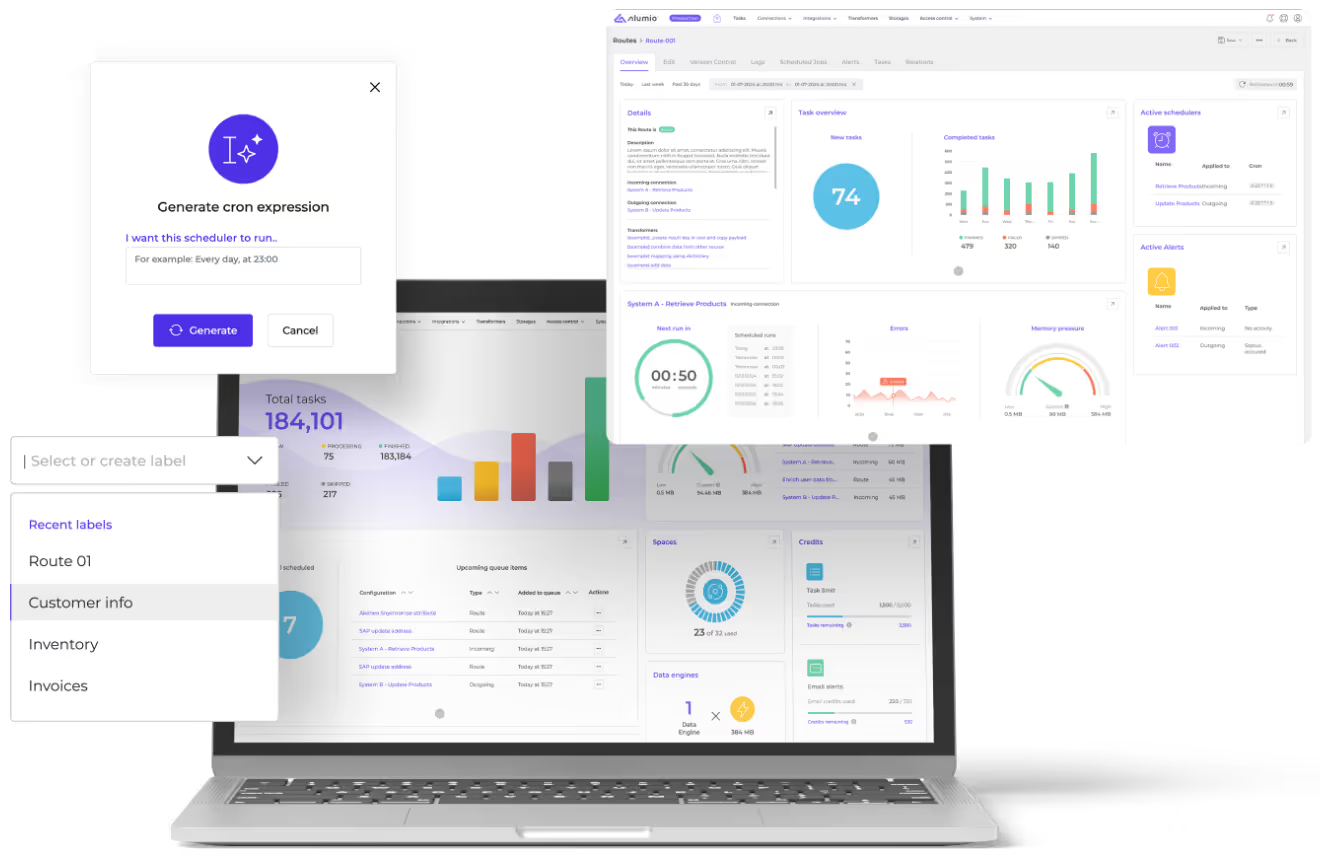
Laptop screen displaying the Alumio iPaaS dashboard, alongside pop-up windows for generating cron expressions, selecting labels and route overview.