Accelerating Dynamics 365 integrations with ecommerce: API Plugin by Alumio & Fresh Dynamics
In today's data-driven and digital-first business landscape, seamless integration between enterprise systems and e-commerce platforms is not just a competitive advantage - it's a necessity. Efficiently connecting the ERP system with e-commerce applications ensures real-time product data exchange, enhances inventory management, streamlines operations, and entails several other crucial benefits that we’ll soon delve into.
While Microsoft Dynamics 365 Finance & Operation (aka Finance & Supply Chain Management) enables businesses to create custom integrations with e-commerce applications using standard Microsoft OData endpoints, this method is time-consuming, expensive, and requires the help of Microsoft consultants. To provide a faster and more streamlined alternative, Alumio and Fresh Dynamics (Dynamics 365 implementation experts) have collaborated to develop and deliver a Connector called the API Plugin for Microsoft Dynamics 365 F&O that significantly enhances the ERP’s integration capabilities with e-commerce applications.
What is the Alumio API Plugin for Microsoft Dynamics 365 F&SCM?
The Alumio API plugin natively installs additional B2B & B2C API Points directly within Dynamics 365 F&O, enabling it to integrate with any e-commerce apps two times faster (compared to regular integration time). Alumio then provides an integration platform (iPaaS) to seamlessly integrate Dynamics 365 F&O (enhanced by the API Plugin) with any e-commerce platform or SaaS solution.
Developed by Fresh Dynamics and implemented via the Alumio integration platform, the Alumio API plugin for Dynamics 365 is a certified solution in AppSource, Microsoft’s official store for business apps. This is important because it means that the API plugin is not only compatible and installs correctly with Dynamics 365 F&O, but it will also upgrade with every new version of Dynamics 365 F&O that Microsoft releases.
What is the Alumio integration platform (iPaaS)?
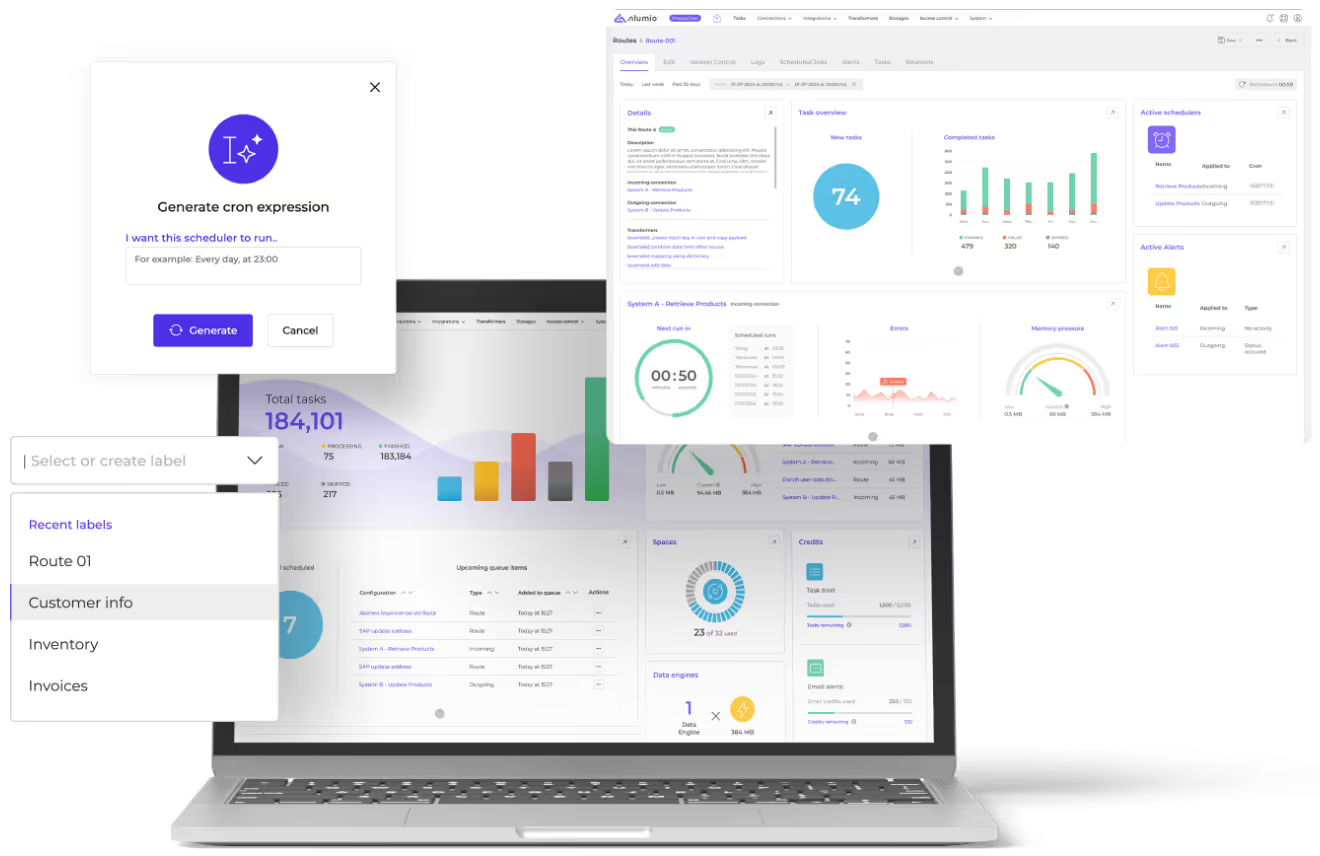
Alumio is a cloud-native, low-code integration that provides a user-friendly web interface to develop, govern, and orchestrate multiple integrations. As an API-driven solution, it enables real-time data exchange and workflow automation. Alumio also provides flexible mappers and data transformation features that help flexibly customize integrations to suit evolving business needs. It also provides automated monitoring and logging features to detect integration errors and API conflicts in real-time.
What apps does the Alumio API Plugin help Dynamics 365 F&SCM integrate?
After installing the Alumio API Plugin within Dynamics 365 F&SCM, it will have all the necessary B2B & B2C API points required to seamlessly integrate it via the Alumio integration platform with:
The integration possibilities are endless, with Alumio providing a wide range of connectors to build faster integrations with popular applications in a flexible and scalable way.
What data entities does the Alumio API Plugin install in Dynamics 365 F&O?
Swiftly installing the API points necessary for e-commerce integration within Dynamics 365 F&O, the Alumio API Plugin helps the ERP synchronize product data, pricing, customer info, stock details, and more. Here’s a full list of the current endpoints that the API Plugin installs in Dynamics 365 F&O to help it seamlessly exchange data via Alumio in real-time:
- Get: Delivery details, Delivery days of the customer, Sales order information, Simulation of sales order, Price and Stock information, Warehouse stock, Customer balance, EDI Purchase orders.
- Push: Products, Product attributes, Categories, Customers, Stock, Price, and Discount.
- Create: Sales orders, RMA Orders, and Post Order Payments in Dynamics 365 F&SCM.
Additionally, sending sales orders from an e-commerce platform to Dynamics 365 F&O would usually require multiple API calls, which is cumbersome and slow. The Alumio API Plugin provides a single endpoint to handle the creation of sales orders directly in Dynamics 365 F&O, significantly reducing the time and complexity involved. All these features greatly reduce the time and cost of developing and maintaining Dynamics 365 F&O integrations with e-commerce.
How to implement the Alumio API Plugin for Microsoft Dynamics 365 API Plugin
Businesses can discover the Fresh Dynamics and Alumio API Plugin for Microsoft Dynamics 365 F&O on Microsoft AppSource or the Alumio API Plugin page. After that, the process of implementing the plugin to enable e-commerce integration capabilities within Dynamics 365 F&SCM is as follows:
- Deploy the plugin via a secure portal
Once a business chooses to use the API plugin, it is deployed through a portal to which the customer gets a specific account with a password and two-factor authentication. From here, they can download the plugin along with its documentation, which includes a deployable package (as Microsoft refers to it).
- Install the plugin with an existing partner or Alumio partner
The business can have its existing integration partner typically handle the technical installation of the plugin, or it can employ an Alumio integration partner from its extensive network. There is detailed documentation available for setting up the plugin. If they encounter any issues or need assistance, Fresh Dynamics is ready to help and can also perform the setup if the customer prefers that.
- Configure the Azure app for authentication
It’s important to note that the Alumio API plugin operates through Azure, and an app must be configured in Azure to recognize the plugin for authentication purposes. This configuration needs to be done by the partner and the end customer. Once the Azure app is configured, the integration partner, customer, and Fresh Dynamics work together to set up the plugin. The setup process is usually straightforward with the provided documentation, and Fresh Dynamics helps tackle unexpected challenges.
- Testing the connection
After the setup, a connection test is performed from the Alumio integration platform with the business’s Dynamics 365 F&SCM ERP environment via the API plugin to ensure everything works correctly.
- Building Dynamics 365 ERP integrations with Alumio
Once these steps are completed successfully, the actual implementation of Dynamics 365 F&SCM integrations via the Alumio integration platform (iPaaS) can begin. The ERP is now primed with the API points it needs to seamlessly integrate with any B2B or B2C cloud app or SaaS solution via Alumio.
The benefits of the Alumio API Plugin for Dynamics 365 F&SCM
The collaboration between Alumio and Fresh Dynamics has resulted in a game-changing solution for businesses using Microsoft Dynamics 365 F&O. By directly installing pre-configured B2B and B2C API endpoints that Dynamics 365 F&O needs to integrate with e-commerce solutions, the plugin eliminates the need for complex, custom OData entity configurations and expensive custom development. Apart from reducing integration costs, it enhances overall operational efficiency, flexibility, and time-to-market.
Furthermore, the API plugin by Fresh Dynamics and Alumio opens up new possibilities for integrating Dynamics 365 F&SCM (via the Alumio integration platform) with other essential applications besides e-commerce platforms, such as PIM systems, Marketing Automation platforms, and more. This helps create a scalable commerce ecosystem where businesses can seamlessly integrate any new applications they implement with their Dynamics 365 F&O ERP, via the Alumio integration platform, as a single source of truth.




.svg)








.svg)
.svg)
.svg)
.svg)
.svg)
.svg)
