Unlock composable commerce with the Alumio SCAYLE Connector
In today’s fast‐evolving digital commerce landscape, businesses need integration solutions that connect various applications seamlessly and drive growth through tailored, data-driven operations. The Alumio SCAYLE Connector is designed to do just that — empowering enterprises to harness the robust capabilities of SCAYLE’s e‑commerce platform while integrating seamlessly with your existing IT ecosystem.
What is SCAYLE?
SCAYLE is an enterprise, cloud-native e-commerce platform that combines PIM, OMS, CRM, and e-commerce functionalities, known for powering some of Europe’s most dynamic online retail operations. In fact, Van Tilburg, one of the largest independent fashion stores in the Netherlands, uses the Alumio iPaaS to integrate SCAYLE with their entire retail ecosystem.
Scoring 4.07/5 for composable commerce in Gartner® Critical Capabilities for Digital Commerce 2024, SCAYLE is designed to help create tailored and modular e-commerce experiences. It also provides extensive built-in capabilities to drive seamless omnichannel, localized customer journeys, and effortless internationalization.
The benefits of using SCAYLE
SCAYLE distinguishes itself in the competitive e-commerce landscape through a combination of innovative architecture, industry-specific focus, and comprehensive functionality:
1. Composable, API-first architecture
As a composable commerce platform, SCAYLE is built on a headless, API-first, and cloud-native design that allows businesses to configure and extend the platform using modular components. This means that enterprises can effortlessly tailor their digital storefronts without being limited by legacy systems or rigid templates, resulting in faster time-to-market and greater flexibility as business needs evolve. At the same time, it’s API-first nature means that you can seamlessly integrate SCAYLE with your existing business systems and applications, or newer SaaS solutions.
2. End-to-end, integrated functionality
While SCAYLE is open to being integrated with other applications, it also already offers a fully integrated retail solution. This includes digital storefronts, checkout, order management (OMS), product information management (PIM), customer relationship management (CRM), promotions, payments, and analytics. As such, SCAYLE’s holistic approach minimizes integration challenges and ensures seamless data flow across all touchpoints, providing a unified customer experience from discovery to post-purchase engagement.
3. B2C and D2C growth features
SCAYLE is purpose-built for B2C and direct-to-consumer models. The platform emphasizes internationalization, omnichannel engagement, and deep personalization—key capabilities for brands seeking to capture and retain consumer attention in a global market. It is designed to not only enable brands to deliver personalized and localized shopping experiences, but also to empower them to manage high volumes of direct sales efficiently. By streamlining complex operations such as inventory control, international logistics, and marketing automation, SCAYLE allows companies to maintain the agility necessary to meet the evolving demands of today’s consumer market.
4. Robust internationalization and localization
Expanding into global markets is made simple with SCAYLE’s built-in internationalization features. The platform supports localized customer journeys, ensuring that every market receives a customized shopping experience. SCAYLE allows you to easily manage multi-country operations and ensure that logistical and operational standards are maintained across regions. Furthermore, it supports tailored marketing messages, pricing, and product information to meet localization requirements.
5. Enterprise-grade scalability and reliability
SCAYLE’s robust architecture is validated by industry analysts, earning accolades in reports such as Gartner’s Magic Quadrant™ and the IDC MarketScape. Its proven track record, supported by flagship clients like leading luxury retailers and sports brands, demonstrates the platform’s ability to handle complex, high-volume operations on a global scale while maintaining performance and security.
The advantages of integrating Scayle via the Alumio iPaaS
Integrating SCAYLE via the Alumio iPaaS unlocks a host of strategic and operational benefits, enabling businesses to fully realize the potential of its composable commerce capabilities. Below are the key advantages of this integration:
1. Seamless connectivity for a composable ecosystem
The Alumio iPaaS (integration Platform as a Service) provides a rich library of connectors to integrate SCAYLE rapidly with a wide range of applications for AI, BI, WMS, POS, Marketing, Channel Marketplace, and much more. At the same time, it provides native integration tools, features, and connection methods, which enable integrations between SCAYLE and any custom endpoint(s). As such, the API‑first design of SCAYLE, combined with Alumio’s flexible connection capabilities, allows enterprises to build a modular ecosystem where new applications can be integrated quickly and without disruption. At the same time, it eliminates silos by ensuring data flows fluidly and visibly between all integrated endpoints, in a way that it can be freely managed or modified via one user-friendly interface.
2. Enhanced flexibility and customization
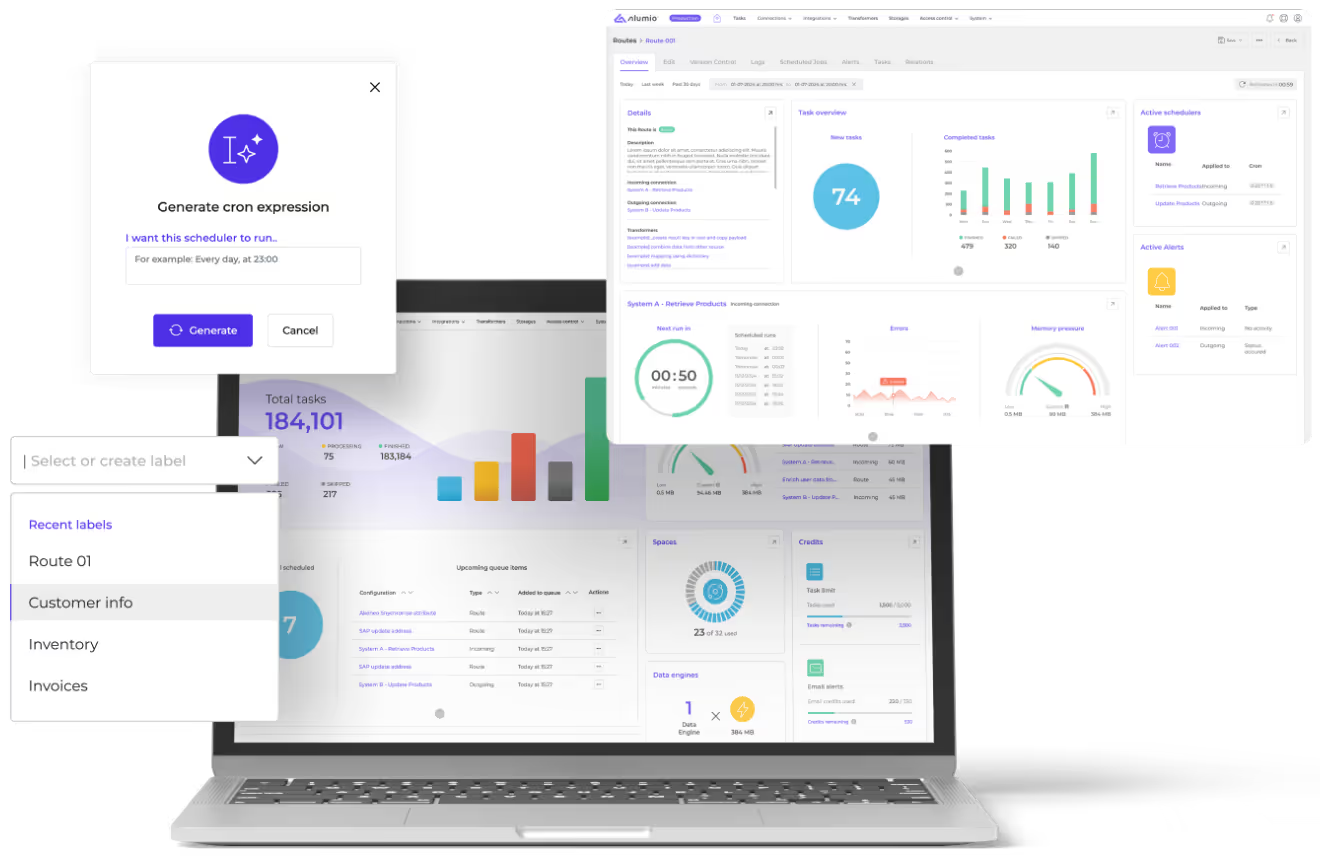
The modular architecture of SCAYLE, when integrated via Alumio, provides unparalleled flexibility in tailoring your digital storefront and also in managing data flows with precision. When building integrations with the Alumio iPaaS, organizations can fine‑tune workflows, adjust data mappings, and customize customer journeys without being constrained by rigid legacy systems. Its advanced route-building feature, which incorporates robust Transformers and Schedulers, allows organizations to flexibly filter and modify data as it moves between systems. This means you can configure integrations to run in scheduled batches or to synchronize in real-time, ensuring that data exchanges are optimized for your operational needs and market demands.
3. Unified operations and improved Data Integrity
A central benefit of integrating SCAYLE through Alumio is the consolidation of operational processes across your retail ecosystem. Whether it’s managing orders, tracking inventory, or executing omnichannel marketing campaigns, building integrations via the Alumio iPaaS ensures that all data remains synchronized and consistent across multiple systems. This unified approach reduces manual errors, streamlines processes, and enhances the overall efficiency of your business operations.
4. Scalability and future-proofing
The cloud‑native infrastructure and API‑driven design of both Alumio and SCAYLE ensure that as your business expands — whether through increased transaction volumes, international market entry, or the addition of new channels — the integrations also scale seamlessly. This future‑proofing capability means you can confidently invest in your digital commerce strategy without worrying about outgrowing your technology.
5. Robust security, monitoring, and support
Finally, leveraging the Alumio iPaaS ensures that your digital commerce ecosystem remains secure, resilient, and fully supported. With real‑time monitoring, automated error detection, and comprehensive logging capabilities, potential issues are identified and resolved swiftly — ensuring minimal disruption to your operations. This robust support framework gives you the confidence to focus on strategic growth initiatives while maintaining a secure and reliable retail environment.
Want to discover how Van Tilburg used the Alumio iPaaS to integrate SCAYLE with Microsoft Dynamics 365 Business Central, Mailjet, Bright River, and Fashion Cloud? Read the full case study →
Navigate the future of e-commerce with SCAYLE and Alumio iPaaS
The power of SCAYLE lies in its flexible, modular architecture and the composable commerce model, which allows businesses to adapt and thrive in an ever-evolving digital landscape. With the Alumio iPaaS as the connecting cornerstone, SCAYLE can integrate seamlessly with other enterprise applications. Integrating SCAYLE with the Alumio iPaaS elevates your e‑commerce strategy and lays the foundation for a truly composable commerce ecosystem.
By harnessing SCAYLE’s modular, API‑first, and headless architecture alongside Alumio’s robust connectivity tools — including advanced Transformers and Schedulers —enterprises can seamlessly orchestrate real‑time or scheduled data exchanges across their entire retail landscape. Whether you’re looking to enhance personalized customer journeys, manage high volumes of direct sales, or expand globally with confidence, integrate SCAYLE within your B2C or D2C ecosystem rapidly with the Alumio iPaaS SCAYLE connector.





.svg)









.svg)
.svg)
.svg)
.svg)
.svg)
.svg)
