




.svg)


The ISO 27001 advantage of the Alumio iPaaS
Rapid technological advancements and evolving consumer demands characterize the current dynamic business environment. In this climate, the ability to seamlessly integrate new software solutions and applications while ensuring real-time data exchange is crucial for future-proof growth. This can involve businesses having to integrate an ERP system with an e-commerce platform or a CRM, PIM, POS, Marketing automation software, or any of the many other popular cloud apps and SaaS.
However, as organizations attempt to connect two or a multitude of these systems, the risk of data silos, security breaches, and cyber threats escalates and becomes more challenging to manage, along with the integrations themselves. In this case, an integration platform that has achieved a globally recognized security certification like ISO 27001 is deemed a reliable solution to build a secure, integrated data ecosystem.
Building secure system integrations with an ISO 27001 iPaaS
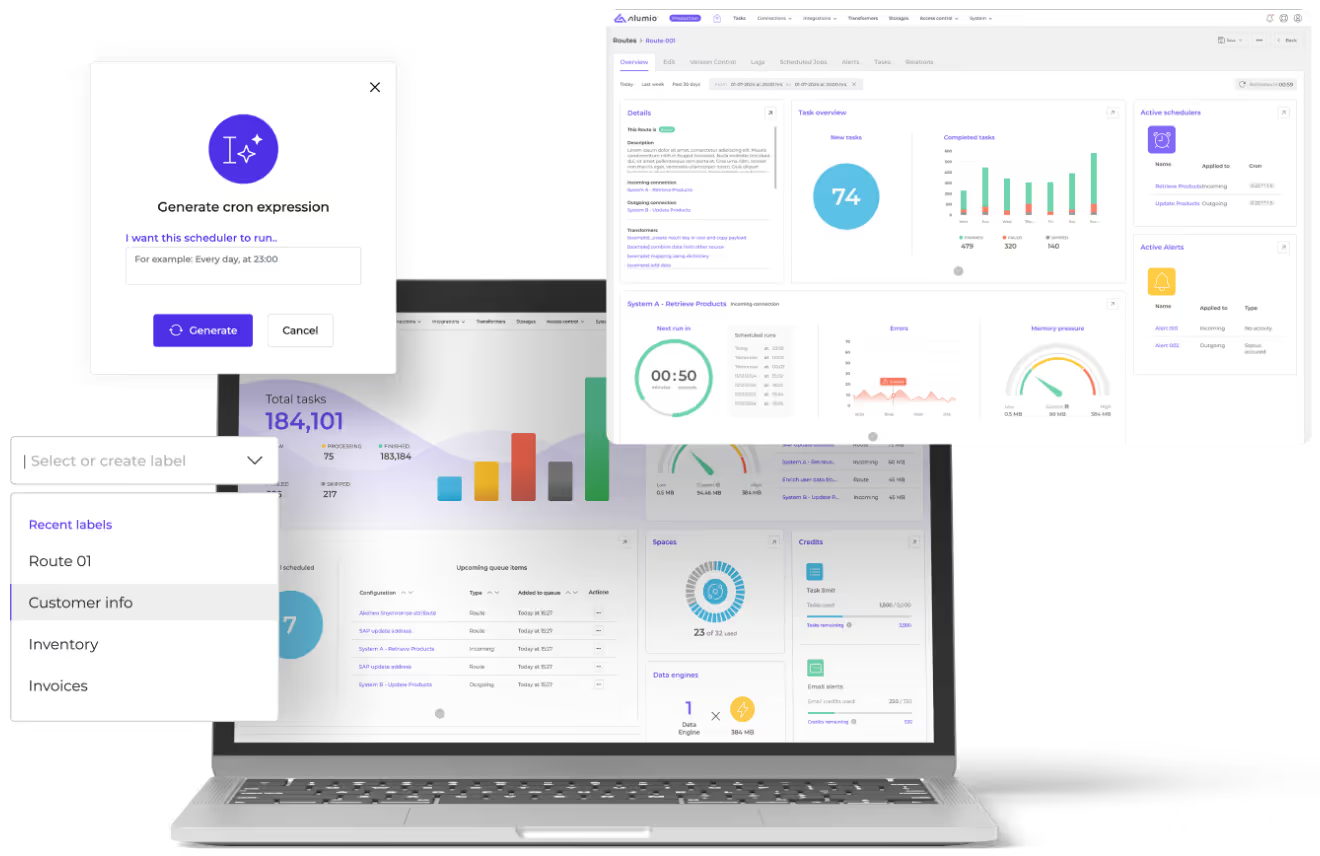
The Alumio iPaaS (integration Platform as a Service) is a next-gen, API-driven middleware that empowers organizations to seamlessly integrate all their disparate systems, applications, and data sources on one central and secure cloud-native platform. It helps streamline, synchronize, and automate data exchange between all integrated systems within an organization from one user-friendly, low-code interface.
As an ISO 27001-Certified iPaaS, Alumio offers several crucial security benefits when building integrations. This includes:
- Robust encryption protocols to ensure data exchanged between systems is protected from unauthorized access and to help maintain data integrity and confidentiality.
- Secure authentication and access controls via role-based access (RBAC) and multi-factor authentication (MFA) to verify the identity of users and restrict information access to authorized personnel only.
- Automated logging to capture detailed records of user activities, system events, and data transactions to facilitate compliance auditing, incident response, and visibility into the data integration processes.
- Real-time monitoring enables real-time detection of security threats, integration errors, data inconsistencies, and anomalous behavior by monitoring network traffic, system logs, and user activities.
Despite being a newly developed next-gen integration solution, all of the aforementioned platform security features, among others, have enabled the Alumio iPaaS to achieve an ISO 27001 certification. This indicates that Alumio meets the highest levels of global data security standards and solidifies the platform's compliance with key privacy regulations like GDPR. This also means that each business system, application, or data source that's integrated via the Alumio iPaaS can now benefit (and be assured) from the highest standards of data protection.
What is ISO 27001?
ISO 27001 is an internationally recognized standard that outlines the requirements for implementing, maintaining, and continually improving an Information Security Management System (ISMS). Developed and maintained by the International Organization for Standardization (ISO) and the International Electrotechnical Commission (IEC), the standard is also known as ISO/IEC 27001. Being ISO 21007-Certified indicates that the platform provides a structured framework for establishing robust security measures, ensuring compliance, and mitigating the risk of costly breaches.
Read our full definitive guide on ISO 27001, how it's established, its benefits, and more →
What are the advantages of Alumio being an ISO 27001-Certified iPaaS?
Being an ISO 27001-Certified iPaaS presents multitude of advantages. The certification signifies that the iPaaS provider has implemented a comprehensive Information Security Management System (ISMS) and adheres to stringent security protocols that are internationally recognized.
The Alumio iPaaS ISO 27001 certification also underscores its commitment to ensuring data protection through robust encryption, access controls, and proactive threat mitigation measures. It instills confidence in customers, software vendors, system integrators, and agencies to use the Alumio integration platform because of its dedication to maintaining the confidentiality, integrity, and availability of information assets.
Some of the essential benefits of Alumio being an ISO 2700-Certified iPaaS include:
1. Enhanced data security
With an ISO 27001 certification, Alumio ensures that data remains secure throughout the integration process, mitigating the risk of unauthorized access or breaches. By adhering to best practices outlined in the standard, Alumio provides a secure environment for data transmission and integration.
2. Compliance adherence
Businesses operating in regulated industries can trust Alumio to comply with stringent security requirements, thereby facilitating regulatory compliance. The ISO 27001 certification demonstrates Alumio's commitment to compliance with international standards for information security, such as GDPR, HIPAA, CCPA, and more.
3. Risk mitigation
ISO 27001 certification emphasizes a risk-based approach to information security management. By implementing rigorous security measures, Alumio helps organizations proactively identify and address potential security risks, safeguarding against data breaches and financial losses.
4. Trust and credibility
Partnering with the ISO 27001-Certified Alumio iPaaS helps enhance an organization's reputation and instills confidence among stakeholders, fostering long-term trust and credibility. The certification indicates a serious dedication to data security and demonstrates the willingness to invest in robust security measures.
5. Competitive Advantage
In today's competitive marketplace, businesses that prioritize data security gain a significant competitive edge. By leveraging the ISO 27001-Certified Alumio iPaaS, businesses can centralize all their integrations and data on a scalable platform that meets the highest levels of global security standards. At the same time, Alumio integration partners can attract more enterprise customers with the promise of building their integrations on an ISO 27001-Certified secure platform.
6. Enterprise-readiness
An ISO 27001-certified iPaaS solution is of significant importance to enterprise customers seeking a robust and secure integration solution. For enterprise businesses tasked with safeguarding vast volumes of sensitive data, the ISO 27001 certification instills confidence by validating Alumio's adherence to stringent security standards and best practices. Moreover, it positions Alumio as a trustworthy partner capable of meeting the rigorous security requirements of large-scale enterprises operating in regulated industries. By choosing the ISO 27001-Certified Alumio iPaaS, enterprise customers can vast integrated data ecosystems while mitigating the risk of data breaches.
Read more about the benefits of ISO 27001 for enterprise businesses ->
Elevate your data security with Alumio's ISO 27001-certified iPaaS
In conclusion, the benefits of Alumio iPaaS being ISO 27001 certified are manifold. From enhanced data security and regulatory compliance to improved risk management and competitive advantage, organizations stand to gain a plethora of advantages by leveraging Alumio's certified integration platform. By choosing the Alumio iPaaS, businesses can ensure the confidentiality, integrity, and availability of their data while staying ahead of the curve in today's rapidly evolving digital landscape.





.svg)
.svg)
.svg)
.svg)
.svg)
.svg)
