


Go back
Data, systemen en AI: hoe B2B-bedrijven waarde halen uit goede integraties



IN CONVERSATION WITH

.svg)








B2B businesses create value from good integrations by automating the manual processes that slow their operations: order intake from customer portals or EDI channels flowing directly into ERP, pricing and catalog data synchronized between ERP and customer-facing storefronts, inventory updated in real time across all touchpoints, and customer data unified between CRM and e-commerce so account managers have a complete and current view. The businesses seeing the most value treat integration as ongoing infrastructure rather than a series of one-off projects.
In B2B, AI tools for demand forecasting, customer risk scoring, and automated pricing are only as reliable as the data they receive. Data quality is determined by how well source systems (ERP, CRM, e-commerce) are integrated and synchronized. B2B businesses that invest in integration governance first find their AI investments deliver better and faster results, while those deploying AI on fragmented or inconsistently synchronized data experience unreliable outputs that undermine confidence in the technology.
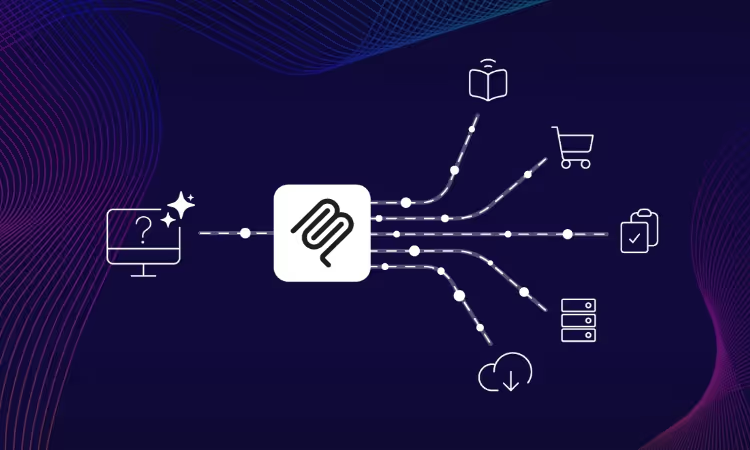
A governed integration backbone connects the diverse B2B system landscape (ERP, PIM, e-commerce, CRM, WMS, EDI trading partners) into a single managed platform where all data flows are visible, monitored, and replayable. For B2B businesses with legacy on-premise ERPs and modern cloud applications coexisting, the integration backbone bridges these generations without requiring a full ERP replacement. It is the infrastructure that makes digital transformation incremental and manageable rather than requiring a high-risk big-bang system replacement.
The highest-priority B2B data flows to automate are: customer-specific pricing synchronization from ERP to customer portals (ensuring each customer sees their contracted prices), order intake from all channels (EDI, portal, e-commerce) into ERP for unified processing, inventory levels from ERP to all customer-facing channels in near real time, and outbound order confirmations and shipping updates from ERP or WMS back to customers. Each of these flows, when automated, removes a category of manual work that slows B2B operations and introduces error risk.
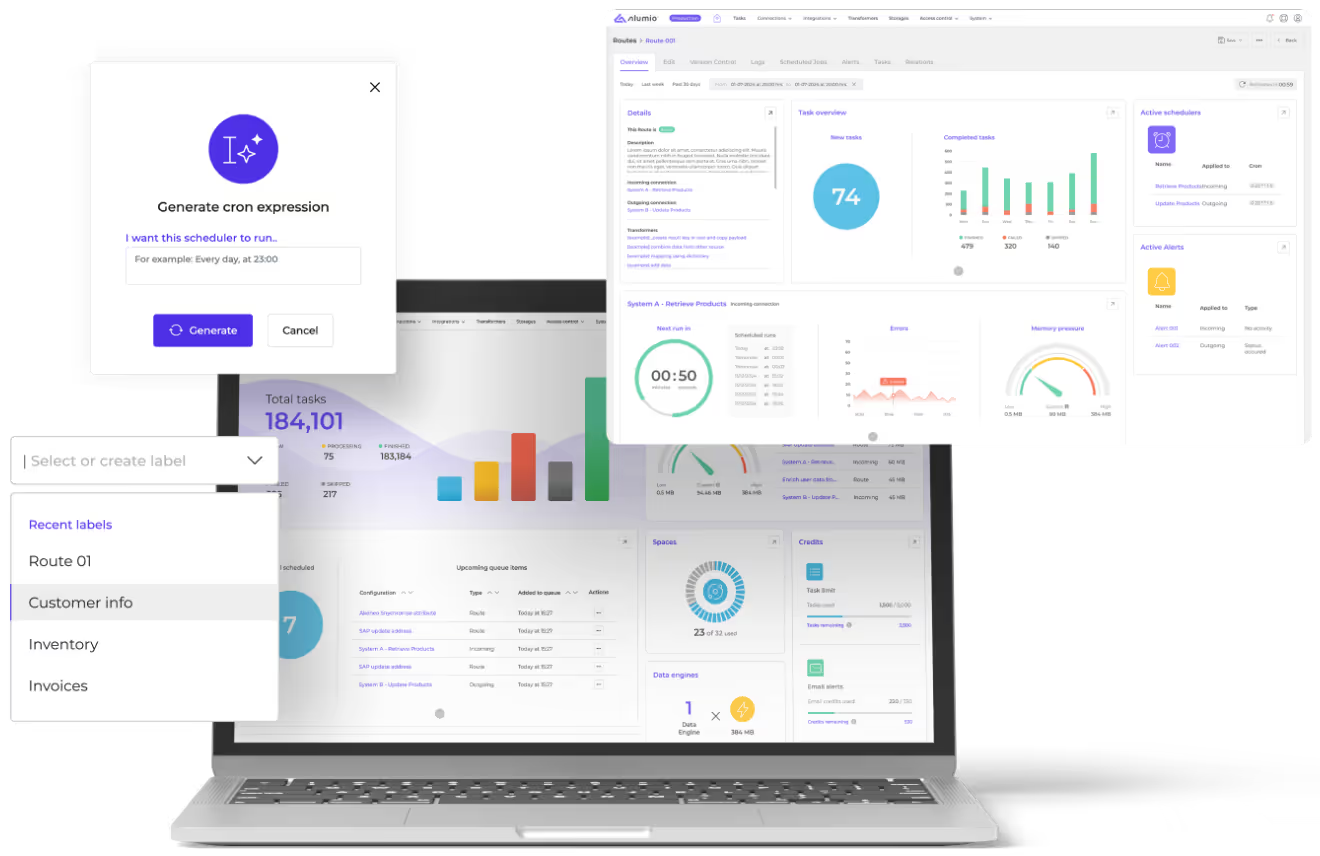
Alumio acts as the governed integration backbone that connects B2B organizations' ERP, PIM, e-commerce, CRM, and EDI systems through config-first Routes. Its prebuilt connectors for SAP, Microsoft Dynamics 365, Business Central, and major e-commerce platforms, combined with EDI support, mean B2B businesses can automate the most critical data flows without specialist middleware development. Full monitoring and audit logging ensure data quality is maintained and compliance requirements are met across all integrated systems.
B2B integration governance is critical because the consequences of data errors are amplified: a pricing error sent to a B2B customer creates a contractual dispute, a missed order confirmation causes a supply chain failure, and a wrong inventory level on a B2B portal can lead a customer to over-commit their own production planning. Full audit logging, validation logic, and proactive monitoring are therefore not optional in B2B integration environments where high-value transactions make data quality failures both commercially and reputationally consequential.




.svg)
.svg)
.svg)
.svg)
.svg)
.svg)