




.svg)


Why automating manual processes is essential
For many businesses, especially those reliant on multiple software systems, manual processes can slow down operations and lead to costly errors. Whether it's updating customer information, reconciling orders, or manually inputting data into different platforms, these tasks can be both time-consuming and prone to mistakes. Additionally, manual workflows limit scalability. As businesses grow and transaction volumes increase, manually maintaining operations can quickly overwhelm teams.
Digital transformation, powered by an iPaaS solution, offers a streamlined, scalable alternative. By integrating various applications, automating repetitive tasks, and ensuring smooth data exchanges across systems, iPaaS platforms help businesses eliminate inefficiencies. The result? A significant reduction in time spent on manual processes, allowing teams to concentrate on more strategic initiatives.
The role of iPaaS in digitalizing business operations
One of the biggest advantages of an iPaaS is its ability to connect disparate systems—both legacy and modern—without the need for custom coding or complex IT interventions. An iPaaS platform acts as the “glue” that links different systems, ensuring they communicate seamlessly. For businesses, this opens the door to automating tasks that once required manual input, reducing errors, and improving overall productivity.
Beyond simple automation, iPaaS offers the ability to modernize legacy systems by integrating them with newer platforms. This helps companies digitize their entire operation, reducing dependency on outdated tools like Excel spreadsheets and empowering teams to work smarter, not harder. The long-term impact is clear: businesses can focus more on growth and less on maintaining the status quo.
How automating manual tasks works with an iPaaS
From a technical perspective, iPaaS platforms work by connecting multiple software systems through APIs (Application Programming Interfaces) or other data exchange methods like webhooks or flat files. The platform extracts data from a source application (e.g., CRM or ERP system), applies rules for data transformation, and then pushes that transformed data to the target system in real-time or on a scheduled basis.
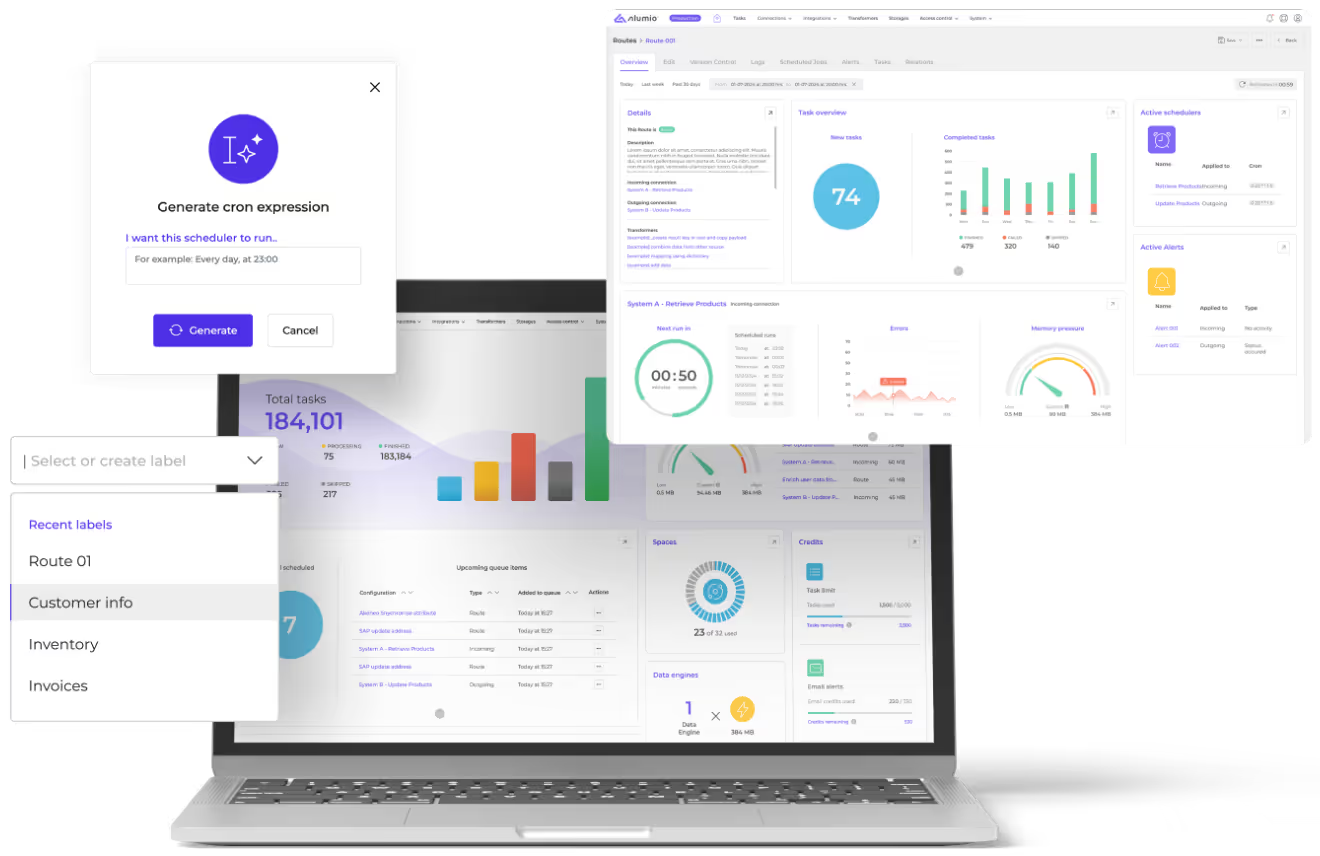
iPaaS solutions provide pre-built connectors for common applications, allowing businesses to set up integrations quickly without needing custom development. Additionally, workflows are configurable, enabling automation of repetitive tasks such as order processing, customer record updates, and inventory management. Once these workflows are in place, the system can autonomously handle large volumes of data, trigger real-time updates, and ensure that information is always synchronized across various platforms. This automation eradicates the need for manual data entry and reduces errors caused by human oversight, offering both efficiency and accuracy.
For companies that have legacy systems, iPaaS can also act as an intermediary layer that facilitates communication between these older platforms and modern SaaS applications, further enhancing digital transformation efforts.
Real-world application: How Eichholtz transformed its business with the Alumio iPaaS
Eichholtz, a global leader in luxury furniture and design, faced the challenge of managing increasingly complex business processes while maintaining its reputation for quality and innovation. With a portfolio of nearly 4,000 designs, the brand collaborates with manufacturers worldwide to serve a diverse clientele—from high-end department stores to upscale restaurants and chic hotels. However, as the company grew, its reliance on manual processes, including data entry via Excel sheets and time-consuming system updates, became a barrier to efficiency.
To keep pace with its growth, Eichholtz needed to migrate from a legacy ERP system and integrate all its core systems into a single, cohesive framework. Enter Alumio’s iPaaS solution. By deploying Alumio’s platform, Eichholtz was able to:
- Automate manual data transfers across systems, eliminating the need for Excel sheets and manual updates.
- Streamline complex workflows that previously required hours of manual labor, allowing the company to maintain accurate and up-to-date data in real time.
- Simplify lengthy processes, giving teams the bandwidth to focus on more strategic, value-added activities.
“Thanks to Alumio’s seamless data transferring and automation capabilities, we have been able to eradicate time-consuming tasks that previously involved countless Excel sheets and manual updates.- Maud Evers, Head of IT, Eichholtz.
In a nutshell, with Alumio’s integration and automation capabilities, Eichholtz transformed its operations. The company no longer had to dedicate resources to mundane, error-prone tasks, but instead could focus on scaling its business, enhancing customer relationships, and continuing to deliver exceptional products to its clientele.
Read the full case study here →
Conclusion
In an increasingly competitive and fast-moving marketplace, businesses can no longer afford to rely on manual processes and outdated systems. iPaaS platforms, like Alumio, offer a practical, scalable solution to automate repetitive tasks, integrate disparate systems, and streamline operations. By digitalizing their processes, businesses can not only improve efficiency but also free up resources to focus on innovation and growth. Eichholtz’s success story is a clear example of how automating manual processes can transform operations, allowing businesses to thrive in the digital age. So, what are you waiting for?





.svg)
.svg)
.svg)
.svg)
.svg)
.svg)
