





.svg)


Alumio vs. Zapier: Comparison of best integration platforms 2025
Were you looking for an integration solution and weighing Zapier vs. Alumio for enterprise data integration? Or, perhaps you were looking for a Zapier alternative for Shopify → ERP integration? The real question isn’t whether one tool is universally “better,” but which approach fits your specific business needs best, and that could involve weighing workflow automation vs. system integration features, multi-system orchestration, e-commerce integration connectors, and so forth. Zapier shines in app-to-app automation across thousands of SaaS tools, while Alumio offers enterprise-grade data orchestration, unlimited connections, and governance to run core system integrations at scale.
TL;DR Verdict: Alumio iPaaS vs. Zapier integration platform
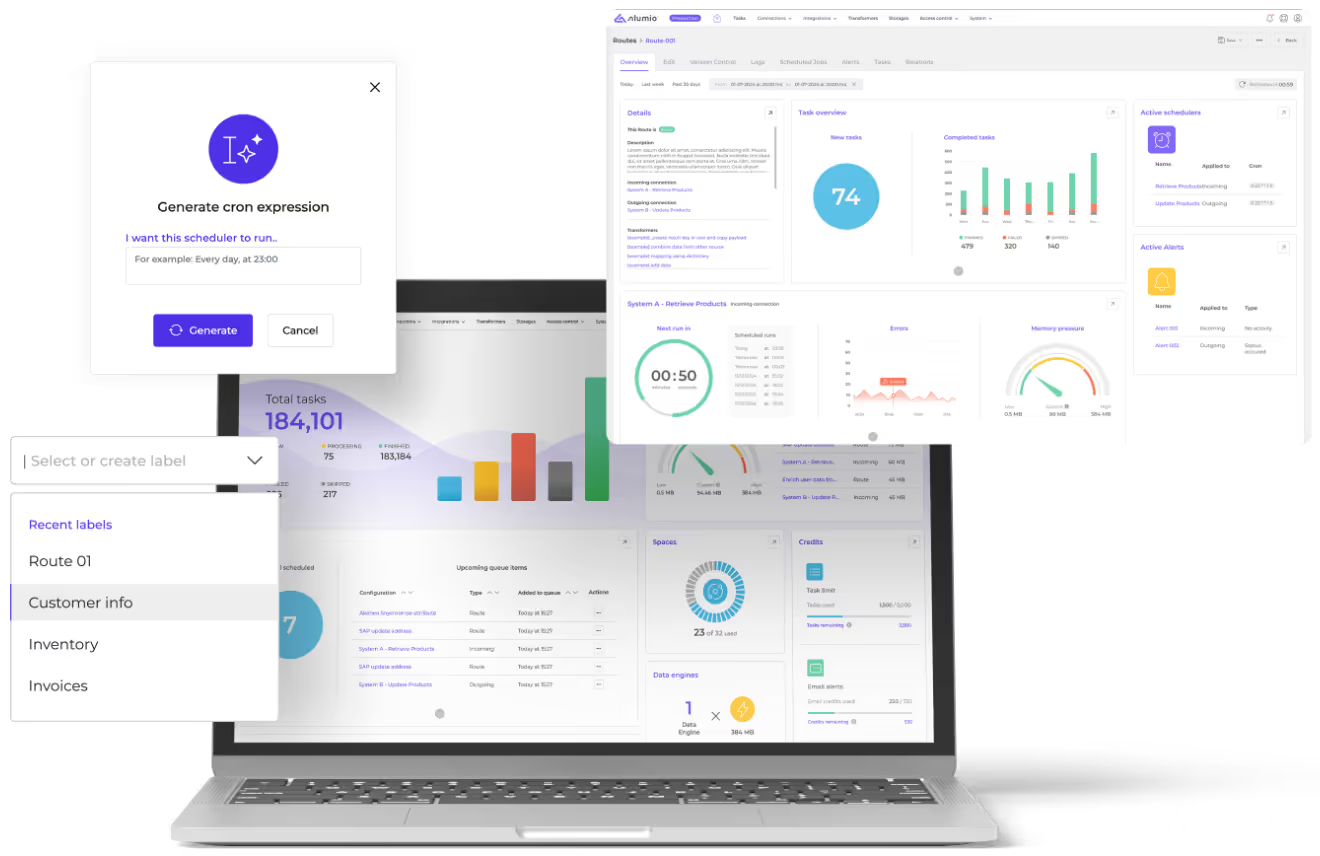
Alumio is an API-driven, config-first integration platform-as-a-service (iPaaS) that acts as a governed backbone for ERP, CRM, and e-commerce data flows. In a cloud-managed environment, it enables teams to configure and monitor integrations at scale with advanced Transformers and a Code Transformer (JavaScript) to map, enrich, filter, and reshape data—including custom endpoints. Select Alumio when you require enterprise governance, predictable task tiers, and integrations that can be productized and audited across systems.
Zapier is a cloud-based, no-code workflow automation platform known for its vast app ecosystem and ease of use. It lets teams connect thousands of SaaS tools with simple triggers and actions (“Zaps”), supporting multi-step workflows, branching logic, and built-in utilities like formatters and filters. Zapier is best when speed and accessibility matter most—whether automating SaaS-to-SaaS workflows, experimenting quickly, or embedding integrations into day-to-day operations—though task quotas and polling intervals should be factored in at scale.
Comparing key integration platform facts: Alumio iPaaS vs. Zapier
Pricing model
- Alumio: Task-tiered, quote-based plans (from ~€999/mo, billed annually). Tiers: Essential (1M tasks/year), Growth (2M), Custom (flexible)—each with its own SLA. The Essential edition includes 1 production + 1 sandbox, unlimited users & routes, and all standard/generic connectors.
- Zapier: Pricing scales with monthly task volume (€/mo, billed annually). Clear waypoints:
Pro ≈ €43/mo at 2k tasks, €429/mo at 100k, €2,976/mo at 2M.
Team ≈ €61/mo at 2k tasks, €526/mo at 100k, €3,511/mo at 2M.
Enterprise = contact sales (moves to annual task pools with advanced admin/observability).
Best for
- Alumio: Enterprises and mid-market organizations that need governed integrations at multiple levels of detail—whether stitching together full back-office systems or orchestrating modular data flows around specific data entities. It’s designed for IT leaders who want a scalable, composable backbone with compliance, observability, and support for complex digital ecosystems.
- Zapier: Business units and product teams that prioritize speed over structure. Ideal for automating everyday SaaS workflows and connecting tools with minimal setup, making it a fit for marketing, operations, and innovation teams that thrive on experimentation. Great for form→CRM→Slack flows, spreadsheets, alerts, and prototypes that benefit from a huge app catalog and simple sharing on Team/Enterprise.
Integration style
- Alumio: Takes a config-first approach where every connection is modeled as a reusable building block. Rather than relying on opaque point-to-point links, Alumio lets teams define data flows with precision, apply advanced Transformers for mapping and enrichment, and extend edge cases through a Code Transformer (JavaScript). This approach supports both system-level orchestration and fine-grained, entity-level workflows, giving enterprises the ability to shape integrations around the realities of their data model.
- Zapier: Built as a no-code automation studio, Zapier abstracts integrations into simple triggers and actions (“Zaps”). Its visual builder makes it easy to chain steps, add logic branches, and insert utilities like formatters or filters, all backed by one of the largest SaaS app catalogs in the market. Flows are designed for workflow automation rather than deep data modeling, with limits on step count and polling intervals that matter at higher volumes.
Industry focus
- Alumio: Designed for organizations operating across diverse sectors—retail, manufacturing, logistics, finance—where integrations must connect both legacy core systems, modern SaaS, and future technologies like AI models. Alumio’s strength is its ability to support composable architectures and granular data orchestration, so it caters to any enterprise looking to evolve their digital landscape without being tied to rigid vendor roadmaps.
- Zapier: Popular wherever teams rely heavily on SaaS apps and need automation without IT bottlenecks. It’s widely used in marketing, support, and operations, where speed and ease of use take precedence over deep data modeling, making it ideal for quick wins and departmental workflows.
Governance & Compliance
- Alumio: ISO-27001 certified and GDPR aligned. SLA-backed uptime, system monitoring, audit trails, and enterprise features like federated SSO, multi-factor authentication, and dedicated success management on higher tiers.
- Zapier: Runs as a cloud-hosted service with SOC 2 Type II, SOC 3, GDPR, and CCPA compliance. On Team and Enterprise plans, features expand to SAML SSO, SCIM provisioning, audit logs, and app allow/deny controls. Team plans support up to 25 users, while Enterprise allows unlimited seats with advanced admin visibility.
Strengths and limitations of Alumio vs. Zapier
Let’s look beyond features and pricing to examine the real-world strengths and limitations of both Alumio and Zapier:
- Alumio: offers predictable, SLA-backed task tiers with annual allowances, advanced Transformers (including code for edge cases), and compliance baked in (ISO-27001, GDPR). Its strength is handling both system-wide and entity-level integrations with governance and auditability. The trade-off: setup requires upfront modeling and configuration, which may feel heavier than quick automation tools.
- Zapier: Shines with a huge SaaS ecosystem, no-code builder, and rapid time-to-value for teams outside IT. Departmental users can chain multi-step workflows, use logic paths, and embed automations quickly. Limits appear with monthly task quotas, polling intervals, and a 100-step cap per Zap. Enterprise features (SSO, SCIM, audit logs) are gated behind higher tiers, and it’s not suited for large-scale ERP/CRM orchestration.




.svg)
.svg)
.svg)
.svg)
.svg)
.svg)
