Understanding the integration challenge with Odoo
Odoo’s modular design encourages an all-in-one approach. ERP, CRM, inventory, manufacturing, and even e-commerce can be handled within a single environment. While its integrated suite reduces the need for multiple disparate systems, no single ERP can cover every specialized business requirement. Companies still rely on best-in-class applications like Shopify for e-commerce, Salesforce for CRM, or specialized warehouse management systems (WMS) for logistics.
In practice, many teams reach a point where Odoo remains fit for core operations, but its surrounding ecosystem becomes restrictive. This often happens when businesses:
- Outgrow Odoo’s native e-commerce or marketplace capabilities
- Require more advanced WMS or 3PL integrations
- Introduce specialized marketing, analytics, or compliance tools
- Operate B2B or manufacturing workflows that demand tighter orchestration
At this stage, the question is no longer whether Odoo is good enough, but how it should integrate with the rest of the landscape.
Why point-to-point Odoo integrations do not scale
The most common response is to build direct integrations between Odoo and each external system. While workable initially, this approach introduces structural issues over time.
As integrations multiply, common issues that custom-built logic result include:
- Custom logic spreads across scripts, plugins, and modules
- API changes trigger reactive fixes
- Monitoring and error handling become fragmented
- integration maintenance starts consuming more effort than ERP management
The result is integration debt. Odoo remains affordable, but the cost and risk of keeping systems in sync steadily increase. This is where businesses that implement an integration platform stand to gain.
The benefits of integration Odoo via an integration platform
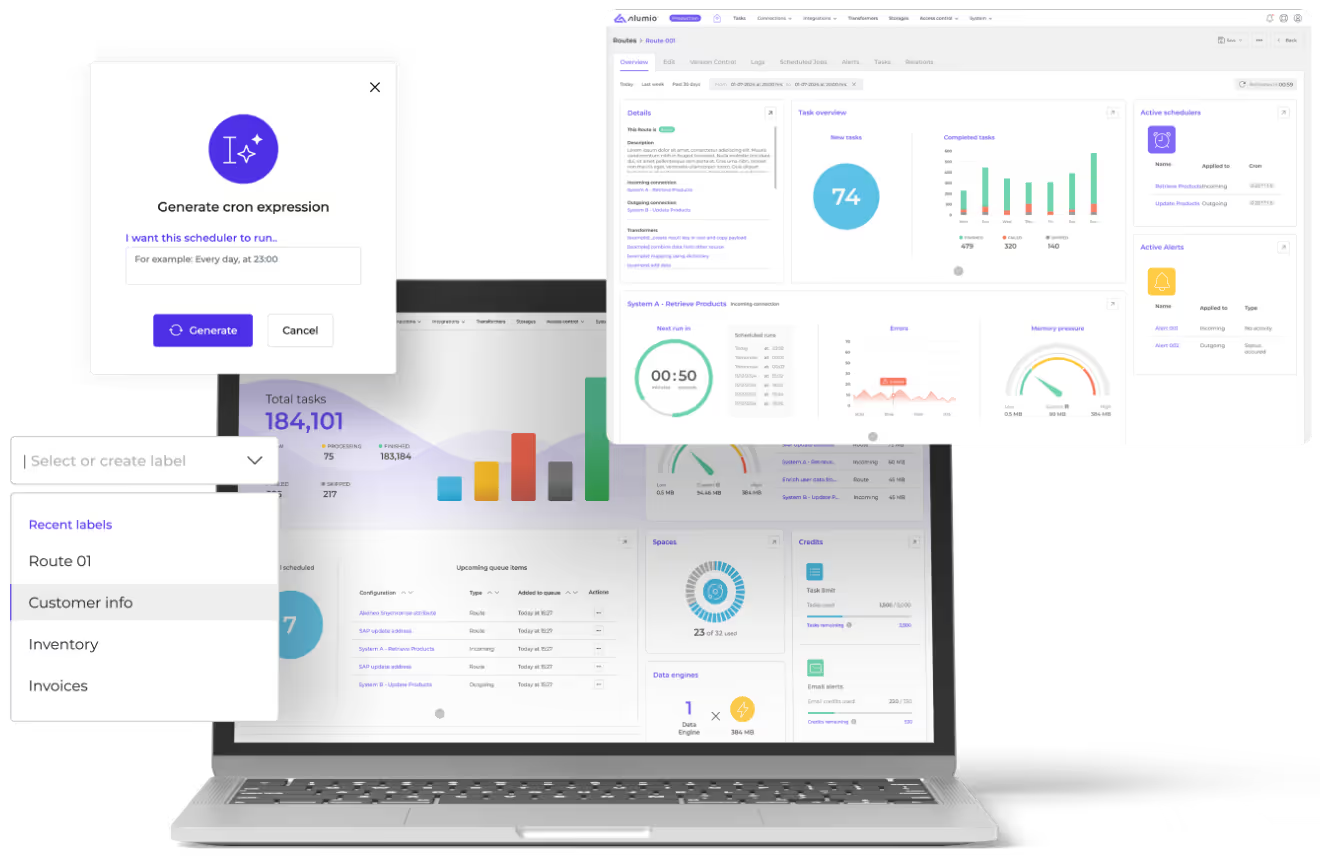
An integration platform-as-a-service (iPaaS) like Alumio introduces a central connectivity layer between Odoo and the rest of the business application landscape. Instead of building integrations directly with Odoo, the Alumio integration platform provides a user-friendly web interface to build, modify, and manage data flows between Odoo and other applications.
In other words, instead of managing dozens of individual point-to-point connections, the Alumio iPaaS provides a single dashboard to oversee all data flows in and out of Odoo. The core business benefits its implementation results in includes:
1. Accelerated integration development
An iPaaS comes equipped with pre-built connectors for popular applications and standardized protocols (REST, SOAP, GraphQL). This eliminates the need for developers to write boilerplate code for authentication, API calls, and error handling for each new integration.
With Alumio, developers can focus on the business logic of the integration, the mapping and transformation of data (formatting, filtering, enrichment), rather than the underlying technical plumbing. This accelerates development time, allowing businesses to connect new systems in days or weeks, not months
2. Centralized control and operational visibility
Delivering robust monitoring and logging features, the Alumio iPaaS enables IT teams to track the status of every data transaction, identify errors in real-time, and receive automated alerts for failed processes. This proactive approach to error handling minimizes downtime and ensures data integrity.
When an application’s API changes (for example, when Shopify releases an update), you only need to adjust the connector within the Alumio iPaaS. Without an iPaaS, you would have to manually identify and update every custom integration that touches that API. This significantly reduces maintenance overhead and technical debt.
3. Scalable and flexible architecture
As businesses grow, integration requirements tend to increase in volume and complexity. New sales channels, additional warehouses, regional expansions, or external partners introduce new data flows that must remain reliable under higher transaction loads and tighter operational expectations.
When integrations are built directly into Odoo, each new connection adds coupling and makes change harder to manage. Introducing an integration platform creates a buffer between Odoo and external systems, allowing integrations to be extended or adjusted without reworking existing flows. This makes it easier to scale operations over time, absorb volume spikes, and adapt to changing system requirements without destabilizing core ERP processes.
For a deeper dive on how business automation with Odoo and Alumio works, see the Alumio Odoo connector blog.
Case study: supporting hybrid application landscapes with Odoo
Many teams want to keep Odoo’s ERP while using external platforms for e-commerce or logistics. The Alumio iPaaS supports this hybrid model by allowing Odoo to coexist with systems such as Shopify, WooCommerce, WMS platforms, or marketplaces without forcing all logic into the ERP.
A practical example of this approach is Heusinkveld, a high-performance sim racing manufacturer, who used the Alumio iPaaS to integrate their WooCommerce e-commerce platform with Odoo’s ERP module. In addition to synchronizing orders, inventory, and customer data, Alumio provides centralized monitoring and alerting, enabling the team to quickly detect and resolve integration issues before they impact fulfillment or customer experience. This setup allows Heusinkveld to evolve its commerce stack while maintaining stability and control across ERP-driven processes.
Read the full case on how Heusinkveld used the Alumio iPaaS to integrate Odoo →
Building a future-ready Odoo integration strategy
Integrating Odoo via an iPaaS like Alumio is not about extending the ERP with more functionality. It is about preventing integration complexity from becoming the bottleneck as the business grows. By centralizing integration logic outside Odoo, organizations preserve the cost and operational benefits that led them to choose Odoo, while gaining the flexibility to adopt and scale best-of-breed systems over time.
For teams that want to keep Odoo as a stable ERP or CRM core while operating in a broader application ecosystem, an integration platform provides the control, visibility, and resilience needed to scale without trading short-term savings for long-term integration debt.




.svg)








.svg)
.svg)
.svg)
.svg)
.svg)
.svg)
