




.svg)


What is a legacy system?
In technology, the word "legacy" doesn't mean a good thing. A legacy system is an outdated or obsolete piece of software or hardware that is still in use within an organization. The issue with legacy systems is that they can often be so old and outdated that they may not integrate well with newer software or hardware, which can interfere with workflow and operations.
However, this doesn't necessarily mean that a legacy system is a bad one. In some cases, the system still performs reliably and may even still be supported by the vendor, in which case it may be better to keep it running rather than invest in a new system.
Usually, a system is considered a legacy system when it runs on outdated hardware and uses old software and programming languages that may no longer be supported, making it difficult to find developers or technical experts who can maintain and update it. Other factors can include the inability to integrate well with more modern systems or software, as well as the increasing cost of maintaining the system.
When should organizations consider legacy system migration?
While legacy systems aren't necessarily bad, if their limitations are inhibiting your business growth, then it may be time to consider a migration. In particular, organizations should consider legacy system migration when they encounter the following challenges:
- High maintenance costs: Legacy systems often require specialized skills and significant resources to maintain. Over time, the cost of maintaining these systems can surpass the cost of migrating to a more modern solution.
- Incompatibility with modern technologies: As new systems and technologies emerge, legacy systems may struggle to integrate, leading to data silos and workflow disruptions.
- Security vulnerabilities: Older systems may not receive regular security updates, making them vulnerable to cyber threats. A legacy system migration can address these cyberattacks and help keep your data safe.
- Limited scalability: As businesses grow, they need systems that can scale with them. Legacy systems may not be able to handle increased workloads or new functionalities, restricting growth.
- Lack of vendor support: If a vendor no longer supports your existing system, you may be left without crucial updates, patches, or technical assistance, leaving your system vulnerable.
Find out about the risks of legacy systems in manufacturing.
What is legacy system migration?
Legacy system migration involves moving data, applications, and workloads from old, outdated systems to more modern platforms. This can include migrating to a new software solution, cloud infrastructure, or hybrid environments that combine both on-premise and cloud-based systems.
Types of legacy system migration
There are many types of legacy system migration for organizations to consider, each with its own advantages and disadvantages:
- Rehosting (Lift and Shift): Moving data and applications to a new environment without significant changes. This approach is quick but may not take full advantage of new system capabilities.
- Replatforming: Making minor optimizations to gain specific benefits without changing the core architecture. This provides more improvements than rehosting while maintaining a degree of familiarity.
- Refactoring: Restructuring and optimizing existing code to improve performance, maintainability, and scalability, without altering external behavior. It's a more code-intensive approach but improves the quality of the existing system.
- Rebuilding: Redesigning and rewriting the system from scratch using modern technologies. This provides the most flexibility but is time-consuming and resource-intensive.
- Replacing: Replacing the entire legacy system with a new, commercially available solution. This can offer the latest features but requires extensive planning and change management.
- Retiring: Decommissioning the legacy system entirely, often when it is no longer needed or after its functions have been absorbed by other systems. It's the simplest approach but only viable when the system's functionality is no longer needed.
- Encapsulation: Wrapping the legacy system with an integration Platform-as-a-Service (iPaaS) or API layer to make it accessible to modern applications without fully replacing it. This is ideal for situations where immediate migration is not feasible.
Legacy system migration challenges and how to overcome them
Legacy system migration can be a complex process with several challenges organizations need to prepare for:
- Data complexity: Legacy systems often store data in formats that are incompatible with modern systems, making data migration complex and error-prone. Solution: Conduct a thorough data audit and use automated data transformation tools to convert data into compatible formats.
- System integration: Integrating legacy systems with newer technologies can be challenging due to incompatible data formats, APIs, and protocols. Solution: Use middleware or an integration platform to act as a bridge between the legacy and modern systems.
- Knowledge gaps: Organizations may lack the internal expertise needed to manage a complex migration. Solution: Invest in training or hire external experts with experience in legacy system migration.
- Business continuity: Migration processes can disrupt business operations if not managed carefully. Solution: Develop a comprehensive migration plan that includes rollback strategies and thorough testing to minimize disruptions.
- Cost management: Migrations can be expensive, often requiring significant investment in new systems and skilled IT professionals to maintain them. Solution: Develop a detailed budget and timeline, and consider a phased approach to spread costs over time.
How Alumio helps with legacy system migration
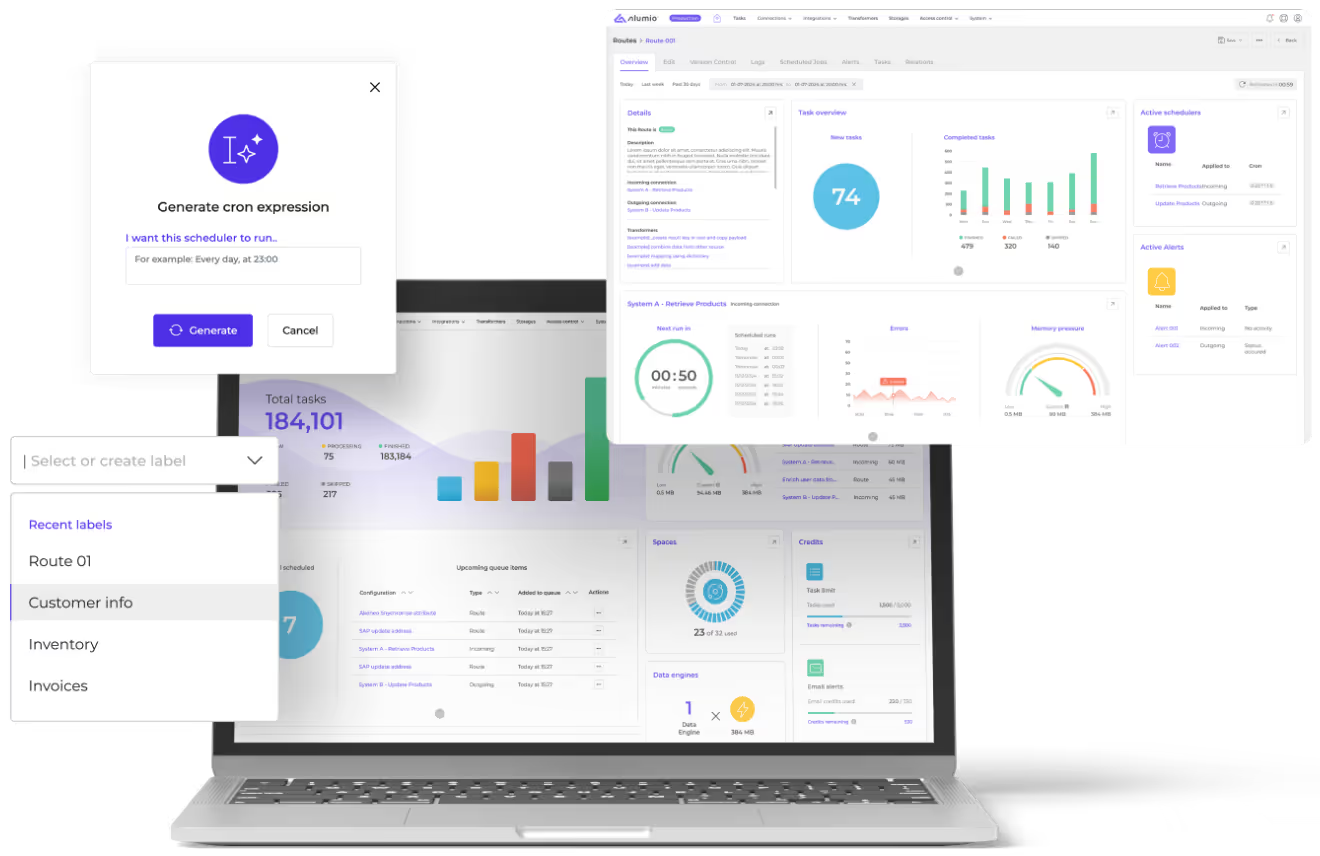
Alumio is an integration Platform-as-a-Service (iPaaS) specifically designed to simplify the process of integrating and migrating data between legacy systems and modern platforms. Here's how Alumio can help your business manage the transition effectively:
- Seamless data integration: Alumio's platform connects legacy systems with modern applications through APIs and connectors, enabling smooth data flow without disrupting existing operations.
- Data transformation: Alumio automates the conversion of data from legacy formats to modern ones, reducing the risk of data loss and ensuring accuracy during migration.
- Real-time data synchronization: Alumio ensures that data is synchronized in real-time between old and new systems during the migration process, minimizing downtime and maintaining data integrity.
- Scalability: Alumio's cloud-based platform scales with your business, ensuring that your integration needs are met both during and after the migration.
- Security and compliance: Alumio provides robust security features and compliance tools to protect data during migration and ensure compliance with industry standards and regulations.
Explore Alumio’s commitment to the highest security standards →
Conclusion
Migrating from legacy systems is a critical step for organizations looking to stay competitive in today's rapidly evolving technological landscape. While the process can be challenging, the benefits—such as improved efficiency, reduced costs, and enhanced security—far outweigh the risks when managed properly. By leveraging a platform like Alumio, businesses can ensure a smooth transition that preserves data integrity and minimizes disruptions.
Ready to future-proof your business? Book a demo with one of our specialists!




.svg)
.svg)
.svg)
.svg)
.svg)
.svg)
