




.svg)



What is the Alumio NetSuite Connector?
The Alumio NetSuite Connector is a pre-built software component that helps facilitate faster integrations between NetSuite’s cloud-based, business management software and the latest e-commerce SaaS or cloud apps, legacy systems, and/or data sources. Integrating NetSuite help expand business capabilities and enables process automation.
The Connector essentially contains the configurations to all of the NetSuite ERP’s software data and services. As such, it serves as a bridge to connect NetSuite seamlessly with any application or system that a business chooses. It enables real-time exchange of data and services and successfully incorporates Netsuite’s features into the busines tech stack. By integrating the ERP using the Alumio NetSuite Connector, your business IT ecosystem can get real-time visibility into operational and financial performance. Netsuite also helps automate core business processes like accounting, order processing, inventory management, production, supply chain, and warehouse operations.
To implement the Alumio NetSuite Connector, Alumio provides a next-gen integration platform, also known as iPaaS (integration Platform as a Service). It's an API-driven solution that helps develop, govern, and orchestrate application integrations and real-time data exchange.
To learn more about the Alumio integration platform, read our comprehensive “What is iPaaS?” guide →
What are Alumio connectors?
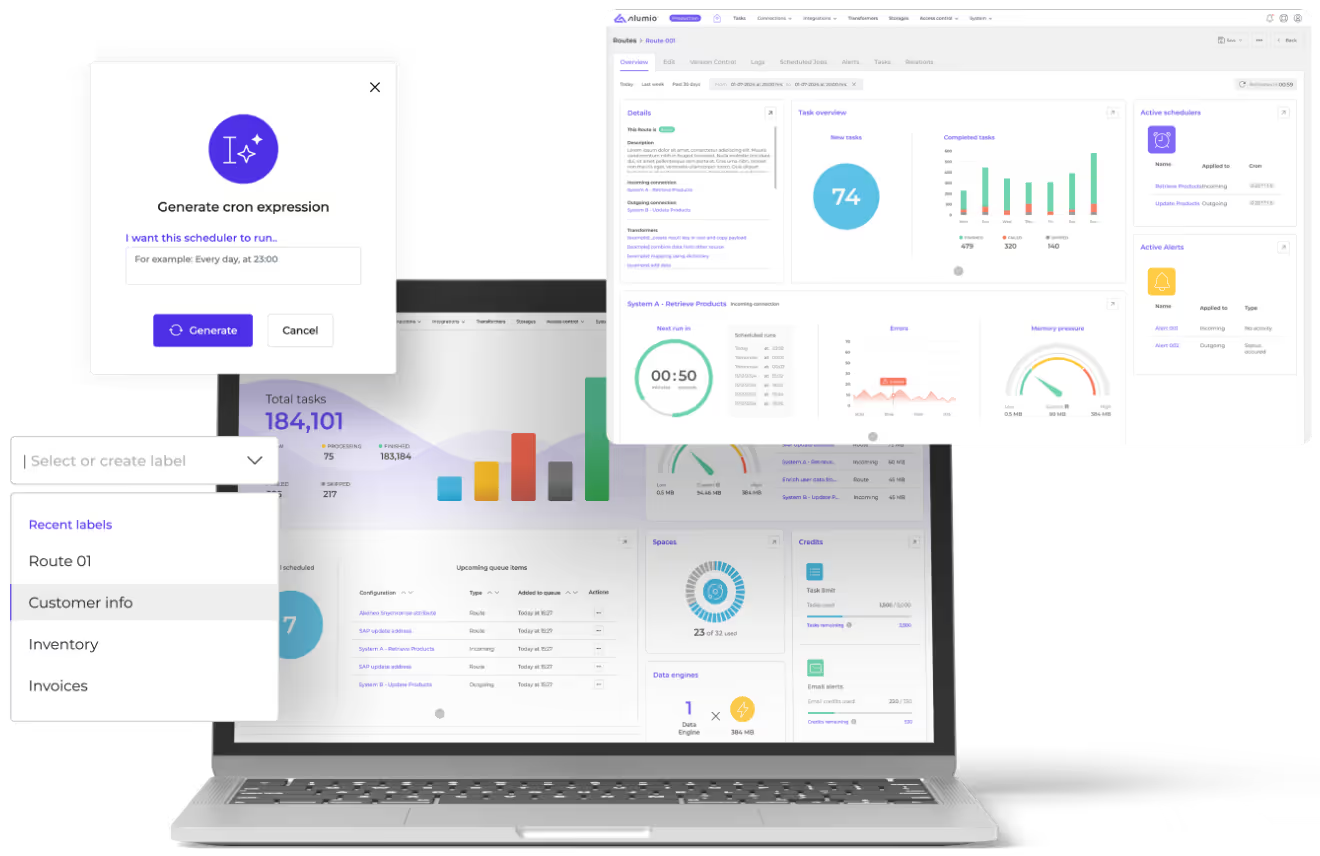
Alumio Connectors are packages of pre-configured software data that make it easy to build integrations between applications like NetSuite and any other application, system, or data source. The Alumio iPaaS offers a rich library of Connectors and provides a user-friendly web interface to combine and configure these Connectors to build fast and flexible application integrations.
Alumio is a cloud-native, low-code integration platform (iPaas) that businesses can use to integrate apps like NetSuite without the hassles of custom code. As an API-driven solution, it helps integrate all kinds of apps, such as e-commerce platforms, PIM, CRM, WMS, marketing automation systems, shipping software, and many other cloud apps. Centralizing all integrations and data sources on one secure cloud platform, Alumio can be used to integrate more systems in a scalable way, helping to orchestrate entire IT ecosystems.
The benefits of implementing the Alumio NetSuite Connector
NetSuite is a holistic ERP solution that helps enterprises effortlessly manage multiple subsidiaries, business units, and legal entities. Designed for global business, it is used in over 200 countries and supports over 27 languages and 190 currencies. In terms of operations, NetSuite helps manage accounting, inventory, operations, distribution, and more, while automating manual processes to save time and free up resources.
Using the Alumio NetSuite Connector to integrate the leading cloud ERP with the latest e-commerce SaaS or cloud apps, entails several business advantages such as:
- Real-time financial visibility: Enable informed decision-making by gaining real-time data insights into sales, finances, accounting, and other critical business metrics and performance indicators.
- Enhanced finance management: NetSuite provides comprehensive financial management capabilities, including accounting, budgeting, and financial reporting.
- Inventory management: NetSuite provides real-time visibility into inventory levels, enabling businesses to monitor stock levels, track movements, and prevent stockouts or overstock situations.
- Improve order fulfillment: NetSuite supports several e-commerce capabilities that enable businesses to manage online sales, inventory, and customer interactions, while also automating processes such as order routing, picking, packing, and shipping.
- Customer Relationship Management (CRM): NetSuite includes robust CRM features to manage customer interactions, sales leads, and marketing campaigns. This integrated CRM functionality helps improve customer relationships and drive sales.
- Global Business Support: NetSuite is designed to support global business operations. It handles multiple currencies, taxation systems, and compliance. requirements, making it suitable for organizations with international operations.
Integrate NetSuite with an entire ecosystem of applications with the Alumio Connector
By implementing the Alumio NetSuite Connector via the Alumio integration platform (iPaaS), businesses can integrate NetSuite with an entire ecosystem of SaaS and cloud apps in a scalable way. For businesses looking to integrate well-matched applications with NetSuite, Alumio also provides Connectors for other systems that include:
Integrating NetSuite with e-commerce platforms via the Alumio iPaaS
Using the Alumio NetSuite Connector, businesses can use the Alumio iPaaS to integrate NetSuite with the most popular e-commerce platforms, such as Shopify, BigCommerce, and Adobe Commerce. Integrating NetSuite with an e-commerce platform ensures real-time financial data exchange, enables efficient inventory management and forecasting, and helps automate order fulfillment processes.
Integrating NetSuite with CRM systems via the Alumio iPaaS
Connecting NetSuite with Customer Relationship Management (CRM) systems such as Salesforce and HubSpot can help enhance and expand NetSuite’s CRM capabilities. It enables businesses to acquire a more unified and real-time overview of customer data, sales leads, and communication history. It can also help automate sales workflows, streamline the lead-to-cash process, and facilitate targeted marketing campaigns based on CRM insights.
Integrating NetSuite with Marketplace Automation tools via the Alumio iPaaS
The Alumio NetSuite Connector also helps integrate NetSuite with marketing automation tools like Marketo or Yotpo. This can help create a unified ecosystem where customer and marketing data align in real-time, helping treamline the lead-to-customer conversion process. With the Alumio iPaaS enabling data synchronization between NetSuite and a marketing automation tool, leads generated through marketing efforts will reflect in real-time within NetSuite. The integration can also help improve the accuracy of customer profiles, allowing for more targeted and effective marketing campaigns.
How to Implement the Alumio NetSuite Connector
Implementing the Alumio NetSuite Connector via the Alumio iPaaS, in order to seamlessly integrate NetSuite with any application or system of your choice, is a straightforward process. Here are the basic steps:
Step 1: Sign up for the Alumio iPaaS and install the Connector
Buy an Alumio account and the Connector package via an Alumio partner or directly get in touch with the Alumio Sales Team →
Step 2: Add credentials and mapping via the Alumio web interface
- Add basic configuration
Configure basic information like adding credentials and connection URLs to the correct paths of the APIs. This can also involve mapping data fields, defining rules, and setting up automation triggers. - Build mappings
Define which attributes are available in your source system and need to be mapped between integrated systems. Create the mappings needed for your integration via the Alumio user-friendly web interface.
Step 3: Add edge cases
The Alumio integration features allow you to add specific requests or business logic in the integration - if required.
Step 4: Final testing
After all the mappers are set up and all attributes are checked, you can conduct a final test to make sure everything is as expected.
Maintenance and customizations
After configuring the basic integration, Alumio provides robust monitoring and logging that automatically detects errors or anomalies. For customizations, Alumio provides advanced developer-friendly integration features like advanced mappers, transformers, and workflow automation.
Visit the Alumio Forum to explore the technical documentation of all Alumio Connectors →
Enabling real-time business data exchange with the Alumio NetSuite Connector
Real-time data synchronization is a key advantage of using the Alumio NetSuite Connector to integrate your cloud ERP with various applications through the Alumio iPaaS (Integration Platform as a Service). This powerful connector ensures that updates to finance, sales, inventory, and customer data in NetSuite are instantly reflected across all connected systems and vice versa.
The Alumio iPaaS enhances integration with features like custom data transformers and mappers, which maintain data consistency and support tailored integrations. It also offers real-time error detection through advanced monitoring and logging, facilitating the smooth operation of integrated systems.
Moreover, the Alumio iPaaS provides a scalable infrastructure and flexible platform that allows businesses to easily integrate multiple new systems with NetSuite over time. This capability supports the orchestration and governance of a comprehensive, integrated commerce ecosystem, future-proofing your data integration strategy.
Looking to explore the possibility of integrating the renowned shipping software using the Alumio ShipStation Connector? Feel free to book an Alumio demo →





.svg)
.svg)
.svg)
.svg)
.svg)
.svg)
